
🌙 Evening Routines That Train Your Brain for Sleep
Understanding the Sleep-Training Concept
When we think of training, we imagine workouts or learning a skill — but your brain can also be trained to sleep.
In fact, sleep isn’t an on/off switch; it’s a biological rhythm shaped by behavior, light, and consistency.
If your nights are restless or you find yourself scrolling in bed, your brain may have learned the wrong routine.
The goal of an evening routine is to teach your brain when to release sleep hormones, when to unwind, and when to let go.
👉 Also try our Scientifically backed bedtime routine that helps train your brain for deep restful sleep.
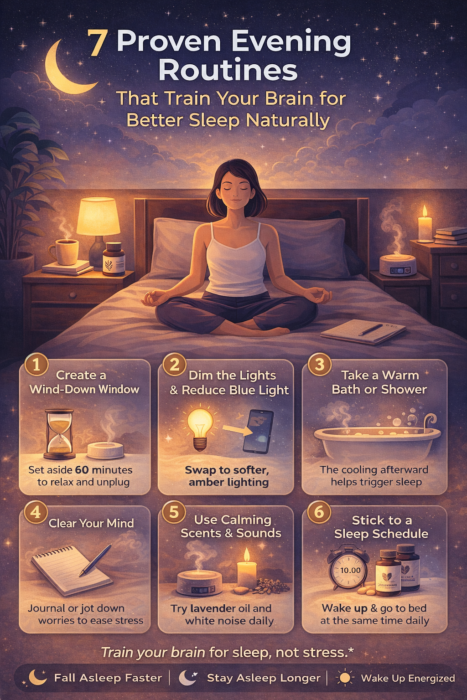
Why Your Brain Needs a Routine
Your brain craves predictability. The more consistent your signals — same lighting, same timing, same steps — the easier it becomes for your nervous system to shift into sleep mode.
Over time, these cues become conditioned triggers — like Pavlov’s bell for your brain — prompting melatonin release and automatic relaxation.
The Science of Circadian Conditioning
Your body’s circadian rhythm is a 24-hour clock that regulates everything from sleep to metabolism.
But modern habits — bright screens, stress, irregular schedules — confuse it.
An evening routine helps realign that internal clock by providing repeated environmental and behavioral cues that say: “It’s time to rest.”
Step 1: Create a Wind-Down Window
Sleep doesn’t begin when you lie down — it begins about an hour before.
That’s your wind-down window — a crucial period when you transition your body from alertness to calm.
The Ideal Timeline for Evening Calm
- 60 minutes before bed: Turn off stimulating activities (work, screens, intense conversations).
- 45 minutes before bed: Dim lights, make tea, play relaxing music.
- 30 minutes before bed: Personal hygiene, skincare, and change into comfortable sleepwear.
- 15 minutes before bed: Read, meditate, or stretch — your chosen nightly ritual.
Even doing the same three steps each night (for example: wash face → stretch → read) can train your brain to associate those actions with sleep onset.
What to Avoid Before Bed
- Bright or blue light from devices
- Caffeine, alcohol, or heavy meals
- Scrolling social media (keeps your mind active)
- Stressful conversations
💡 Pro tip: Keep a “no-screen zone” 1 hour before bed. If you must use devices, turn on Night Shift or wear blue-light blocking glasses.
Step 2: Manage Light Exposure
The Blue Light Effect
Light is the single strongest cue for your circadian rhythm.
Blue light (from phones, TVs, LEDs) tells your brain it’s daytime, delaying melatonin release and making it harder to fall asleep.
By reducing blue light in the evening, you allow your body’s natural melatonin to rise — preparing your brain for rest.
Light Cues and Melatonin Production
Try this:
- Use warm amber lighting in the last 2 hours before bed.
- Avoid overhead lighting; use lamps or candles instead.
- If possible, spend 10 minutes each day in natural morning light to strengthen your rhythm.
This teaches your brain a powerful pattern: bright morning → dim evening → sleep.
Step 3: Relax Your Body with Predictable Cues
Warm Baths, Herbal Teas, and Stretching
A warm bath or shower slightly raises your body temperature — followed by a cooling drop that signals your body it’s time to sleep.
Pair it with chamomile, valerian, or Yusleep’s herbal blend, and you’re sending multiple calming messages to your nervous system.
Gentle Movements That Signal Rest
Slow stretches, yoga, or light foam rolling help release muscle tension and calm your heart rate — perfect precursors to sleep.
Step 4: Calm Your Mind
The Power of Mental Offloading
Your brain often stays awake not because it’s restless, but because it’s unresolved.
Jot down to-dos, concerns, or tomorrow’s tasks before bed.
This process — called cognitive offloading — tells your mind, “You don’t have to hold onto this right now.”
Evening Mindfulness or Journaling Practice
5 minutes of journaling or breath meditation lowers cortisol levels and increases alpha brain waves — the state right before deep relaxation.
You can even repeat a mantra like:
“I’m letting today go. My body knows how to rest.”
Step 5: Use Scent and Sound to Trigger Sleep Mode
Aromatherapy and White Noise Benefits
Smell and sound are incredibly effective sleep triggers.
Try:
- Lavender or bergamot essential oils for calm
- White noise or gentle rain sounds to block background distractions.
Over time, your brain pairs these sensory cues with rest — activating a conditioned relaxation response almost instantly.
Step 6: Anchor Your Sleep Time
Why Consistency Is Everything
Your brain thrives on rhythm. Going to bed and waking up at roughly the same time daily stabilizes melatonin cycles and makes falling asleep effortless.
Weekend Sleep Myths
Sleeping in on weekends may feel like “catching up,” but it actually confuses your biological clock — like switching time zones twice a week.
Instead, stay within ±30 minutes of your usual bedtime.
Step 7: Support Sleep Chemistry Naturally
Magnesium, L-Theanine, and Herbal Support
Certain nutrients and herbs can enhance your natural sleep chemistry.
- Magnesium Glycinate: Relaxes muscles and nerves
- L-Theanine: Promotes calm focus
- Valerian Root & Lemon Balm: Improve sleep onset
- Yusleep Natural Formula: Combines these in balanced doses for sustained, restorative rest
💤 Supplements can’t replace habits — but they can reinforce them.
Common Mistakes That Disrupt Sleep Training
- Inconsistent bedtime: Breaks the brain-body sleep connection
- Late caffeine or alcohol: Interferes with melatonin and REM sleep
- Working in bed: Teaches your brain that bed = stress.
- Skipping wind-down time: Keeps adrenaline levels too high.
- Over-relying on pills: Prevents natural sleep cues from re-establishing
FAQs
Q1: How long does it take to train your brain for better sleep?
A: Most people notice improvement in 1–2 weeks of consistent evening routines. Full circadian reset may take up to 30 days.
Q2: Can I still watch TV before bed?
A: Limit screen brightness and watch from a distance with warm lighting. Avoid stressful or fast-paced shows.
Q3: What’s the best time to start my evening routine?
A: Begin about 60–90 minutes before your target bedtime.
Q4: Does journaling or meditation really help?
A: Yes — studies show mindfulness reduces nighttime rumination and decreases time to sleep onset.
Q5: Should I take supplements like melatonin daily?
A: Short-term use is fine for jet lag or schedule shifts, but for chronic insomnia, focus on habits and natural aids like Yusleep.
Q6: What’s one simple thing I can do tonight?
A: Dim your lights an hour before bed and put your phone away — you’ll sleep more deeply, even from one night of change.
🌟 Conclusion: Train Your Brain — Transform Your Nights
You don’t have to fight your sleep — you just have to teach your brain how to rest again.
When your evenings become consistent, your brain learns to anticipate sleep rather than resist it.
The result?
You fall asleep faster.
Stay asleep longer.
Wake up genuinely refreshed.
Because better sleep isn’t luck — it’s learned. 🌙
💚 Next Step: Continue Your Journey
👉 Discover the Root Causes of Chronic Insomnia & What Actually Helps
👉 Explore Natural Sleep Aids That Work Without Dependency
👉 Top 10 Best Sleep Trackers for Smarter, Healthier Sleep
👉 Try Yusleep — The Natural Formula That Supports Restful Nights