
🌙 How to Reset Your Circadian Rhythm Naturally
What Is Your Circadian Rhythm — and Why It Matters
Your circadian rhythm is your body’s internal clock — a 24-hour cycle that governs when you feel awake, sleepy, hungry, or alert.
It’s controlled by your brain’s suprachiasmatic nucleus (SCN) — a small group of neurons in the hypothalamus that act as your body’s master clock by responding to light and darkness.
When your rhythm is aligned, you fall asleep easily, wake refreshed, and feel mentally clear.
When it’s disrupted, you might experience:
- Insomnia or trouble falling asleep.
- Midday fatigue
- Brain fog or irritability
- Difficulty waking up in the morning
How It Regulates Sleep, Hormones, and Energy
Your circadian rhythm coordinates the release of key hormones:
- Melatonin: signals your body to sleep
- Cortisol: helps you wake up and stay alert
- Insulin and leptin: regulate appetite and metabolism
When these rhythms are in sync, your sleep, digestion, and mood naturally flow together.
The Consequences of a Disrupted Rhythm
Shift work, late-night scrolling, inconsistent schedules, or too much artificial light can all throw this system off balance.
A chronically misaligned rhythm increases the risk of:
- Chronic fatigue
- Hormonal imbalance
- Weakened immunity
- Mood disorders and weight gain
Signs Your Circadian Rhythm Is Out of Sync
You may notice:
- Feeling tired but unable to sleep
- Waking up groggy despite enough hours
- Energy crashes in the afternoon
- Trouble concentrating
- Cravings for sugar or caffeine late in the day
Common Lifestyle Triggers
- Blue light exposure at night
- Lack of natural light in the morning
- Erratic meal and exercise times
- Excess caffeine or alcohol
- Sleeping in on weekends (“social jet lag”)
The Science Behind Resetting Your Sleep Cycle
Your body relies on zeitgebers (“time-givers”) — external cues like light, food, and movement — to regulate its internal clock.
Resetting your circadian rhythm naturally means using these cues intentionally to realign your biological day-night cycle.
The Role of Light, Food, and Movement
- Light: The strongest signal for wake and sleep hormones.
- Food: Acts as a secondary clock — meal timing influences metabolism.
- Movement: Physical activity reinforces your “daytime” alertness, deepening nighttime rest.
The Sleep–Wake Hormone Connection
- Morning light suppresses melatonin and increases cortisol, boosting focus.
- Evening darkness triggers the release of melatonin, preparing the brain for deep sleep.
Artificial light, especially from screens, confuses this natural rhythm — keeping your brain in “daytime” mode long past sunset.
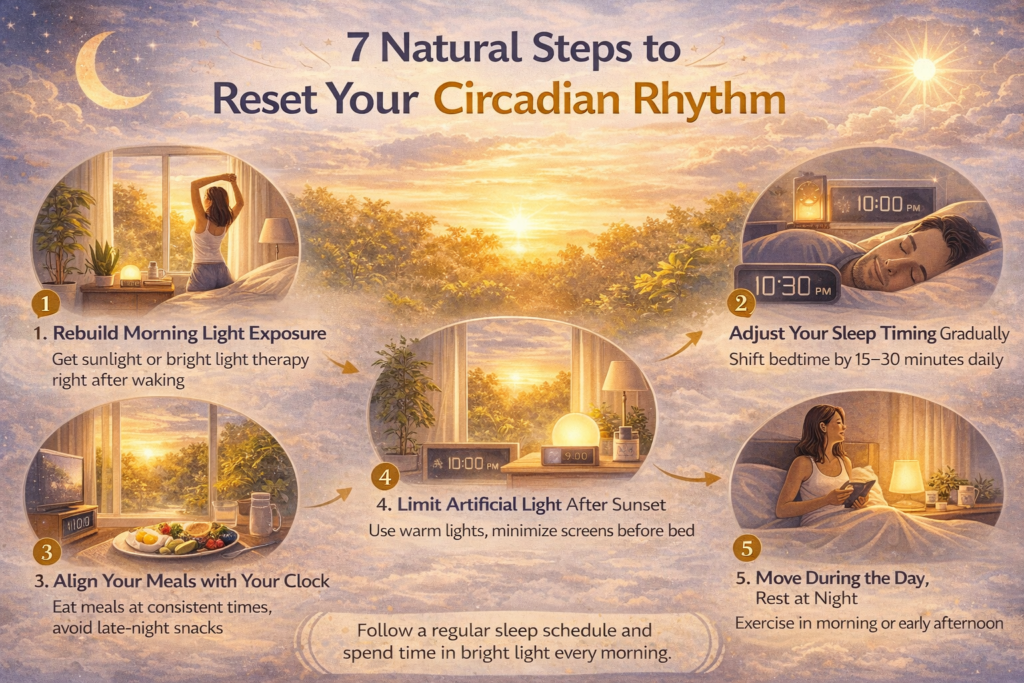
🌞 Step-by-Step Guide: How to Reset Your Circadian Rhythm Naturally
Step 1: Rebuild Morning Light Exposure
Spend at least 10–20 minutes in natural sunlight within 30 minutes of waking up.
If sunlight isn’t available, use a 10,000 lux light therapy lamp.
💡 Morning light is the strongest cue to anchor your circadian rhythm and set the timing of melatonin release for the night.
Step 2: Adjust Your Sleep Timing Gradually
Shift bedtime and wake time by 15–30 minutes each day until you reach your desired schedule.
Consistency is key — even on weekends.
Step 3: Align Your Meals with Your Clock
Eat breakfast soon after waking, and finish your last meal at least 2–3 hours before bed.
Nighttime eating confuses your metabolism, telling your body it’s still “daytime.”
Step 4: Limit Artificial Light After Sunset
Use warm amber lights or red bulbs in the evening.
Enable Night Shift Mode on devices, or wear blue-light-blocking glasses.
Avoid screen time an hour before bed.
Step 5: Move During the Day, Rest at Night
Exercise in the morning or early afternoon.
Avoid vigorous workouts close to bedtime, which can spike cortisol and delay sleep onset.
Step 6: Create a Consistent Wind-Down Routine
Use the same calming cues each night — a warm shower, light reading, stretching, herbal tea, or breathing exercises.
This signals your body that it’s time to power down.
Step 7: Reinforce with Natural Sleep Aids
If your rhythm is still off, natural support can help your brain reset:
- Magnesium Glycinate: relaxes muscles and promotes calm
- L-Theanine: eases mental tension
- Valerian Root & Lemon Balm: reduce sleep onset time
- Yusleep Natural Formula: combines all of the above to support circadian balance
Common Mistakes That Prevent a Reset
Social Jet Lag
Sleeping in on weekends throws off your internal timing.
Stick within 30 minutes of your weekday wake-up time, even on rest days.
Overuse of Melatonin
Short-term melatonin can help during jet lag, but long-term use may delay your body’s own production.
Use it briefly (3–5 nights) while focusing on behavioral resets.
How Long Does It Take to Reset a Circadian Rhythm?
For most people, it takes 7–14 days of consistent light exposure, bedtime, and meal timing.
If you’ve been off-schedule for months or years, give it 3–4 weeks to fully recalibrate.
FAQs
Q1: Can I reset my sleep schedule overnight?
A: Not sustainably — small, consistent adjustments work best.
Q2: Does exercising at night ruin my rhythm?
A: Gentle stretching is fine, but avoid high-intensity workouts within 3 hours of bedtime.
Q3: What if I work night shifts?
A: Use blackout curtains, wear blue-light-blocking glasses after your shift, and keep a consistent “sleep block” during the day.
Q4: Is melatonin safe?
A: Yes, for short-term use. For long-term rhythm support, rely on natural cues and calming nutrients.
Q5: How can I stay consistent while traveling?
A: Adjust your light exposure and mealtimes to the new timezone immediately — your body adapts faster that way.
🌟 Conclusion: Realigning Your Rhythm Restores Your Life
Resetting your circadian rhythm isn’t about discipline — it’s about alignment.
When your internal clock is in sync, everything else flows naturally:
- You fall asleep faster.
- Wake up energized
- Think clearer
- Feel emotionally balanced
Your body wants rhythm.
Give it consistency, light, and calm — and it will reward you with deeper sleep and brighter days. 🌞
💚 Next Step: Continue Your Journey
👉 The Science of Deep Sleep: 7 Proven Ways to Wake Up Energized Every Morning
👉 7 Proven Evening Routines That Train Your Brain for Better Sleep Naturally
👉 Try Yusleep — Natural Support for a Balanced Sleep-Wake Cycle