
An estimated 50 to 70 million adults in the United States suffer from chronic sleep problems. This widespread issue, often called insomnia, can impact daily life by affecting mood, concentration, and health.
If you often wonder, “Why can’t I sleep at night?” you are not alone. Understanding the common causes of sleepless nights is the first step to finding effective solutions.
This guide covers 11 common reasons you might struggle to get quality rest and offers practical, evidence-based fixes to help you reclaim your nights.
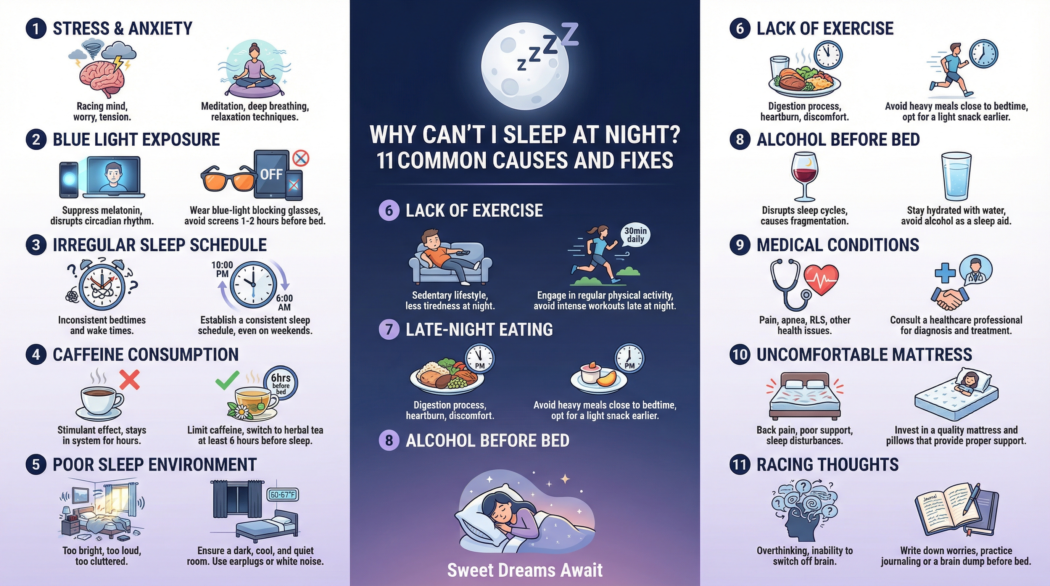
1. Stress and Anxiety: The Mind’s Uninvited Guest
The most common reason people can’t sleep is stress and anxiety. When your mind races with worries about work, relationships, finances, or future events, it is difficult for your body to wind down. This mental overactivity triggers stress hormones like cortisol and adrenaline, which prepare your body for ‘fight or flight,’ the opposite of what is needed for sleep.
- The Science: Elevated cortisol levels disrupt the natural sleep-wake cycle (circadian rhythm), making it harder to fall asleep and stay asleep. Anxiety can also manifest as physical tension, restless leg syndrome, or frequent awakenings.
- Expert Insight: “The inability to ‘switch off’ the brain is a hallmark of stress-induced insomnia,” notes Dr. Eleanor Vance, a sleep psychologist. “We often see a cycle where worry about not sleeping causes more difficulty sleeping.”
- Fixes:
- Mindfulness and Meditation: Practicing mindfulness for even 10-15 minutes daily can help calm a racing mind. Guided meditations specifically for sleep are widely available.
- Journaling: Before bed, write down your worries and potential solutions. This “brain dump” can help release them from your conscious mind.
- Cognitive Behavioral Therapy for Insomnia (CBT-I): This is considered the gold standard treatment for chronic insomnia. It helps identify and change negative thoughts and behaviors surrounding sleep. You can learn more about what actually fixes chronic insomnia here: https://getmoresmoresleep.net/what-actually-fixes-chronic-insomnia.
- Deep Breathing Exercises: Simple techniques, such as the 4-7-8 method, can activate the body’s relaxation response.
2. Poor Sleep Hygiene: Habits Sabotaging Your Slumber
Sleep hygiene refers to the habits and environment that influence your sleep quality. Neglecting good sleep hygiene is a major reason many people struggle to sleep.
- Common Culprits: Irregular sleep schedules, using electronic devices in bed, consuming caffeine or alcohol close to bedtime, a room that’s too hot or too bright, and napping too late in the day.
- Statistics: A study published in the Journal of Clinical Sleep Medicine found a strong correlation between poor sleep hygiene practices and increased insomnia symptoms.
- Fixes:
- Consistent Sleep Schedule: Go to bed and wake up around the same time every day, even on weekends. This reinforces your body’s natural sleep-wake cycle.
- Optimize Your Bedroom: Keep your bedroom dark, quiet, and cool (ideally between 60-67°F or 15-19°C). Invest in blackout curtains and earplugs if necessary.
- Limit Screen Time: Blue light emitted by phones, tablets, and computers can suppress melatonin production. Avoid screens for at least an hour before bed.
- Create a Relaxing Bedtime Routine: Engage in calming activities like reading a physical book, taking a warm bath, or listening to soothing music.
3. Diet and Lifestyle Factors: What You Consume Matters
What you eat, drink, and your overall lifestyle play a crucial role in sleep quality. Certain dietary choices and habits can interfere with your ability to fall asleep.
- Key Contributors:
- Caffeine: Found in coffee, tea, soda, and chocolate, caffeine is a stimulant that can linger in your system for hours. Avoid it at least 4-6 hours before bed.
- Alcohol: While it might make you feel drowsy initially, alcohol disrupts sleep architecture, leading to more frequent awakenings and poorer quality sleep later in the night.
- Heavy Meals: Eating large, rich, or spicy meals close to bedtime can cause indigestion and discomfort, making sleep difficult.
- Nicotine: Another stimulant, nicotine can disrupt sleep patterns.
- Dehydration: Not drinking enough water can lead to discomfort and awakenings.
- Fixes:
- Mindful Eating: Avoid heavy meals 2-3 hours before bed. Opt for lighter snacks if hungry.
- Limit Stimulants: Be aware of hidden sources of caffeine and avoid them in the afternoon and evening.
- Moderate Alcohol Intake: If you drink alcohol, do so in moderation and several hours before bedtime.
- Stay Hydrated: Drink water throughout the day, but reduce fluid intake in the hour or two before bed to minimize nighttime bathroom trips.
4. Medical Conditions: Underlying Health Issues
Sometimes, the reason you can’t sleep at night is not behavioral but related to an underlying medical condition. Many health issues can directly or indirectly cause insomnia.
- Common Medical Causes:
- Chronic Pain: Conditions such as arthritis, fibromyalgia, or back pain can make it difficult to find a comfortable sleeping position and lead to awakenings.
- Respiratory Problems: Asthma, COPD, and sleep apnea (where breathing repeatedly stops and starts) severely disrupt sleep.
- Gastrointestinal Issues: Acid reflux (GERD) can cause heartburn and discomfort when lying down.
- Neurological Disorders: Conditions like Parkinson’s disease or restless legs syndrome (RLS) are strongly linked to sleep disturbances.
- Hormonal Changes: Menopause, thyroid issues, and pregnancy can all affect sleep patterns.
- Mental Health Disorders: Depression, bipolar disorder, and PTSD are frequently accompanied by insomnia.
- Fixes:
- Consult Your Doctor: If you suspect a medical condition is causing your sleep problems, seek professional medical advice. Proper diagnosis and treatment are essential.
- Manage Chronic Conditions: Work with your healthcare provider to effectively manage any existing health issues. This might involve medication adjustments, physical therapy, or lifestyle changes.
5. Medications: Side Effects of Drugs
While medications are meant to help, some can cause insomnia as a side effect. This is a known but often overlooked reason for sleepless nights.
- Classes of Drugs:
- Decongestants and Cold Medications: Many contain stimulants.
- Antidepressants: Certain types can disrupt sleep, though others are used to treat insomnia.
- Beta-blockers: Used for heart conditions and high blood pressure.
- Steroids: Such as prednisone.
- Stimulants: Prescribed for ADHD.
- Diuretics: Can increase nighttime urination.
- Fixes:
- Talk to Your Doctor: If you recently started a new medication and are experiencing sleep issues, discuss it with your prescribing physician. They may be able to adjust the dosage, timing, or switch you to an alternative medication.
- Never Stop Medication Abruptly: Always consult your doctor before making any changes to your prescribed medications.
6. Environmental Disruptions: The World Outside Your Window
Your sleep environment is critical. Even minor disruptions can prevent you from falling or staying asleep.
- Common Issues:
- Noise: Traffic, a snoring partner, pets, or household noises can easily wake you up.
- Light: Streetlights, electronic device lights, or early morning sun can interfere with melatonin production.
- Temperature: A room that is too hot or too cold makes it difficult to achieve restful sleep.
- Uncomfortable Bedding: An old mattress, unsupportive pillows, or uncomfortable sheets can cause physical discomfort.
- Fixes:
- Soundproofing: Use earplugs, a white noise machine, or a fan to mask disruptive sounds.
- Blackout Solutions: Install blackout curtains or use a sleep mask to block out light.
- Temperature Control: Use fans, air conditioning, or extra blankets to maintain a cool, comfortable temperature.
- Upgrade Bedding: Invest in a comfortable mattress and pillows that suit your sleeping style.
7. Shift Work and Jet Lag: Circadian Rhythm Chaos
Working irregular hours or frequently crossing time zones throws your circadian rhythm, your body’s internal clock, into disarray. This can lead to significant sleep problems.
- Shift Work Disorder: Affects individuals who work nights or rotating shifts, causing insomnia when trying to sleep during the day and excessive sleepiness when needing to be awake.
- Jet Lag: Occurs after traveling across multiple time zones, as your body struggles to adjust to the new local time.
- Fixes:
- For Shift Workers: Try to maintain a consistent sleep schedule even on days off. Keep your bedroom as dark and quiet as possible during daytime sleep. Consider light therapy upon waking.
- For Jet Lag: Gradually adjust your sleep schedule a few days before travel. Upon arrival, expose yourself to natural light at appropriate times and avoid long naps.
8. Lack of Physical Activity: A Sedentary Slumber Saboteur
Intense exercise right before bed can be disruptive, but a lack of regular physical activity can also contribute to insomnia.
- The Connection: Exercise helps regulate your body’s natural sleep-wake cycle and can reduce stress and anxiety. Without sufficient physical exertion, your body may not feel the need to rest as deeply.
- Statistics: Research indicates that regular moderate exercise can improve sleep quality and duration.
- Fixes:
- Engage in Regular Exercise: Aim for at least 30 minutes of moderate-intensity exercise most days of the week. Avoid strenuous workouts within 2-3 hours of bedtime.
- Incorporate Movement: Even gentle activities like walking or yoga can be beneficial.
9. Too Much Napping: The Daytime Snooze Trap
Short power naps can be beneficial, but long or late-day naps can interfere with your ability to fall asleep at night. Napping too much reduces your body’s sleep drive.
- The Impact: Napping late in the afternoon or for extended periods (over 30 minutes) can decrease the homeostatic sleep drive, making it harder to feel tired at your regular bedtime.
- Fixes:
- Limit Naps: If you must nap, keep it short (20-30 minutes) and earlier in the day (before 3 PM).
- Prioritize Night Sleep: Focus on establishing a solid nighttime sleep routine rather than relying on naps to compensate for poor nighttime sleep.
10. Aging: Natural Changes in Sleep Patterns
As we age, our sleep patterns naturally change. This does not mean insomnia is inevitable, but it can make sleep more challenging.
- Age-Related Changes:
- Reduced production of melatonin.
- More frequent awakenings during the night.
- Decreased time spent in deep sleep stages.
- Increased prevalence of medical conditions and medication use that can affect sleep.
- Fixes:
- Maintain Healthy Sleep Hygiene: This becomes even more critical with age. Stick to a regular schedule and optimize your sleep environment.
- Stay Active and Hydrated: Regular exercise and adequate water intake remain important.
- Discuss Sleep with Your Doctor: Older adults should talk to their doctor about any persistent sleep difficulties, as they may be linked to underlying health issues.
11. Mental Health Disorders: The Deep Connection
There is a strong and often bidirectional relationship between mental health disorders and insomnia. Insomnia can be a symptom of a mental health condition, and chronic insomnia can also contribute to or worsen mental health problems.
- Examples:
- Depression: Often characterized by early morning awakenings or difficulty falling asleep.
- Anxiety Disorders: Can lead to racing thoughts and hyperarousal, preventing sleep.
- Bipolar Disorder: Sleep disturbances are a core feature, with manic episodes often involving decreased need for sleep and depressive episodes involving hypersomnia or insomnia.
- PTSD: Nightmares and hypervigilance can severely disrupt sleep.
- Depression: Often characterized by early morning awakenings or difficulty falling asleep.
- Fixes:
- Seek Professional Help: Addressing the underlying mental health condition is paramount. Therapy (like CBT or DBT), medication, and lifestyle changes can all be part of the treatment plan.
- Integrate Sleep Strategies: Incorporate the sleep hygiene and stress-reduction techniques mentioned earlier into your overall mental health treatment.
- Source: The National Institute of Mental Health (NIMH) provides extensive resources on the link between mental health and sleep: https://www.nimh.nih.gov/health/topics/sleep-and-sleep-disorders.
- Seek Professional Help: Addressing the underlying mental health condition is paramount. Therapy (like CBT or DBT), medication, and lifestyle changes can all be part of the treatment plan.
Conclusion: Taking Control of Your Sleep
Struggling with sleep is a common and frustrating experience. By understanding the reasons you might be asking, “Why can’t I sleep at night?” you can take targeted action. Managing stress, improving sleep hygiene, and addressing medical or lifestyle factors can help you achieve restful sleep.
Consistency is key. Even a few changes can make a difference. If your sleep problems persist, seek guidance from a doctor or sleep specialist.
Frequently Asked Questions (FAQs)
Q1: How long does it take for sleep hygiene changes to work?
It varies from person to person, but many individuals begin to notice improvements in sleep quality within 2-4 weeks of consistently implementing good sleep hygiene practices. However, significant changes might take longer, especially if underlying issues like stress or medical conditions are also being addressed.
Q2: Can my diet really affect my sleep that much?
Yes, absolutely. Consuming caffeine or heavy meals close to bedtime, or excessive alcohol intake, can significantly disrupt sleep. Conversely, a balanced diet and avoiding certain foods and drinks before bed can promote better sleep. For instance, foods rich in magnesium or tryptophan may aid sleep.
Q3: What is the best time to stop drinking caffeine to ensure good sleep?
To avoid interfering with sleep, it’s generally recommended to stop consuming caffeine at least 4-6 hours before your intended bedtime. Some sensitive individuals may need to stop even earlier, around lunchtime.
Q4: Is it bad to take sleep medication long-term?
Long-term use of some sleep medications can lead to dependence, tolerance, and potential side effects. It’s best to use them under strict medical supervision and explore behavioral therapies like CBT-I, which offer more sustainable, long-term solutions for insomnia. Consult your doctor for personalized advice.
Q5: My partner snores loudly. What can I do to sleep better?
If your partner’s snoring disrupts your sleep, you can try several things. Use earplugs, a white noise machine, or a fan to mask the sound. Encourage your partner to seek medical advice for their snoring, as it could be a sign of sleep apnea. Sometimes, simple positional changes for the snorer can also help.
Q6: Can stress make me physically unable to sleep?
Yes, stress can cause physical symptoms that prevent sleep. This includes muscle tension, a racing heart, and the release of stress hormones like cortisol and adrenaline, all of which make relaxation and sleep difficult. This is often referred to as hyperarousal.
You don’t need harsh prescription drugs. Better sleep comes from supporting a calm nervous system, balanced cortisol levels, a consistent diet and sleep schedule, and prioritizing recovery.