Insomnia has become one of the most common modern health complaints. Long work hours, constant screen exposure, parenting stress, academic pressure, and age-related sleep changes all contribute to restless nights. For many people, the most frustrating part isn’t just being tired—it’s the feeling that nothing works.
Sleep hygiene routines demand weeks of discipline. Medications cause worries about side effects and dependency. Supplements help some people but fail others. So when devices appear claiming fast relief—sometimes in as little as 12 minutes—it’s no surprise they attract attention.
In this article, we’ll examine the top 5 devices that claim to cure insomnia in 12 minutes, how they work, who they’re best for, and whether they’re worth your money.
How We Evaluated These Devices
Before exploring the list, it’s important to explain how these devices were chosen. We evaluated each product using the following criteria:
1. Speed of Effect
Does the device claim near-immediate relaxation or sleep onset, rather than gradual improvement over weeks?
2. Science and Mechanism
Is the technology based on known principles like nervous system regulation, sensory stimulation, or cognitive calming?
3. Ease of Use
Can tired, stressed users operate it easily without setup complexity?
4. Safety and Non-Dependency
Does it avoid pharmaceuticals or invasive methods?
5. Real-World Suitability
Is it practical for professionals, parents, students, and older adults?
Only devices meeting these benchmarks made the list.
Top Picks at a Glance
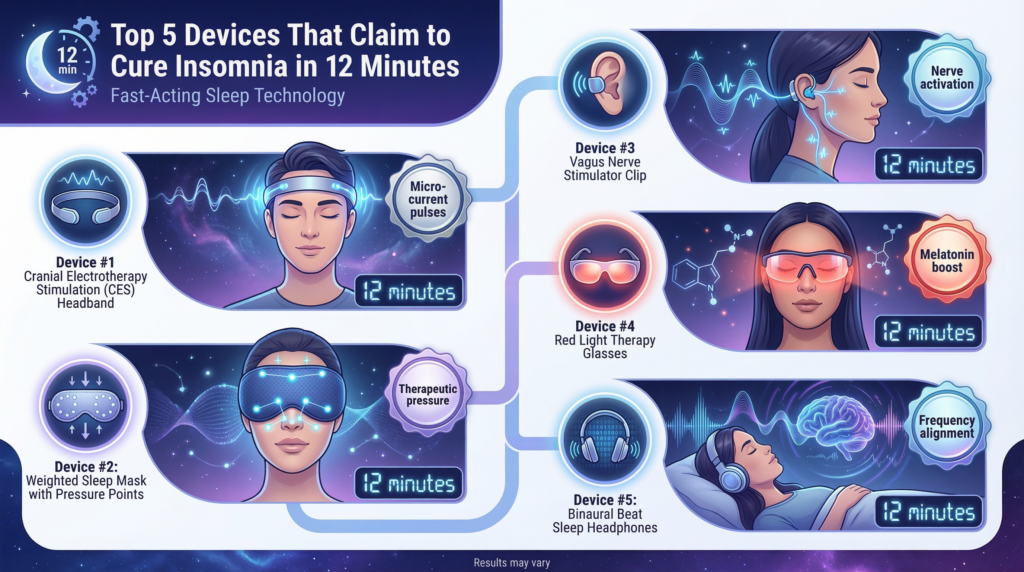
Here are the five devices we’ll be reviewing in detail:
- Alpha-Stim AID Cranial Electrotherapy Stimulator
- Dodow Sleep Aid Device
- Muse S Headband
- Sensate Relaxation Device
- Fisher Wallace Stimulator
Each takes a different approach to calming the mind and body before sleep.
Detailed Reviews
1. Alpha-Stim AID – Best for Stress-Induced Insomnia
The Alpha-Stim AID is a medical-grade cranial electrotherapy stimulation (CES) device. It delivers very low-level electrical currents to the brain through ear clips, designed to reduce anxiety and promote relaxation.
How It Works
CES has been studied for decades and is believed to influence brainwave activity associated with calmness and sleep. Sessions typically last 20 minutes, but many users report noticeable relaxation much sooner.
Pros
- Strong clinical backing
- Effective for anxiety-driven insomnia
- Non-drug, non-invasive
Cons
- Expensive
- Requires consistent use
- Medical-device feel may intimidate some users.
Best For:
Professionals and older adults whose insomnia is closely tied to chronic stress or anxiety.
👉 Designed for fast nighttime calm—ideal when you need sleep now, not weeks from now.
2. Dodow – Best Simple, Low-Tech Option
Dodow is a small, puck-shaped device that projects a rhythmic blue light onto the ceiling. Users sync their breathing to the expanding and contracting light pattern.
How It Works
The light-guided breathing slows respiration, activates the parasympathetic nervous system, and encourages sleep onset—often within minutes.
Pros
- Extremely easy to use
- No wearables required
- Affordable compared to medical devices
Cons
- Less effective for severe anxiety
- Requires visual focus (not ideal for everyone)
Best For:
Students, new parents, or anyone overwhelmed by complicated routines.
👉 If racing thoughts keep you awake, this method may help your body relax faster.
3. Muse S Headband – Best for Mindfulness-Based Sleep
The Muse S is a brain-sensing headband that tracks EEG activity and provides real-time audio feedback to guide relaxation and meditation.
How It Works
The device helps users recognize when their mind is active versus calm, gently guiding them into a more relaxed state favorable to sleep.
Pros
- Data-driven feedback
- Combines meditation and sleep tracking
- Useful beyond sleep
Cons
- Learning curve
- Higher price point
- Requires wearing a headband
Best For:
Tech-savvy users who enjoy biofeedback and mindfulness practices.
👉 Learn how this technique supports natural relaxation without medication.
4. Sensate Relaxation Device – Best for Nervous System Reset
Sensate is a pebble-shaped device placed on the chest. It emits soft vibrations from designed to activate the vagus nerve, helping the body shift out of fight-or-flight mode.
How It Works
Low-frequency vibrations, paired with soundscapes, calm the nervous system quickly—sometimes in under 15 minutes.
Pros
- No mental effort required
- Deep physical relaxation
- Great for stress overload
Cons
- Less effective for cognitive racing thoughts
- Requires lying down
Best For:
Overstimulated professionals and parents who feel physically tense at bedtime.
👉 Designed for fast nighttime calm—ideal when you need sleep now, not weeks from now.
5. Fisher Wallace Stimulator – Best for Clinical-Grade Support
The Fisher Wallace Stimulator is another CES device used for anxiety, depression, and insomnia. It delivers mild electrical stimulation through electrodes placed on the temples.
How It Works
By influencing neurotransmitter function, it aims to calm overactive brain patterns that interfere with sleep.
Pros
- Backed by clinical research
- Drug-free
- Addresses mood and sleep together
Cons
- Expensive
- Requires electrodes and setup
- May feel intimidating at first
Best For:
Individuals with long-term insomnia are tied to mood disorders.
Comparison Table
| Alpha-Stim AID | Moderate | Fast | Anxiety-related insomnia | High |
| Dodow | Very Easy | Moderate-Fast | General sleep difficulty | Low |
| Muse S | Moderate | Moderate | Mindfulness & sleep training | High |
| Sensate | Easy | Fast | Physical stress & tension | Medium |
| Fisher Wallace | Moderate | Fast | Clinical insomnia support | High |
👉 Discover why so many people are turning to this sleep method instead of pills.
Buying Guide: How to Choose the Right Device
When choosing a sleep device, consider the following:
Identify the Root Cause
Is your insomnia mental (racing thoughts), physical (tension), or emotional (stress and anxiety)?
Consider Comfort
Some people dislike wearables or electrodes, while others don’t mind.
Budget Realistically
More expensive doesn’t always mean better—it means different technology.
Set Expectations
Devices can help relaxation quickly, but consistency improves results.
If you’re searching for how to cure insomnia in 12 minutes, these devices aim to accelerate relaxation rather than force sleep, which is often more effective in the long term.
Final Thoughts
The idea of curing insomnia in minutes sounds bold—and in some cases, unrealistic. However, many of these devices succeed not by “forcing” sleep, but by calming the nervous system fast enough that sleep becomes possible.
For people who’ve exhausted conventional methods and want drug-free options, these devices offer encouraging alternatives. It depends on your stress level, comfort preferences, and underlying sleep challenges.
Bottom line:
There’s no universal remedy, but the right device can dramatically shorten the time it takes to fall asleep—sometimes within minutes.
👉 If insomnia is affecting your focus, mood, and energy, this solution may be worth trying tonight.