For many people, melatonin is the first supplement they try for sleep.
And for some, it works—at least initially.
But for others, melatonin stops helping, causes grogginess, or doesn’t address deeper problems like anxiety or interrupted sleep. That’s when people look for stronger, non-prescription options that avoid antihistamine sedation.
To find the right fit, it’s important to look closer at herbal and supplement-based sleep aids beyond melatonin. This section analyzes how they work, who may benefit most, and clarifies why being ‘stronger’ is not always about sedation.
Effectiveness can vary greatly from person to person, depending on individual differences and the underlying causes of sleep disturbances. This highlights the importance of personalizing solutions to meet specific needs, ensuring that the selected option aligns with the user’s unique situation.
How We Evaluated These Sleep Aids
Before listing products or ingredients, it’s important to clarify what “strongest” actually means in the context of supplements.
Evaluation Criteria
We focused on options that:
- Support sleep without prescription medication.
- Avoid habit-forming sedatives
- Address anxiety, stress, or nervous system overactivity.
- They are commonly available over the counter. It’s crucial to ensure these supplements have a reasonable safety profile for adults aged 45–65. Moreover, consider potential interactions with existing medications or pre-existing health conditions to make informed choices and build trust.
Watch Before You Read: Millions rely on melatonin to fall asleep — but for many, it eventually stops working. In this short video, discover stronger herbal and supplement-based sleep aids that go beyond melatonin to help you fall asleep faster and stay asleep longer.
Ready to try a herbal formula that goes beyond melatonin? 👉 Discover Yusleep — A Natural Blend for Deep, Restorative Sleep
What Makes a Herbal or Supplement Sleep Aid “Stronger”?
Unlike pharmaceuticals, supplements don’t increase effectiveness by simply increasing the dose.
In fact, higher doses often:
- Increase side effects
- Disturb natural sleep rhythms.
- Worsen next-day fatigue
The most effective non-melatonin options tend to work by:
- Calming the nervous system
- Reducing nighttime hyperarousal
- Supporting sleep continuity rather than sedation
This distinction matters—especially for chronic insomnia.
Top Picks: Herbal & Supplement-Based Sleep Aids Beyond Melatonin
Below are commonly used non-melatonin sleep-support options, categorized by mechanism of action rather than sedative potency. I also have a guide that breaks down the top 10 natural sleep supplements, explains how they work and who they’re best for, and helps you choose the natural sleep aid that’s right for your specific sleep challenge.
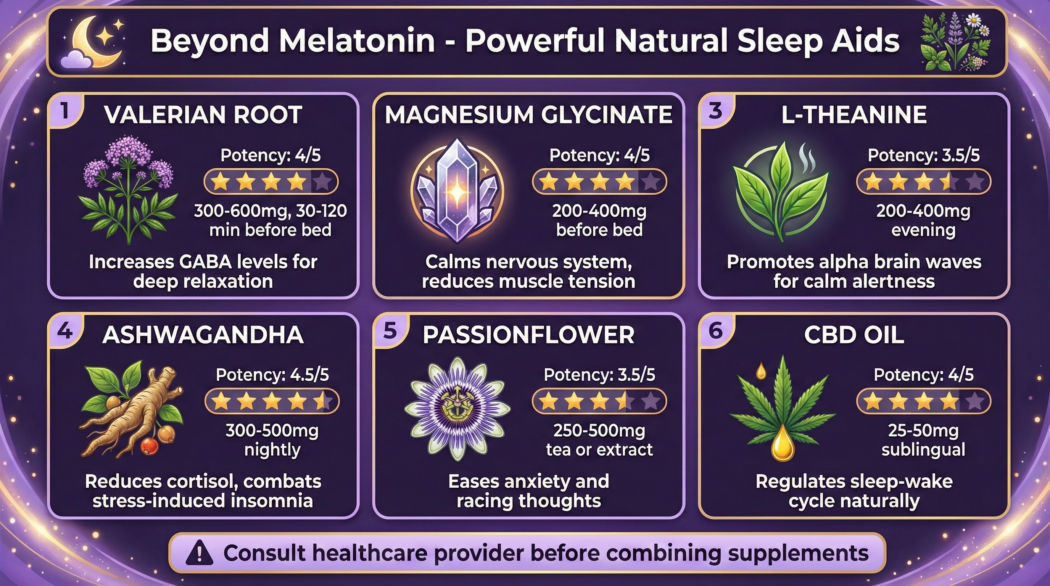
Valerian Root
How It Works
Valerian influences GABA activity in the brain, which plays a key role in relaxation and sleep initiation.
Why It’s Considered “Stronger”
- More noticeable calming effect than low-dose melatonin for some users
- Can reduce sleep latency
- Often paired with hops or lemon balm.
Drawbacks
- Strong smell
- Mixed research results
- Can cause vivid dreams or grogginess in some users
Best for:
People with difficulty falling asleep due to restlessness rather than anxiety.
Magnesium (Glycinate or Threonate)
How It Works
Magnesium supports nervous system regulation, muscle relaxation, and stress reduction.
Why It’s Considered “Stronger”
- Addresses core tension and stress
- Improves sleep quality rather than sedation
- Well-tolerated long-term
Drawbacks
- Subtle effects
- Requires consistency
- Wrong forms (oxide, citrate) may cause GI upset.
Best for:
People with stress-related sleep problems, muscle tension, or light-interrupted sleep.
L-Theanine
How It Works
L-theanine promotes alpha brain waves associated with calm alertness.
Why It’s Considered “Stronger”
- Reduces racing thoughts
- Improves sleep onset without sedation
- Often effective when anxiety is the primary driver
Drawbacks
- Doesn’t “force” sleep
- Effects vary by individual.
Best for:
Anxiety-driven insomnia and nighttime overthinking.
Apigenin (Chamomile Extract)
How It Works
Apigenin binds to benzodiazepine receptors in the brain, fostering tranquility.
Why It’s Considered “Stronger”
- More concentrated than chamomile tea
- Supports calm without next-day grogginess
- Works synergistically with magnesium or L-theanine
Drawbacks
- Less effective for severe insomnia
- Mild effects alone
Best for:
People sensitive to medications who want gentle but noticeable calm.
GABA Supplements (Selective Use)
How It Works
GABA is the brain’s primary inhibitory neurotransmitter.
Why It’s Considered “Stronger”
- Can reduce physical tension
- May help with sleep onset for some users
Drawbacks
- Limited ability to cross the blood-brain barrier
- Inconsistent results
- Can cause paradoxical effects in anxious individuals
Best for:
Situational stress rather than chronic insomnia.
When melatonin and standard supplements stop working, the issue is often not the product—but the underlying cause of insomnia.
This guide explains the root causes of chronic insomnia and why many sleep aids fail long-term.
👉 Root Causes of Chronic Insomnia & What Actually Helps
Detailed Reviews: Why Some Supplements Help More Than Others
Sedation vs Sleep Quality
Many people searching for the strongest over-the-counter sleep aid are actually seeking refreshing sleep, not unconsciousness.
Supplements that:
- Calm the nervous system
- Reduce nighttime alertness
- Improve sleep consistency
- Improve diet
- Reducing overall stress
Tend to outperform sedating OTC prescription sleep aids over time. Read the complete guide that breaks down the top 10 natural sleep supplements — matched to different sleep needs and sleep problems.
Why Combining Ingredients Often Works Better
Multi-ingredient formulas often outperform single supplements because they:
- Address multiple pathways (stress, tension, mental alertness)
- Require lower doses of each ingredient.
- minimize dependence on sedation.
This is why many people move toward non-pill, system-focused approaches after cycling through individual supplements. Additionally, incorporating lifestyle, behavioral, or environmental changes can further enhance sleep quality.
For example, establishing a relaxing bedtime routine, reducing screen time before sleep, maintaining a consistent sleep schedule, and optimizing your sleep environment by minimizing noise and light can all contribute to better sleep. These strategies empower you with a broader toolkit to tackle sleep issues effectively.
Comparison Table: Herbal & Supplement Sleep Aids
| Valerian Root | Sleep onset | Restlessness | Moderate |
| Magnesium Glycinate | Nervous system calm | Stress-related insomnia | Low |
| L-Theanine | Mental quieting | Anxiety-driven insomnia | Very Low |
| Apigenin | Relaxation | Light sleep disruption | Very Low |
| GABA | Physical relaxation | Situational stress | Variable |
Buying Guide: How to Choose the Right Option
Before purchasing, consider:
1. What’s Driving Your Insomnia?
- Anxiety → calming supplements
- interrupted sleep → nervous system support
- Circadian disruption → timing and consistency
2. Avoid “Mega-Dose” Formulas
Higher doses don’t equal better sleep.
3. Look for Transparency
Clear labeling, tested ingredients, and realistic claims matter.
If you sleep enough hours but still wake up tired, sleep quality—not supplement strength—may be the missing piece.
👉 Learn why sleep fragmentation matters more than sleep duration for feeling rested.
When People Look Beyond Supplements Entirely
After trying melatonin, valerian, magnesium, and combinations, many people reach a familiar conclusion:
“I’m calmer—but my sleep still isn’t consistent.”
This is often when the emphasis shifts from what to take to how to support sleep naturally.
When supplements aren’t enough, many people explore non-habit-forming approaches designed to support nighttime calm rather than force sleep.
👉 This in-depth section explores one such approach and how it compares to traditional supplements.
As we finish up, it’s worth asking: are herbal sleep aids truly stronger than melatonin, or is their benefit found elsewhere?
Herbal and supplement-based sleep aids can be more effective than melatonin for many people—but not because they’re stronger.
They work better when they:
- Address stress and anxiety.
- Support the nervous system.
- Improve sleep continuity
For chronic insomnia, the goal is not just to find the strongest over-the-counter sleep aid, but to determine the underlying causes of disrupted sleep and address them effectively. Understanding this difference is often what leads to lasting improvements.
To take the following steps, consider tracking your sleep patterns and identifying any recurring issues. Keeping a sleep diary can be a practical tool to notice patterns in your sleep behavior. Additionally, if you experience persistent sleep problems, consulting a healthcare professional can provide tailored advice and help you explore further options beyond supplements.
Most people move beyond melatonin when their sleep issues become multi-factorial — not because melatonin “failed,” but because they need broader support.