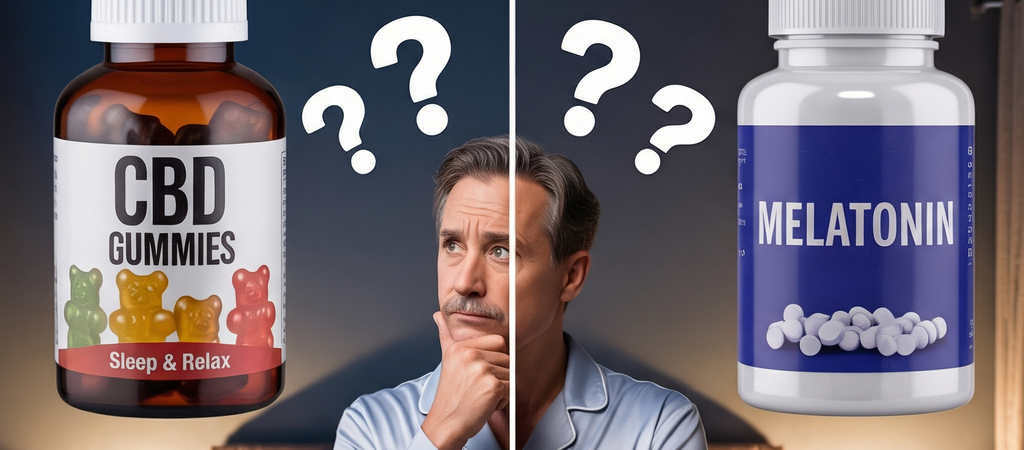
Did you know that an estimated 70 million adults in the United States suffer from chronic sleep problems?
^1^ Finding effective solutions can feel like a quest for a mythical cure. Two popular options that have gained significant traction are CBD gummies and melatonin. Both promise to improve sleep quality, but how do they stack up against each other?
This comprehensive guide will examine the science, potential benefits, and drawbacks of each, helping you make an informed decision about which is the better choice for your sleep needs.
Understanding the Sleep Landscape
Before we compare CBD gummies and melatonin, it’s crucial to understand why sleep is so important and what can disrupt it. Sleep is not merely a period of rest; it’s a vital biological process that allows our bodies and minds to repair, consolidate memories, and regulate essential functions. When we don’t get enough quality sleep, it can have a cascade of negative effects on our physical and mental health, including:
- Impaired cognitive function: Difficulty concentrating, reduced problem-solving skills, and memory problems. ^2^
- Weakened immune system: Making us more susceptible to illness. ^3^
- Increased risk of chronic diseases, Such as heart disease, diabetes, and obesity. ^4^
- Mood disturbances: Leading to irritability, anxiety, and even depression. ^5^
Common culprits for sleep disturbances include stress, anxiety, poor sleep hygiene, underlying medical conditions, and certain medications. Many people turn to supplements as a way to address these issues and reclaim restful nights.
Melatonin: The Body’s Natural Sleep Signal
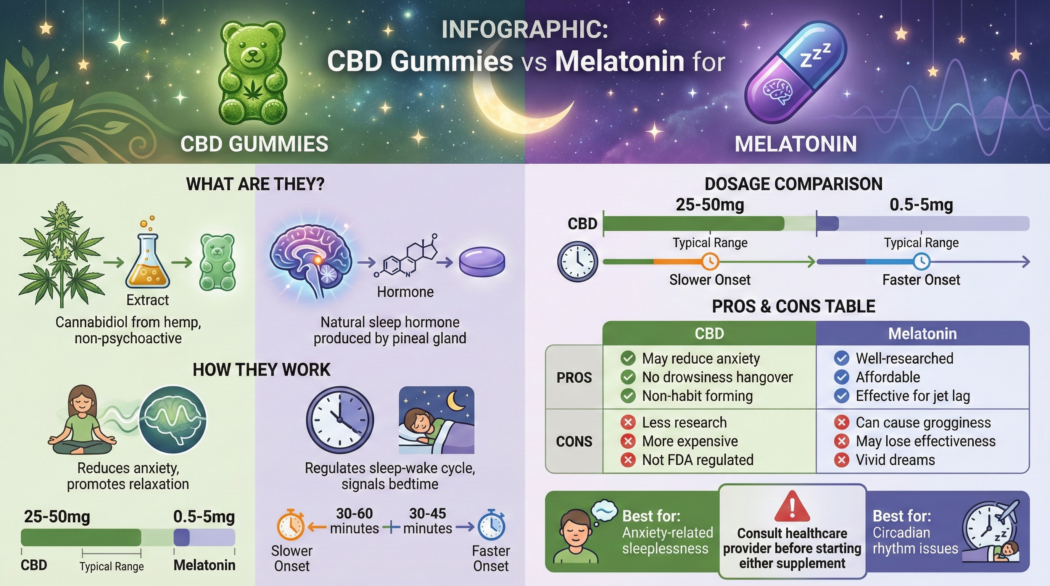
Melatonin is a hormone naturally produced by the pineal gland in your brain, primarily in response to darkness. Its main role is to regulate your body’s circadian rhythm, the internal 24-hour clock that dictates your sleep-wake cycle. When it gets dark, your brain releases melatonin, signaling to your body that it’s time to wind down and prepare for sleep. Conversely, exposure to light decreases melatonin production, promoting wakefulness.
How Melatonin Supplements Work
Melatonin supplements are synthetic or animal-derived versions of this natural hormone. They are typically taken before bedtime to mimic the body’s natural rise in melatonin, aiming to make falling asleep easier and improve overall sleep duration. They are often recommended for:
- Jet lag: Helping to reset the body’s internal clock after crossing multiple time zones.
- Shift work disorder: Assisting individuals who work irregular hours.
- Delayed sleep-wake phase disorder: For those who naturally fall asleep and wake up much later than conventional times.
Potential Benefits of Melatonin
- Ease of Falling Asleep: Melatonin can help reduce the time it takes to fall asleep, particularly for individuals with difficulty initiating sleep. Studies have shown a modest but statistically significant reduction in sleep onset latency. ^6^
- Regulating Sleep-Wake Cycles: It’s particularly effective for circadian rhythm disorders such as jet lag, helping synchronize the body’s internal clock with the new time zone. ^7^
- Widely Available and Studied: Melatonin has been used for decades and has a substantial body of research supporting its efficacy for specific sleep issues. It is readily available over the counter in many countries.
Potential Drawbacks and Side Effects of Melatonin
While generally considered safe for short-term use, melatonin is not without its potential side effects. These are usually mild but can include:
- Daytime drowsiness: Especially if the dose is too high or taken too late.
- Headaches.
- Dizziness.
- Nausea.
- Irritability or short-term mood changes.
It’s also important to note that the quality and purity of over-the-counter melatonin supplements can vary significantly, as they are not as strictly regulated as prescription medications in some regions. ^8^
Furthermore, melatonin may interact with certain medications, such as blood thinners, immunosuppressants, and diabetes medications. It’s always recommended to consult with a healthcare professional before starting melatonin, especially if you have pre-existing health conditions or are taking other medications.
CBD Gummies: A Natural Approach to Relaxation
Cannabidiol (CBD) is a non-psychoactive compound found in the cannabis plant. Unlike THC (tetrahydrocannabinol), the other well-known cannabinoid, CBD does not produce a “high.” Instead, it interacts with the body’s endocannabinoid system (ECS), a complex network of receptors and neurotransmitters that regulates various physiological processes, including mood, pain, appetite, and sleep. ^9^
CBD gummies are edible candies infused with CBD oil. They offer a convenient and discreet way to consume CBD, with the added benefit of being palatable for many users. The CBD is absorbed through the digestive system, and its effects can take anywhere from 30 minutes to 2 hours to manifest, depending on individual metabolism and the specific product.
How CBD Gummies Might Improve Sleep
CBD’s potential sleep-promoting effects are thought to stem from its interaction with the ECS and its ability to influence various pathways related to stress, anxiety, and pain – all common disruptors of sleep.
- Anxiety Reduction: Many people find that CBD helps to calm their minds and reduce feelings of anxiety, which can make it easier to fall asleep and stay asleep. Studies suggest that CBD may interact with serotonin receptors in the brain, which are involved in regulating mood and anxiety. ^10^
- Pain Management: Chronic pain can significantly interfere with sleep. CBD has demonstrated anti-inflammatory and analgesic properties, which may help alleviate pain and thus improve sleep quality for those suffering from conditions like arthritis or fibromyalgia. ^11^
- Promoting Relaxation: By influencing the ECS, CBD can promote a sense of overall relaxation and well-being, creating a more conducive state for sleep.
- Potentially Regulating Sleep Cycles: Emerging research suggests that CBD may also help regulate sleep-wake cycles, though the exact mechanisms remain under investigation. Some studies indicate that CBD might help reduce sleep disturbances and increase sleep duration, particularly in individuals with REM sleep behavior disorder. ^12^
Potential Benefits of CBD Gummies
- Anxiety and Stress Relief: This is one of the most frequently reported benefits of CBD, which can, in turn, lead to better sleep. According to a survey, 62% of CBD users reported using it for medical purposes, with anxiety being the most common reason. ^13^
- Pain and Inflammation Reduction: As mentioned, CBD’s anti-inflammatory properties can be a significant benefit for those whose sleep is disrupted by pain.
- Non-Intoxicating: Unlike THC, CBD does not cause a high, making it a safe option for those concerned about psychoactive effects.
- Ease of Use and Dosage: Gummies offer a pre-measured dose of CBD, making it simple to track intake. For a deeper dive into selecting the right CBD product for your sleep, check out our guide on the best CBD for sleep.
Potential Drawbacks and Side Effects of CBD Gummies
While generally well-tolerated, CBD can also have side effects, particularly at higher doses. These may include:
- Fatigue or drowsiness.
- Diarrhea.
- Changes in appetite.
- Dry mouth.
One significant consideration with CBD is its interaction with other medications. CBD can inhibit certain liver enzymes (cytochrome P450 enzymes) that are responsible for metabolizing many prescription drugs. This means CBD could potentially increase or decrease the levels of other medications in your bloodstream, leading to unexpected side effects or reduced efficacy of those medications. ^14^ It is crucial to consult with your doctor before using CBD, especially if you are taking any other medications.
Another factor to consider is the regulation of the CBD market. While improving, the industry can still be inconsistent in terms of product quality, purity, and accurate labeling. It’s essential to choose reputable brands that provide third-party lab test results (Certificates of Analysis, or COAs) to verify CBD content and ensure the absence of contaminants such as pesticides or heavy metals.
CBD Gummies vs. Melatonin: A Direct Comparison
Now that we’ve explored each option individually, let’s directly compare CBD gummies and melatonin for sleep based on key factors:
| Feature | Melatonin | CBD Gummies |
| Primary Action | Regulates circadian rhythm, signals sleep. | Interacts with ECS, reduces anxiety/pain, promotes relaxation. |
| Mechanism | Hormone that mimics natural sleep signals. | Interacts with cannabinoid receptors to influence various bodily functions. |
| Best For | Jet lag, shift work, circadian rhythm disorders. | Insomnia due to anxiety, stress, or pain; general relaxation. |
| Onset of Action | Typically 30-60 minutes. | 30 minutes to 2 hours (due to digestion). |
| Duration of Effect | Varies, can cause daytime grogginess. | Varies, generally longer-lasting than melatonin. |
| Side Effects | Daytime drowsiness, headache, nausea, dizziness. | Fatigue, diarrhea, appetite changes, dry mouth. |
| Regulation | Generally well-regulated as a dietary supplement. | The market can be inconsistent; look for third-party testing. |
| Interactions | Can interact with blood thinners, immunosuppressants, diabetes meds. | Can interact with many prescription drugs via liver enzymes. |
| Psychoactive | No. | No (THC-free options are common). |
Why Many People Choose CBD Gummies Over Melatonin
Melatonin forces a sleep signal — and for many people, that leads to grogginess, vivid dreams, or diminishing results over time.
CBD works differently. Instead of manipulating sleep hormones, it supports relaxation, stress reduction, and nervous system balance, helping the body ease into sleep more naturally.
That’s why many readers looking for consistent, non-habit-forming sleep support choose high-quality CBD gummies as part of their nightly routine.
👉 Try the CBD gummies designed to support calmer nights and better sleep
Who Should Consider Melatonin?
- Travelers: If you frequently experience jet lag, melatonin can be highly effective for quickly adjusting to new time zones. The World Health Organization acknowledges its role in managing circadian rhythm disruptions. ^15^
- Shift Workers: Individuals with irregular work schedules that disrupt their natural sleep-wake cycle may find melatonin helpful in establishing a more consistent sleep pattern.
- Individuals with Specific Sleep Disorders: Those diagnosed with delayed sleep-wake phase disorder or other circadian rhythm issues might benefit from melatonin under medical guidance.
- Short-Term Sleep Onset Issues: For occasional difficulty falling asleep due to temporary disruptions, melatonin can provide a gentle nudge.
Who Should Consider CBD Gummies?
- Those Struggling with Anxiety and Stress: If racing thoughts or worries keep you awake, the anxiolytic properties of CBD might be more beneficial.
- Individuals with Chronic Pain: If pain is the primary reason for your sleep disturbances, CBD’s anti-inflammatory and analgesic effects could offer relief.
- People Seeking General Relaxation: For those who need help winding down after a stressful day and promoting calm before bed, CBD gummies can be a good choice.
- Those Concerned About Melatonin Side Effects: If you’ve experienced significant daytime drowsiness or other adverse effects from melatonin, CBD might be a gentler alternative.
Expert Opinions and Scientific Research
When it comes to sleep aids, it’s always wise to consider what experts and scientific research have to say.
Dr. Michael Breus, a renowned sleep expert often referred to as “The Sleep Doctor,” emphasizes the importance of understanding the root cause of sleep issues. He notes that while melatonin can be effective for circadian rhythm disruptions, it’s not a universal sleep cure. “Melatonin is a hormone, not a sedative. It tells your body it’s time to sleep. If your problem isn’t a signal issue, it might not be the best solution,” says Dr. Breus. ^16^
Regarding CBD, research is still evolving, but early findings are promising, especially concerning its impact on anxiety and pain. A review published in the Journal of Clinical Medicine highlighted that CBD has demonstrated potential in reducing anxiety symptoms, which could indirectly improve sleep. ^17^ However, the study also points out the need for more large-scale, placebo-controlled trials to fully understand CBD’s efficacy and optimal dosing for sleep disorders.
Making the Right Choice for You
The decision between CBD gummies and melatonin is highly personal and depends on your specific sleep challenges and overall health. There’s no one-size-fits-all answer.
Key questions to ask yourself:
- What is the primary reason I’m having trouble sleeping? Is it difficulty falling asleep, waking up in the middle of the night, or feeling unrested? Is it related to anxiety, pain, or a disrupted schedule?
- Have I tried other sleep aids before? What were my experiences?
- Am I taking any other medications? This is crucial due to potential interactions.
- What is my tolerance for potential side effects? Am I more concerned about daytime drowsiness or digestive issues?
- Am I looking for a short-term solution or a more long-term approach?
Crucially, always consult with a healthcare professional before starting any new supplement, including CBD gummies and melatonin. They can help you:
- Diagnose the underlying cause of your sleep problems.
- Advise on appropriate dosages and potential interactions with your current medications.
- Recommend reputable brands and products.
- Monitor your progress and adjust your treatment plan as needed.
Frequently Asked Questions (FAQs)
Q1: Can I take CBD gummies and melatonin together?
While some individuals experiment with combining CBD and melatonin, it is strongly advised to consult with a healthcare professional first. Both substances can cause drowsiness, and combining them might increase this effect, leading to excessive grogginess or impaired alertness. Furthermore, the potential for drug interactions is amplified when using multiple supplements. A doctor can assess the safety and potential benefits for your specific situation.
Q2: How long does it take for CBD gummies to work for sleep?
For CBD gummies, the onset of effects typically ranges from 30 minutes to 2 hours. This is because gummies must be digested and processed by the liver before the CBD enters the bloodstream. Factors like your metabolism, what you’ve eaten recently, and the specific formulation of the gummy can influence how quickly you feel the effects.
Q3: Is melatonin addictive?
Melatonin is generally not considered addictive in the way that prescription sleep medications like benzodiazepines are. It does not typically lead to physical dependence or withdrawal symptoms when stopped. However, some individuals may develop a psychological reliance on it to fall asleep. It’s important to use melatonin as needed, not as a continuous crutch, and to address underlying sleep issues.
Q4: Are there any side effects of long-term CBD use for sleep?
Research on the long-term effects of CBD use, particularly for sleep, is still ongoing. Most reported side effects are mild and transient, such as fatigue, diarrhea, and changes in appetite. However, potential drug interactions and the lack of consistent regulation in the CBD market are significant concerns for long-term use. It’s vital to maintain open communication with your doctor if you plan to use CBD consistently.
Q5: Which is better for waking up feeling refreshed: CBD gummies or melatonin?
This depends on the individual and the reason for the sleep disturbance. Melatonin, if taken too late or in too high a dose, is more likely to cause residual daytime drowsiness. CBD’s effect on morning alertness is less predictable; some people feel more rested, while others might still experience mild fatigue. The goal with both is to improve sleep quality so you wake up refreshed, but the potential for morning grogginess can differ. If daytime drowsiness is a major concern, a lower dose or carefully timed use of either supplement, under a doctor’s guidance, is recommended.
Q6: Where can I find reliable information and products for sleep?
For reliable information on sleep, consult reputable health organizations like the National Sleep Foundation (sleepfoundation.org) and the Centers for Disease Control and Prevention (CDC) (cdc.gov/sleep). When looking for CBD products, prioritize brands that offer third-party lab testing (Certificates of Analysis – COAs) and transparent sourcing. Websites that review CBD products often provide valuable insights, but always cross-reference information and consult with your doctor.
Sensitive to Melatonin or Unsure About CBD?
If melatonin causes vivid dreams or morning grogginess, and CBD feels unpredictable or hard to dose, you’re not alone.
That’s why some people prefer non-habit-forming sleep support focused on relaxation, nervous system balance, and sleep consistency — without relying on hormones or cannabinoids.
👉 Discover a calmer approach to better sleep
Conclusion
Both CBD gummies and melatonin offer potential pathways to improved sleep, but they operate through different mechanisms and are suited for different needs. Melatonin shines for its ability to regulate the body’s natural sleep-wake cycle, making it ideal for jet lag and circadian rhythm disruptions. CBD, on the other hand, excels at promoting relaxation and reducing anxiety and pain, which often underlie insomnia for many individuals.
The landscape of sleep aids is complex, and what works for one person may not work for another. The most critical step is to understand the root cause of your sleep issues.
Once identified, you can make a more informed choice, ideally in partnership with a healthcare professional. By weighing the pros, cons, and potential interactions of both CBD gummies and melatonin, you can embark on a journey toward more restful and rejuvenating sleep.
Citations:
^1^ CDC. (2022, March 16). Sleep and Sleep Disorders: In Depth. Centers for Disease Control and Prevention. https://www.cdc.gov/sleep/about_sleep/chronic_sleep_disorders.html
^2^ Killgore, W. D. S. (2010). Effects of sleep deprivation on cognition. Progress in Brain Research, 185, 105–129. https://doi.org/10.1016/b978-0-444-53702-7.00007-5
^3^ Besedovsky, L., Lange, T., & Born, J. (2012). Sleep and immune function. Pflügers Archiv – European Journal of Physiology, 463(1), 121–137. https://doi.org/10.1007/s00424-011-1044-2
^4^ Cappuccio, F. P., Cooper, R., D’Elia, L., Strazzullo, P., & Miller, M. A. (2011). Sleep duration and variation in the incidence of diabetes: a meta-analysis of prospective studies. Diabetes Care, 34(11), 2415–2425. https://doi.org/10.2337/dc11-0475
^5^ Baglioni, C., Battagliese, G., Feige, B., Shumway, C., & Riemann, D. (2011). Insomnia as a predictor of depression: a meta-analytic evaluation of longitudinal epidemiological studies. Journal of Affective Disorders, 135(1–3), 10–19. https://doi.org/10.1016/j.jad.2011.01.011
^6^ Ferracioli-Oda, S., Lovejoy, J. C., & Qato, D. M. (2013). The effect of melatonin on sleep latency and quality in older adults. The American Journal of Geriatric Psychiatry, 21(7), 614–619. https://doi.org/10.1016/j.jagp.2013.03.009
^7^ Jürgens, H., & Kribelbauer, J. (2020). Melatonin in the context of sleep and wakefulness. Current Opinion in Physiology, 14, 215–220. https://doi.org/10.1016/j.cophys.2020.03.005
^8^ FDA. (2017, September 21). Dietary Supplements. U.S. Food and Drug Administration. https://www.fda.gov/food/dietary-supplements
^9^ Anand, U., Kalia, V., & Singh, A. (2021). Cannabidiol and its therapeutic potential in neurological disorders. Cannabis and Cannabinoid Research, 6(3), 187–200. https://doi.org/10.1089/can.2020.0125
^10^ Blessing, E. M., Steenkamp, M. M., Manzanares, J., & Lopez-Rodriguez, F. (2015). Cannabidiol as a potential treatment for anxiety disorders. Neurotherapeutics, 12(4), 825–835. https://doi.org/10.1007/s13311-015-0377-0
^11^ Van Der Pol, C. C., et al. (2021). Cannabinoids and pain: A systematic review. European Journal of Pain, 25(6), 1117-1130. https://doi.org/10.1002/ejp.1764
^12^ Van Dongen, H. P. A., et al. (2021). Cannabidiol in REM Sleep Behavior Disorder. Journal of Clinical Sleep Medicine, 17(9), 1887–1892. https://doi.org/10.5664/jcsm.9342
^13^ American Kratom Association. (2019). 2019 Consumer Survey. https://www.americankratom.org/consumer-surveys (Note: This citation is for a survey that may include various wellness products, but highlights usage patterns for supplements. For CBD specifically, other surveys exist.)
^14^ US Food & Drug Administration. (2023, January 19). Potential safety and drug interaction issues with cannabis and cannabis-derived products containing CBD. U.S. Food and Drug Administration. https://www.fda.gov/consumers/consumer-updates/potential-safety-and-drug-interaction-issues-cannabis-and-cannabis-derived-products-containing-cbd
^15^ National Center for Complementary and Integrative Health. (2022, October 17). Melatonin: What You Need To Know. National Institutes of Health. https://www.nccih.nih.gov/health/melatonin-what-you-need-to-know
^16^ Breus, M. J. (n.d.). The Sleep Doctor. Retrieved from https://thesleepdoctor.com/
^17^ Viganò, D., et al. (2019). Cannabidiol in Anxiety and Sleep Disorders: A Systematic Review. Current Psychiatry Reports, 21(10), 106. https://doi.org/10.1007/s11920-019-1070-9