
Did you know that about 20% of shift workers experience Shift Work Sleep Disorder (SWSD)? This condition impacts their sleep quality and daily life. This article explores the best treatments for SWSD, with insights into its causes, symptoms, and management strategies. We’ll cover treatment options from lifestyle adjustments to medical interventions, providing a comprehensive guide to help you manage and overcome SWSD.
Understanding Shift Work Sleep Disorder (SWSD)
What is Shift Work Sleep Disorder?
Shift Work Sleep Disorder (SWSD) affects people who work non-traditional hours, such as overnight, rotating, or early-morning shifts. SWSD disrupts the body’s natural sleep-wake cycle, leading to excessive sleepiness or insomnia. This disruption can impact both physical and mental health.
Causes and Risk Factors
The main cause of SWSD is the misalignment between the body’s circadian rhythm and the work schedule. The circadian rhythm is a natural process that regulates the sleep-wake cycle. Several factors can increase the risk of developing SWSD, including:
• Working night shifts or rotating shifts
• Working long hours
• Poor sleep hygiene
• Pre-existing sleep disorders
• Age
• Genetics
Pick one simple upgrade that makes these 10 tips actually stick—starting tonight.
Symptoms of Shift Work Sleep Disorder
Recognizing SWSD symptoms is crucial for timely diagnosis and treatment. Common symptoms include:
• Excessive sleepiness or fatigue during work hours
• Difficulty sleeping during the day
• Insomnia
• Difficulty concentrating
• Irritability
• Headaches
• Gastrointestinal problems
• Increased risk of accidents
Diagnosing Shift Work Sleep Disorder
The Diagnostic Process
Diagnosing SWSD involves evaluating the patient’s sleep patterns, work schedule, and medical history. Doctors often use a combination of methods, including:
• Medical History: A review of the patient’s sleep habits, work schedule, and any existing medical conditions.
• Sleep Diary: Patients may be asked to keep a sleep diary, recording their sleep and wake times, as well as any daytime sleepiness or symptoms.
• Actigraphy: A small device worn on the wrist to monitor sleep-wake cycles over several days or weeks.
• Polysomnography (Sleep Study): In some cases, a sleep study may be recommended to rule out other sleep disorders.
When to Seek Medical Advice
Seek medical advice if you experience symptoms of SWSD. Early diagnosis and treatment can improve your quality of life. Consult a healthcare professional if you consistently have daytime sleepiness, trouble sleeping, or other symptoms of SWSD.
Want an easier way to sleep after nights?
Take a look at the nightshift workers favorite supplement—it’s one of the simplest upgrades you can make for deeper daytime sleep.
Best Treatments for Shift Work Sleep Disorder
Lifestyle Adjustments and Sleep Hygiene
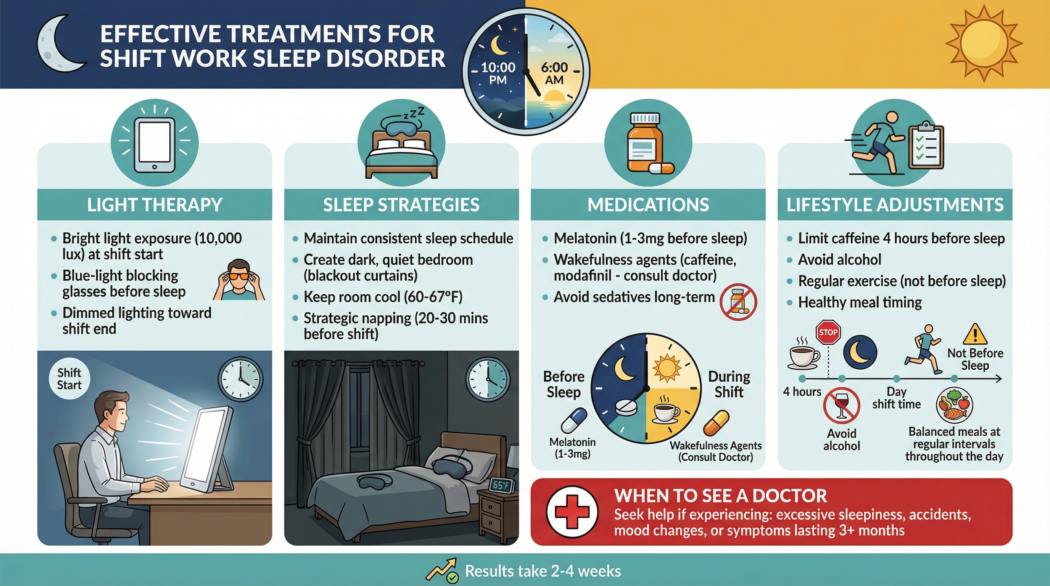
Lifestyle adjustments are often the first step in managing SWSD. These focus on improving sleep hygiene and creating a sleep-friendly environment. Several strategies can help:
• Maintain a Regular Sleep Schedule: Try to maintain a consistent sleep schedule, even on days off, to regulate your circadian rhythm.
• Create a Relaxing Bedtime Routine: Establish a relaxing bedtime routine to signal your body that it’s time to sleep. This could include a warm bath, reading a book, or listening to calming music.
• Optimize Your Sleep Environment: Ensure your bedroom is dark, quiet, and cool. Use blackout curtains, earplugs, or a white noise machine to create an optimal sleep environment.
• Avoid Caffeine and Alcohol Before Bed: Limit your intake of caffeine and alcohol, especially before bedtime, as these can disrupt sleep.
• Regular Exercise: Engage in regular physical activity, but avoid strenuous exercise close to bedtime.
Light Therapy
Light therapy can be an effective treatment for SWSD. It involves exposure to bright light at specific times to help regulate your circadian rhythm. This can include:
• Bright Light Exposure: Use a light box or expose yourself to bright light during your work hours to promote alertness.
• Light Timing: The timing of light exposure is critical. Consult with a sleep specialist to determine the appropriate timing for your work schedule.
Medications for Shift Work Sleep Disorder
Sometimes, medication is needed to manage SWSD symptoms. A doctor will prescribe the best option based on your symptoms and medical history. These can include:
• Melatonin: This is a hormone that regulates the sleep-wake cycle. Melatonin supplements can help regulate the circadian rhythm.
• Wakefulness-Promoting Agents: Medications like modafinil or armodafinil can help reduce excessive daytime sleepiness. These drugs work by promoting wakefulness and alertness.
• Sleeping Pills: Short-acting sleeping pills may be prescribed to help with insomnia. However, these should be used with caution and under a doctor’s supervision.
Cognitive Behavioral Therapy for Insomnia (CBT-I)
CBT-I is a form of psychotherapy that is effective in treating insomnia. It helps people identify and change thoughts and behaviors that contribute to sleep problems. CBT-I techniques include:
• Stimulus Control: This involves associating the bed with sleep and nothing else. Avoid activities like watching TV or working in bed.
• Sleep Restriction: Limiting the time spent in bed to match the actual sleep time.
• Relaxation Techniques: Practicing relaxation techniques like deep breathing or meditation to calm the mind and body.
• Cognitive Therapy: Identifying and changing negative thoughts about sleep.
Other Therapies and Interventions
Other therapies and interventions can also help manage SWSD. These may include:
• Chronotherapy: This involves gradually shifting the sleep-wake cycle later to align it with the desired sleep schedule.
• Napping: Strategically timed naps can help reduce daytime sleepiness. Keep naps short (20-30 minutes) to avoid disrupting nighttime sleep.
• Workplace Support: Employers can implement measures to support shift workers, such as providing rest areas, flexible scheduling, and educational programs.
The Importance of Professional Guidance
Consulting a Sleep Specialist
Consult a sleep specialist for an accurate diagnosis and personalized treatment plan. They can evaluate your symptoms, conduct tests, and recommend the most effective treatments for your needs.
Working with Your Doctor
Discuss your symptoms and concerns with your doctor. They can help you determine the best course of action and monitor your progress. Open communication with your healthcare provider is key to managing SWSD. They can also adjust your treatment plan as needed.
Preventing Shift Work Sleep Disorder
Strategies for Shift Workers
Shift workers can take steps to prevent SWSD or reduce its impact. These strategies include:
• Prioritize Sleep: Make sleep a priority and ensure you get enough rest.
• Follow Good Sleep Hygiene: Maintain good sleep hygiene practices, as mentioned earlier.
• Optimize Your Work Environment: Make sure your workplace supports alertness and productivity. This includes adequate lighting and breaks.
• Communicate with Your Employer: Discuss any concerns about your work schedule or sleep problems with your employer.
Employer Responsibilities
Employers play an important role in supporting shift workers. They can implement strategies such as:
• Flexible Scheduling: Offer flexible scheduling options to accommodate employees’ sleep needs.
• Education and Training: Provide education and training on sleep hygiene and SWSD.
• Rest Areas: Provide comfortable rest areas for employees to take breaks.
• Promote a Healthy Workplace Culture: Foster a workplace culture that values sleep and employee well-being.
Long-Term Management and Outlook
Managing SWSD Over Time
Managing SWSD is an ongoing process. It requires consistent effort and commitment to lifestyle changes and treatment. A long-term approach may involve:
• Regular Sleep Schedule: Continue to maintain a regular sleep schedule as much as possible.
• Monitoring Symptoms: Keep track of your symptoms and any changes in your sleep patterns.
• Adjusting Treatment: Adjust your treatment plan as needed, with guidance from your doctor.
Prognosis for SWSD
With proper treatment and management, people with SWSD can improve their sleep quality and overall well-being. The prognosis is good if the disorder is addressed early and effectively. Untreated SWSD can lead to serious health consequences, so prompt diagnosis and treatment are crucial.
Conclusion: Taking Control of Your Sleep
Shift Work Sleep Disorder can impact your life, but it is manageable. By understanding the causes, symptoms, and best treatments for SWSD, you can take control of your sleep and improve your health and well-being. Remember to consult a healthcare professional for personalized guidance and support.
Sleep during the day like it’s midnight.
If you work nights, your body’s daytime sleep is designed to help you unwind faster, stay asleep longer, and wake up less wrecked—without complicated routines.
✅ Great for blackout + noise + “tired but wired” nights
✅ Simple to use after your shift
✅ Thousands of night shifters love it (see why)
FAQs about Shift Work Sleep Disorder
What is the main cause of Shift Work Sleep Disorder (SWSD)?
The primary cause of SWSD is the misalignment between the body’s circadian rhythm and the work schedule, which disrupts sleep.
What are the common symptoms of Shift Work Sleep Disorder?
Common symptoms include excessive sleepiness, difficulty sleeping during the day, insomnia, and difficulty concentrating.
How is Shift Work Sleep Disorder diagnosed?
Diagnosis involves a review of medical history, sleep diary, and possibly actigraphy or a sleep study.
What lifestyle adjustments can help manage SWSD?
Lifestyle adjustments include maintaining a regular sleep schedule, creating a relaxing bedtime routine, and optimizing your sleep environment.
Are there any medications for Shift Work Sleep Disorder?
Yes, medications like melatonin and wakefulness-promoting agents, such as modafinil, may be prescribed.
What is Cognitive Behavioral Therapy for Insomnia (CBT-I)?
CBT-I is a form of psychotherapy that helps individuals identify and change thoughts and behaviors contributing to sleep problems, improving sleep quality.
Mayo Clinic – Shift work sleep disorder
National Sleep Foundation – Shift Work
American Academy of Sleep Medicine – Sleep Disorders
══════════════════════════════════════════