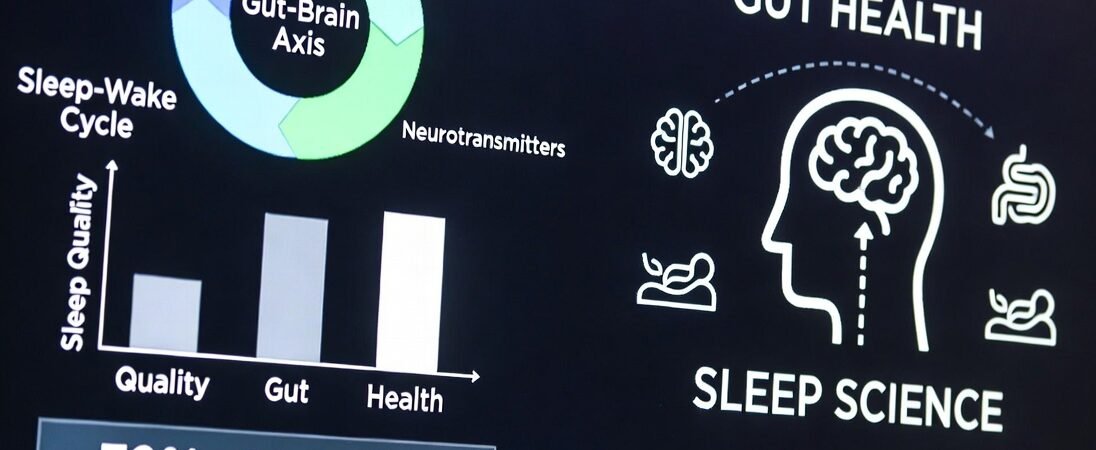
Gut Health and Sleep: The Surprising Science Behind the Microbiome–Insomnia Connection
If you’ve improved your bedtime routine, reduced screen time, managed stress — and still struggle to sleep — your gut may be the missing piece.
Sleep is not controlled solely by the brain. It’s the result of constant communication between multiple systems in the body. One of the most overlooked — yet scientifically significant — is gut health.
Your digestive system and your brain are deeply connected through what researchers call the gut–brain axis. When this system is out of balance, sleep can suffer in ways that routines and supplements alone can’t fully fix.
This article explains the real science behind the microbiome–insomnia connection, why gut health affects deep sleep and REM sleep, and how to support better sleep by restoring internal balance — naturally.
🎥 Watch This First
If you’ve improved your sleep habits but still struggle to rest, this short video explains how gut health quietly affects sleep quality — and why fixing sleep sometimes requires looking beyond routines and the brain alone.
🌙 Sleep isn’t just controlled by the brain — it’s influenced by your entire body. When gut signaling is off, deep sleep and REM sleep can suffer even with good habits.
👉 Improve your sleep with CBD gummies
Continue reading to learn how gut health affects sleep biology, and what you can do to support both your digestive system and your sleep naturally.
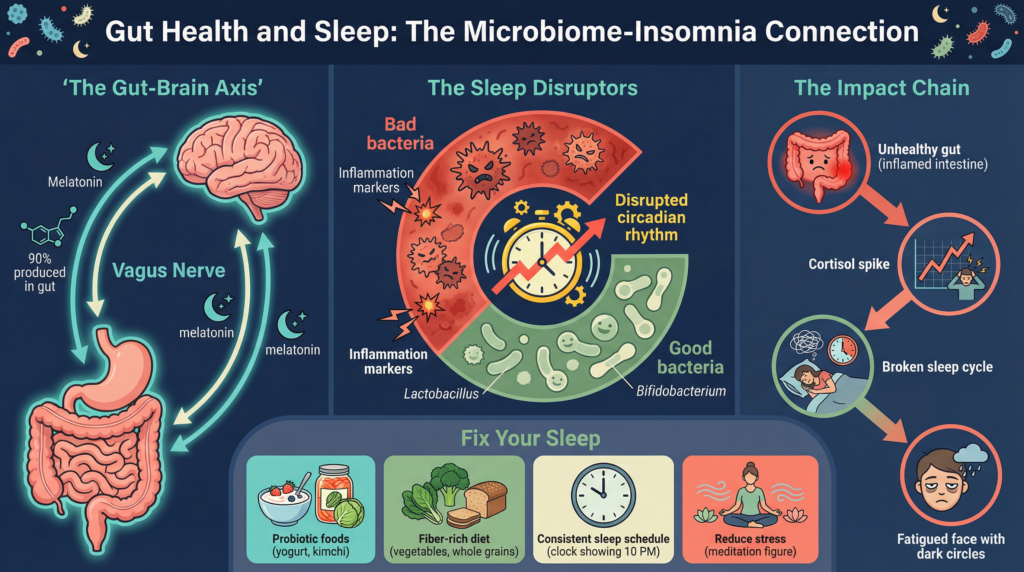
🧠 The Gut–Brain Axis: Why Your Digestive System impacts Sleep
Your gut is home to trillions of microorganisms that help regulate:
- Chemical messengers such as serotonin and GABA
- Immune and inflammatory responses
- Stress hormone signaling
- Circadian rhythm communication
In fact:
- Nearly 90% of serotonin (a precursor to melatonin) is produced in the gut.
- Gut bacteria influence the brain’s ability to enter calm, sleep-ready states.
- Inflammation originating in the gut can directly interfere with sleep intensity.
This constant two-way communication means that when the gut is stressed, inflamed, or imbalanced, the brain receives signals that keep it alert instead of relaxed — even at night.
Why Gut Imbalance Can Cause Chronic Insomnia
Poor gut health doesn’t just cause digestive symptoms. It can quietly disrupt sleep through multiple biological pathways.
1. Inflammation That Blocks Refreshing Sleep
Chronic low-grade inflammation interferes with deep sleep, the stage responsible for physical restoration. People may sleep for hours but wake up feeling unrefreshed.
2. Neurotransmitter Disruption
An imbalanced microbiome can reduce:
- Serotonin affects melatonin production.
- GABA, the brain’s primary calming chemical
This often leads to racing thoughts, anxiety at bedtime, or difficulty staying asleep.
3. Cortisol and Stress Signaling
Gut stress activates the body’s stress response. Elevated cortisol at night keeps the nervous system in alert mode, making it harder to fall or stay asleep.
4. Vagus Nerve Irritation
The vagus nerve connects the gut directly to the brain. When gut signaling is disrupted, sleep-regulatory signals become less effective.
This is why some people experience insomnia even when their lifestyle habits appear “healthy.”
🌙 How Gut Health Affects Deep Sleep and REM Sleep Differently
Not all sleep stages are affected equally.
- Deep sleep is highly sensitive to inflammation and physical stress.
- REM sleep is more sensitive to neurochemical equilibrium and mood management
Gut imbalance often reduces REM sleep first, which can lead to:
- elevated anxiety
- Emotional sensitivity
- Poor concentration
- Vivid or disrupted dreams
This explains why many people with gut issues report mental exhaustion even after sleeping for several hours.
👉 This connects directly to our guides on The Science of Deep Sleep and 5 Ways to Get More REM Sleep, where we explore these stages in more detail.
Signs Your Gut May Be Affecting Your Sleep
You don’t need severe digestive symptoms for gut health to influence sleep. Typical indicators include:
- Trouble falling asleep despite feeling tired
- Light or interrupted sleep
- Waking at the same time each night
- Nighttime anxiety without a clear cause
- Poor response to melatonin
- Feeling “wired but exhausted.”
If these sound familiar, addressing gut health may help explain why other strategies haven’t worked as well.
How to Support Gut Health for Better Sleep (Without Extremes)
Improving gut health for sleep doesn’t require detoxes or restrictive protocols. Small, consistent changes work best.
1. Align Meal Timing With Your Sleep Rhythm
Eating late at night signals “daytime” to the body. Aim to:
- Eat dinner at least 2–3 hours before bed.
- Keep nighttime digestion light.
This supports both gut repair and circadian rhythm alignment.
2. Feed Beneficial Gut Bacteria
A diverse microbiome supports neurotransmitter formation.
Focus on:
- Fiber-rich vegetables
- Fermented foods (if tolerated)
- Variety flawlessness
Consistency matters more than elimination.
3. Reduce Gut Irritants in the Evening
Alcohol, heavy meals, and excessive caffeine irritate the gut lining and disrupt sleep signaling.
Even reducing — not eliminating — these can noticeably improve sleep quality.
4. Lower Stress to Heal the Gut–Brain Loop
Stress alters gut permeability and microbiome balance.
Evening routines, breathwork, and gentle wind-down habits support both:
- Gut healing
- Nervous system calm
👉 This is where our guide on Evening Routines That Train Your Brain for Sleep fits naturally.
5. Support the Nervous System With Targeted Nutrients
Certain nutrients support both gut calm and sleep chemistry:
- Magnesium glycinate — relaxes muscles and nerves.
- L-theanine — reduces mental chatter.
- Lemon balm and valerian — calm gut-brain signaling
Balanced formulas like a all natural CBD formula without forcing sedation or dependency.
Why Gut Health Explains “Unfixable” Sleep Problems
Many chronic sleepers feel stuck because they’re addressing only one side of sleep — habits or mindset — while internal biology remains stressed.
Gut health helps explain:
- Why sleep routines sometimes plateau
- Why melatonin works briefly, then stops
- Why anxiety and insomnia often appear together
Sleep improves most reliably when internal systems and external habits are aligned.
How This Fits Into Your Sleep Journey
If gut health aligns with you, this is the recommended path:
1️⃣ Root Causes of Chronic Insomnia — identify hidden contributors
2️⃣ How to Reset Your Circadian Rhythm Naturally — restore timing signals
3️⃣ Gut Health and Sleep — address internal biology
4️⃣ The Science of Deep Sleep — improve physical restoration
5️⃣ 5 Ways to Get More REM Sleep — restore strength
Each step supports the next.
FAQs
Can gut health really cause insomnia?
Yes. Research shows gut imbalance affects neurotransmitters, inflammation, and stress hormones that regulate sleep.
Do probiotics help sleep?
They may help some people, but diet, stress reduction, and timing matter more than supplements alone.
Why does anxiety often come with gut-related insomnia?
The gut and brain share stress pathways. When gut signaling is disrupted, the nervous system stays alert.
How long does it take to see improvement?
Many people notice changes within 1–3 with regular assistance and support.
🌙 Conclusion: Sleep Requires Whole-Body Alignment
Sleep isn’t controlled by a single switch. It’s the result of multiple systems working together — the brain, the gut, the hormones, and the nervous system.
When gut health is overlooked, sleep often remains fragile. When it’s supported alongside healthy routines and circadian alignment, deep, restorative sleep becomes far more achievable.
You don’t need extreme fixes.
You need alignment — inside and out.
🌿 Next Steps
👉 Root Causes of Chronic Insomnia & What Actually Helps
👉 The Science of Deep Sleep: How to Wake Up Energized
👉5 Ways to Get More REM Sleep