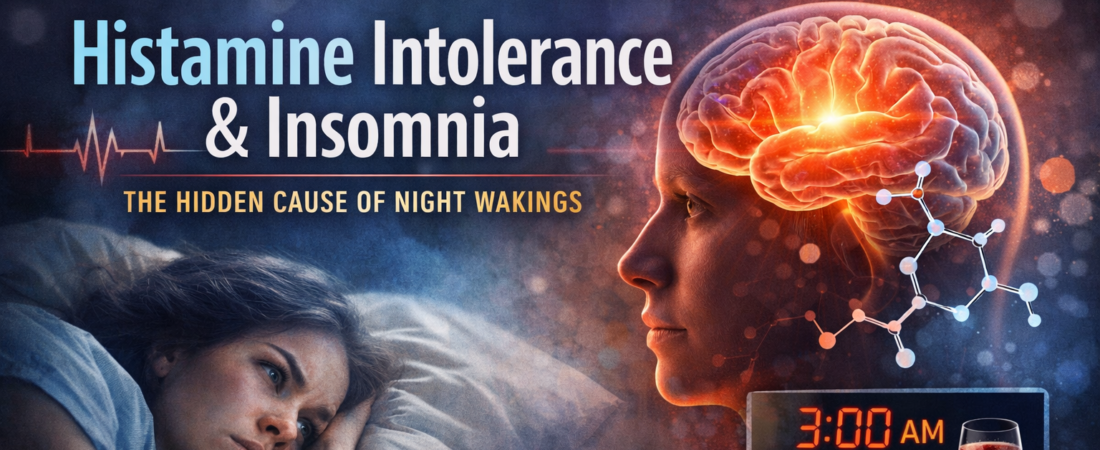
If you fall asleep easily but wake up suddenly in the middle of the night — pounding heart, mind alert, body tense — histamine may be the missing piece.
Many chronic sleepers blame night wakings on stress, anxiety, or blood sugar. While those variables might influence, histamine intolerance is an often-missed biological trigger.
Histamine is more than an allergy mediator; it’s a neurotransmitter influencing wakefulness, inflammation, gut health, and the nervous system. Elevated histamine at night causes fragmented and disrupts sleep.
To start off, let’s explore the role histamine plays in sleep—and how understanding its effects may result in better sleep quality.
What Is Histamine (and Why It Matters for Sleep)?
Histamine is a chemical messenger involved in various key functions, including:
- Immune response
- Digestion and stomach acid production
- Neurotransmission in the brain
- Regulation of the sleep–wake cycle
In the brain, histamine is wake-promoting. It helps keep you alert, focused, and responsive during the day.
That’s useful — until histamine levels stay high at night.
If histamine isn’t broken down properly, it can overstimulate the nervous system, making it hard to stay asleep.
Why Histamine Intolerance Often Causes Night Wakings
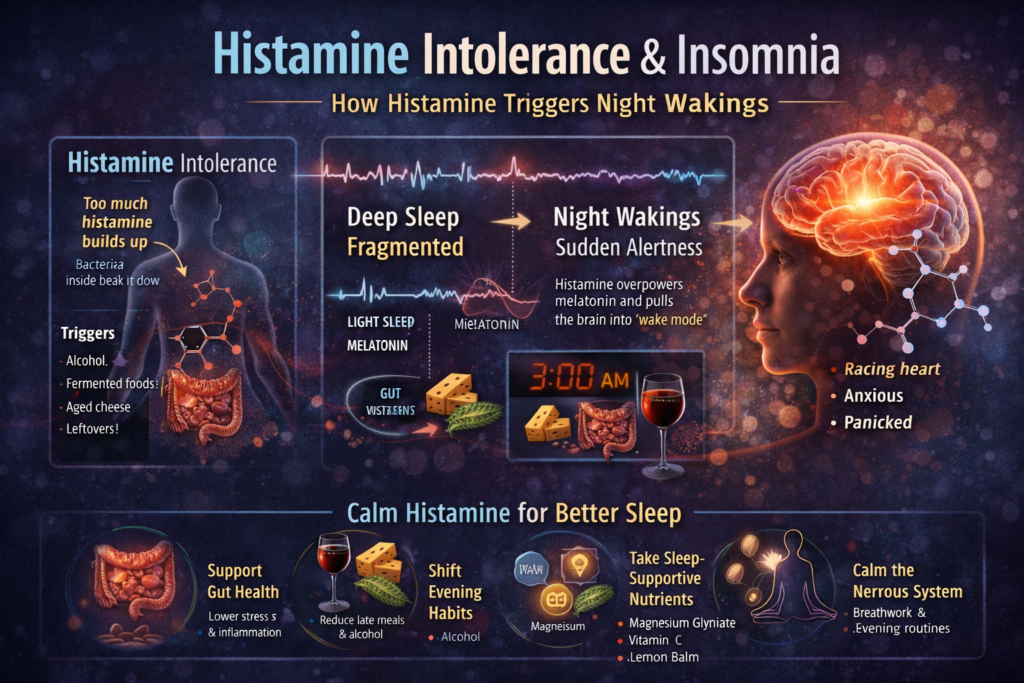
Histamine intolerance occurs when the body accumulates more histamine than it can effectively break down.
This typically happens due to:
- Reduced activity of the DAO enzyme (which breaks down histamine)
- Gut inflammation or dysbiosis
- Chronic stress and cortisol imbalance
- Certain foods, medications, or alcohol
- Ongoing low-grade inflammation
At night, histamine becomes especially disruptive because it directly opposes melatonin, the hormone that keeps you asleep.
As melatonin naturally rises overnight, histamine should fall. When it doesn’t, the result is often a sudden wake-up, usually between 2 and 4am.
Common Signs Histamine May Be Affecting Your Sleep
Histamine-related insomnia can vary widely, but here are the key signs you might notice to help you identify if histamine could be a factor in your sleep issues.
- Waking suddenly with a racing heart
- Feeling “alert” instead of groggy during night awakenings
- Nighttime anxiety or panic without a clear cause
- Flushing, itching, congestion, or warmth at night
- Headaches or pressure upon waking
- Sensitivity to wine, fermented foods, or leftovers
- Sleep that worsens after stressful days
Many don’t link these symptoms to histamine since they lack classic allergy reactions.
Histamine, the Brain, and the “On Switch” for Wakefulness
Histamine neurons are part of the brain’s arousal system.
When histamine is released in the brain:
- Alertness increases
- Heart rate rises
- Cortisol might spike
- The nervous system shifts toward “fight or flight.”
This is the opposite of what’s needed for deep, continuous sleep.
Unlike some sleep disruptors, histamine doesn’t just make sleep lighter — it can force wakefulness, which is why night wakings often feel abrupt and intense.
The Gut–Histamine–Sleep Connection
The gut plays a central role in histamine balance.
Certain gut bacteria:
- Produce histamine
- Reduce DAO enzyme activity.
- Increase gut permeability (which raises inflammation)
This is why histamine intolerance often overlaps with:
- Digestive discomfort
- Food sensitivities
- Bloating or reflux
- Anxiety-driven insomnia
👉 This connects closely with your pillar post on Gut Health and Sleep, where gut inflammation keeps the nervous system in an alert state.
When the gut is inflamed, histamine signaling becomes harder to regulate — especially at night.
🎥 Before You Watch: Video CTA
Watch This First
If you wake up suddenly in the middle of the night with your heart pounding or your mind wide awake, this short video explains how histamine affects the sleep–wake system — and why these awakenings aren’t just anxiety or stress.
🌿 After the Video: Transition CTA
Night wakings aren’t always psychological — sometimes they’re chemical. Below, we’ll explore how histamine interacts with inflammation, gut health, and sleep cycles. At the end, we’ll list the top practical steps to calm the system and improve sleep.
Histamine, Inflammation, and Light Sleep
Histamine and inflammation reinforce each other.
When inflammation is present:
- Histamine release increases
- DAO enzyme activity decreases
- Sleep becomes lighter and more fragmented.
This explains why people with chronic inflammation often report:
- Frequent night wakings
- Poor deep sleep
- Feeling unrefreshed despite enough hours in bed
👉 This directly ties into Inflammation and Sleep: Why Chronic Inflammation Blocks Deep Sleep — histamine is one of the messengers that keeps the body in defense mode.
Why Histamine Disrupts REM Sleep First
REM sleep is especially sensitive to neural signal balance.
When histamine remains elevated:
- REM cycles shorten
- Emotional processing is impaired.
- Anxiety increases the next day.
- Sleep feels mentally unrefreshing.
This creates a feedback loop:
poor REM → higher stress → more histamine → worse sleep.
If this sounds like you, check out 5 Ways to Get More REM Sleep next.
Let’s break down what might unexpectedly spike histamine levels at night.
Common nighttime triggers include:
- Alcohol (especially wine)
- Aged or fermented foods
- Leftovers eaten late
- High stress or emotional load
- Poor gut integrity
- regular bedtime routines
Even “healthy” foods can be problematic for histamine-sensitive individuals.
How to Calm Histamine Naturally for Better Sleep
This is not about extreme restriction.
The goal is to lower total histamine and support its breakdown.
1. Support the Nervous System First
Histamine and stress amplify each other.
Evening routines, breathwork, and gentle wind-down cues reduce histamine release by calming the nervous system.
👉 Read more here: Evening Routines That Train Your Brain for Sleep.
2. Be Mindful of Evening Food Timing
Late meals increase:
- cellular activity
- Histamine release
- Nighttime awakenings
Aim to finish eating 2–3 hours before bed.
3. Reduce Common Histamine Triggers at Night
You don’t need perfection — awareness is enough.
Common evening offenders:
- Alcohol
- Aged cheeses
- Fermented foods
- Leftovers stored too long
Even a temporary reduction can improve sleep noticeably.
4. Support Gut Health Gently
A calmer gut = better histamine regulation.
Focus on:
- Regular meals
- Lower gut irritation
- Stress reduction
- Avoiding aggressive detoxes
This reinforces your gut health, better sleep quality and overall health.
5. Targeted Nutrient Support
Certain nutrients support histamine balance and a calm nervous system:
- Magnesium glycinate
- Vitamin C (histamine-lowering)
- L-theanine (calms histamine-driven alertness)
- Lemon balm (supports gut–brain signaling)
Balanced formulas like Yusleep fit here as support, not a cure.
How This Fits Into Your Sleep Journey
Histamine intolerance is often uncovered after people fix their routines, but still wake up.
Recommended reading path:
1️⃣ Root Causes of Chronic Insomnia
2️⃣ Gut Health and Sleep
3️⃣ Histamine Intolerance and Insomnia
4️⃣ Inflammation and Sleep
5️⃣ Deep Sleep & REM Sleep Optimization
This supports your Start Page logic, and at the end, we’ll summarize the primary takeaways so readers know which steps to focus on.
FAQs
Can histamine really cause insomnia?
Yes. Histamine is a wake-promoting neurotransmitter. When elevated at night, it can cause sudden awakenings.
Why do I wake up around 3am every night?
This is a common pattern when histamine or cortisol spikes oppose melatonin.
Is this the same as allergies?
No. Histamine intolerance can occur without classic allergy symptoms.
Do antihistamines help?
They may reduce symptoms in the short term, but don’t address the underlying cause and disturb sleep architecture.
🌙 Conclusion: When Sleep Won’t Stay Asleep, Look Deeper
Not all insomnia starts in the mind.
For many people, night wakings are driven by biochemical signals, not anxiety or poor habits. Histamine intolerance is one of the most common — and least recognized — contributors.
When histamine is calmed, the nervous system relaxes, REM sleep improves, and night wakings often fade naturally. Key takeaways: identify your personal histamine triggers, gut health and diet, and prioritize calming nighttime routines.
You’re not broken. Your body is signaling — and those signals are very important and can recognize to understand them.
🌿 Next Steps
👉 Gut Health and Sleep: The Microbiome–Insomnia Connection
👉 Inflammation and Sleep: Why Chronic Inflammation Blocks Deep Sleep
👉 5 Ways to Get More REM Sleep
👉 Try Yusleep — Gentle Support for Calm, Continuous Sleep