
Why Sleep Quality Matters More Than Ever
Sleep quality is one of the most searched health topics worldwide, and for good reason. Poor sleep affects nearly every system in the body, from immune function and metabolism to mood, focus, and long-term cardiovascular health.
Modern lifestyles don’t make things easier. Late-night screen use, chronic stress, irregular schedules, and nutrient-poor diets all contribute to restless nights. As a result, many people search for natural ways to improve sleep without becoming dependent on prescription medications.
This growing interest has placed magnesium—particularly magnesium glycinate for sleep—at the center of many wellness discussions.
Why People Are Searching for Natural Sleep Aids
Prescription sleep medications can be effective, but they also come with drawbacks such as tolerance, dependency, next-day grogginess, and altered sleep architecture.
Natural sleep aids appeal to people who want:
- Gentle, non-habit-forming support
- Long-term sleep improvement rather than short-term sedation
- Fewer side effects
- Solutions that address root causes like stress or nutrient deficiencies
Magnesium glycinate has gained attention for supporting relaxation, nervous system balance, and muscle function—all essential components of healthy sleep.
What Is Magnesium Glycinate?
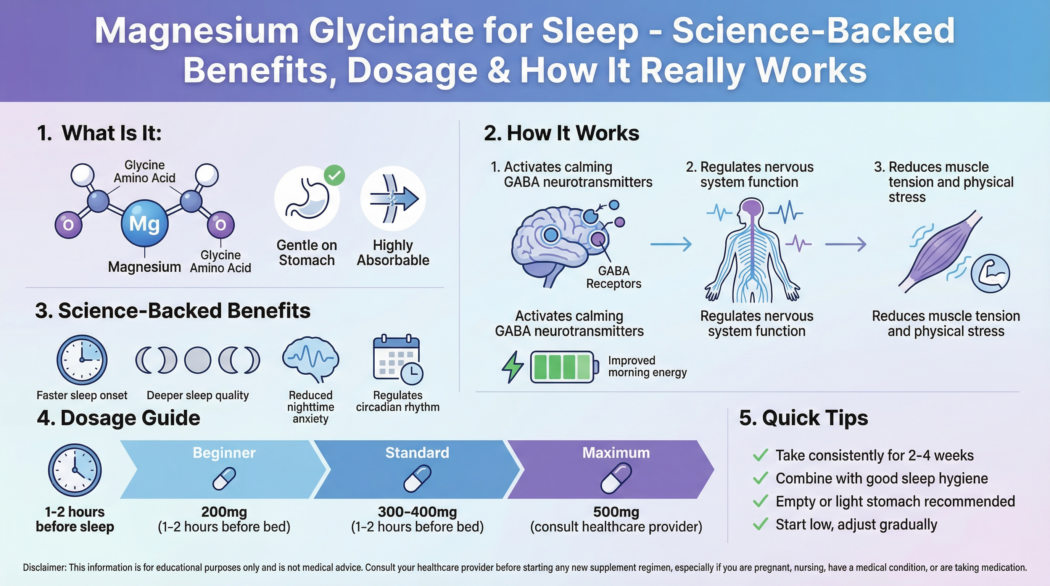
Magnesium glycinate, sometimes called magnesium bisglycinate, is a form of magnesium bound to the amino acid glycine.
This combination matters because:
- Magnesium supports hundreds of biochemical processes.
- Glycine is known for its calming, inhibitory effects on the nervous system.
Together, they form a highly absorbable and gentle supplement that many people tolerate better than other forms of magnesium.
How Magnesium Glycinate Is Different From Other Forms
Magnesium supplements come in many forms, but not all are equal when it comes to sleep.
Key advantages of magnesium glycinate:
- High bioavailability (absorbed efficiently)
- Minimal laxative effect
- Calming properties due to glycine
- Suitable for sensitive stomachs
This makes magnesium glycinate appealing for people seeking sleep support rather than digestive relief.
How Magnesium Works Inside the Body
Magnesium is involved in over 300 enzymatic reactions, many of which influence sleep directly or indirectly.
Magnesium and the Nervous System
Magnesium helps regulate the balance between excitatory and inhibitory signals in the brain. Without enough magnesium, nerve cells may fire too easily, contributing to restlessness and difficulty relaxing at night.
Magnesium, GABA, and Brain Calm
GABA (gamma-aminobutyric acid) is the brain’s primary calming neurotransmitter. Magnesium helps GABA bind to its receptors more effectively, which may:
- Reduce mental chatter
- Promote relaxation
- Support smoother transitions to sleep.
This mechanism explains why magnesium is often associated with stress reduction and improved sleep quality.
How Magnesium Glycinate May Improve Sleep
Magnesium glycinate does not act as a sedative. Instead, it supports the body’s natural sleep processes.
Falling Asleep Faster
By calming the nervous system and supporting GABA activity, magnesium glycinate may help shorten sleep onset time—especially in people who struggle with stress-related insomnia.
Staying Asleep Longer
Magnesium contributes to muscle relaxation and nervous system stability, which may reduce nighttime awakenings caused by tension or discomfort.
Improving Overall Sleep Quality
Many users report deeper, more restorative sleep when magnesium levels are adequate. Better sleep quality often leads to improved daytime energy and focus.
Want to See If Can Improve Your Sleep?
Not all magnesium supplements are created equal. If you’re curious about a highly absorbable sleep supplement that many people use as part of their nightly routine, you can explore a trusted option below.
👉 Check the current price and details here
The Role of Glycine in Sleep and Relaxation
Glycine itself has been studied for its role in sleep. Research suggests it may:
- Lower core body temperature (important for sleep initiation)
- Promote subjective sleep quality.
- Support mental calm before bedtime.
When paired with magnesium, glycine enhances the supplement’s relaxation effect, making magnesium glycinate well suited for sleep support.
What Science Says About Magnesium and Sleep
Findings That Support Sleep Benefits
Several observational and clinical studies suggest:
- Higher magnesium intake is associated with better sleep duration and efficiency
- Magnesium supplementation may improve insomnia symptoms in older adults
- Adequate magnesium levels support melatonin regulation.
You can explore a summary of magnesium research via the National Institutes of Health:
https://ods.od.nih.gov/factsheets/Magnesium-Consumer/
Limitations of Current Research
Despite promising findings:
- Not all studies show significant benefits.
- Sample sizes are often small.
- Results vary depending on dosage, population, and magnesium form.
Magnesium glycinate appears helpful but not guaranteed, especially for individuals who are deficient.
Who May Benefit Most From Magnesium Glycinate
Magnesium glycinate may be particularly useful for:
- People under chronic stress
- Those with poor dietary magnesium intake
- Adults experiencing mild insomnia
- Individuals with nighttime muscle tension
- Older adults (who often have lower magnesium levels)
It is not a replacement for medical care but may be a valuable part of a holistic sleep approach.
Struggling With Restless Nights or Trouble Falling Asleep?
Many readers turn to magnesium glycinate as a natural, non-habit-forming sleep support—especially when stress or tension keeps the mind racing at night.
If you want to see the magnesium glycinate supplement our readers ask about most often, you can find it here:
👉 View the best sleep supplement here
Magnesium Glycinate Dosage for Sleep
Recommended Dosage
Most experts suggest:
- 200–400 mg of elemental magnesium per day
- Start low (around 200 mg) and increase gradually
⚠️ Always check the label for elemental magnesium, not total compound weight.
Timing and Absorption Tips
- Take magnesium glycinate 30–60 minutes before bedtime.
- Consume with food to reduce digestive discomfort.
- Be consistent. Benefits often build over 1–2 weeks.
Best Practices to Maximize Sleep Benefits
Magnesium works best when combined with healthy sleep habits:
- Maintain a consistent sleep schedule.
- Limit screen exposure before bed.
- Keep the bedroom cool and dark.
- Avoid caffeine late in the day.
Supplements support sleep. They don’t replace good sleep hygiene.
Safety, Side Effects, and Who Should Avoid It
Magnesium glycinate is considered safe for most healthy adults.
Possible side effects:
- Mild digestive discomfort
- Drowsiness
- Rare drops in blood pressure
Who should consult a doctor first:
- People with kidney disease
- Those taking medications affecting magnesium levels
- Individuals with chronic medical conditions
Magnesium Glycinate vs Other Magnesium Forms
| Glycinate | Sleep & relaxation | Gentle, calming, well absorbed |
| Citrate | Constipation | Can cause diarrhea |
| Oxide | Low cost | Poor absorption |
| Threonate | Cognitive support | Emerging research |
| Malate | Energy & muscles | Less calming |
Common Myths About Magnesium for Sleep
Myth: Magnesium works instantly
Truth: Benefits often take 1–2 weeks
Myth: More is better
Truth: Excess magnesium can cause side effects
Myth: It’s a sleeping pill
Truth: Magnesium supports sleep indirectly
Frequently Asked Questions
Q1: Can magnesium glycinate make you too sleepy?
A: It promotes relaxation, not sedation. Effects vary by individual.
Q2: Can I take magnesium glycinate every night?
A: Yes, for most people it’s safe for daily use within recommended doses.
Q3: Should I combine magnesium with melatonin?
A: Some people do, but consult a healthcare provider first.
Q4: How long does it take to work?
A: Many notice improvements within 7–14 days.
Q5: Is magnesium glycinate better than citrate for sleep?
A: Yes, glycinate is generally better tolerated and more calming.
Q6: Can magnesium help with anxiety-related sleep problems?
A: It may help by calming the nervous system.
Ready to Support Better Sleep—Naturally?
If you’re looking for a clean, well-reviewed all natural sleep supplement to support relaxation and sleep quality, this is the option many people start with.
👉 See why this sleep supplement supplement is so popular
✔️ Easy to take
✔️ Gentle on digestion
✔️ Designed for nighttime use
Final Thoughts: Is Magnesium Glycinate Worth Trying?
Magnesium glycinate is not a miracle cure, but it is one of the most well-tolerated and research-supported supplements for relaxation and sleep support. Its calming effects on the nervous system, gentle digestion, and high absorption make it a strong option for people seeking natural sleep improvement.
If you struggle with restless nights, stress-related insomnia, or poor sleep quality, magnesium glycinate may be a practical and evidence-based addition to your routine, especially when paired with healthy sleep habits.