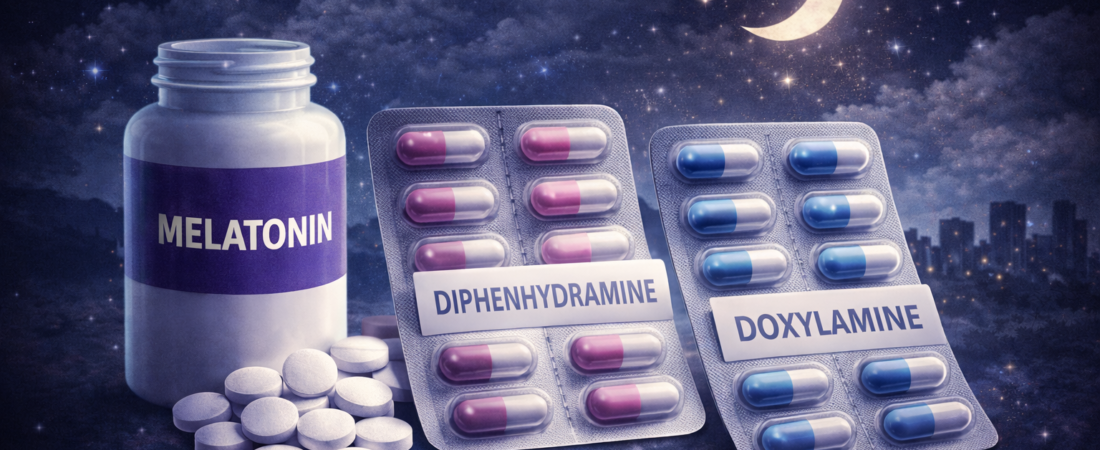
If you’ve struggled with chronic insomnia, you’ve probably stood in the sleep-aid aisle wondering which option really works. Melatonin claims natural support. Diphenhydramine often knocks you out. Doxylamine is considered stronger, though it has drawbacks.
For those juggling tasks at unpredictable hours, frequent flyers battling jet lag, or anyone in the midlife of 45–65 trying to calm a racing mind when bedtime calls, choosing the right sleep aid matters. Picking the wrong one could lead to another restless night or worse, a groggy, distracted day.
This in-depth comparison breaks down melatonin vs. diphenhydramine vs. doxylamine to help you understand which is perceived as the strongest sleep aid over the counter, and which actually makes sense for your type of insomnia.
Overview: Why “Strongest” Is the Wrong First Question
Most people search for the strongest OTC sleep aid because weaker options have failed them. But “strongest” can mean very different things:
- Most sedating
- Fastest to knock you out
- Longest-lasting
- Best at calming anxiety
- Least likely to cause next-day grogginess
These three OTC sleep aids work differently, so results vary quite a bit.
Before ranking them, let’s briefly define each.
Melatonin
A hormone naturally produced by the brain to regulate daily sleep patterns. It does not sedate—you don’t “feel” it the way you feel a sleeping pill.
Diphenhydramine
A first-generation antihistamine that causes drowsiness as a side effect. Commonly found in Benadryl, ZzzQuil, and many store-brand sleep aids.
Doxylamine
Another sedating antihistamine, often considered stronger and longer-lasting than diphenhydramine. Found in Unisom SleepTabs.
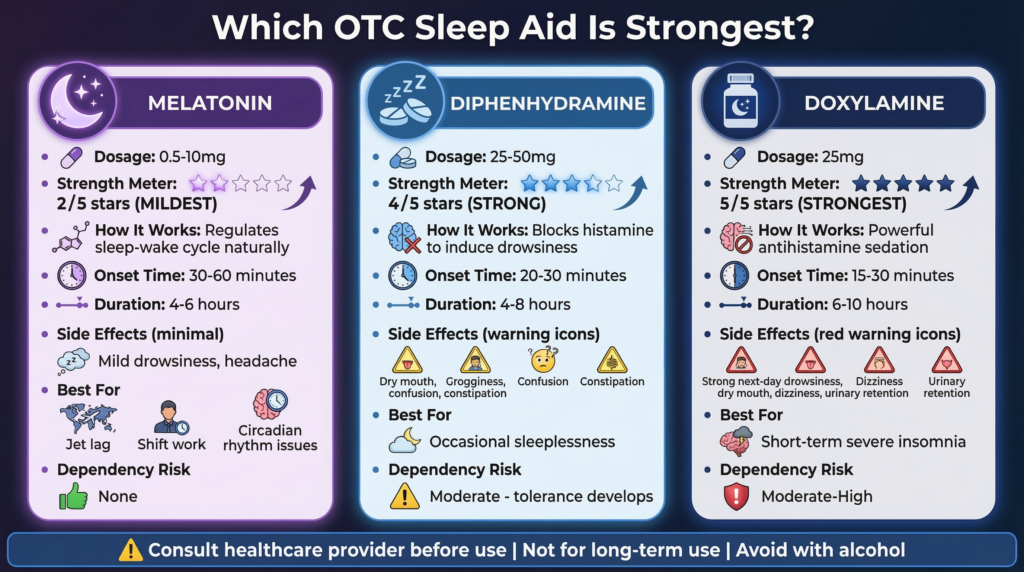
Feature Comparison
How Each Sleep Aid Works
| Primary Action | Regulates circadian rhythm | Sedates brain via antihistamine effect | Stronger antihistamine sedation |
| Onset Speed | Slow–moderate | Fast | Fast |
| Sedation Level | Low | High | Very high |
| Habit Formation | None | Tolerance develops | Tolerance develops |
| Next-Day Grogginess | Low–moderate | Moderate–high | High |
Melatonin: The Regulator, Not the Knockout
Melatonin tells your brain when to sleep, not how hard to sleep. This makes it ideal for:
- Jet lag
- Shift work
- Delayed sleep phase
- Older adults with reduced natural melatonin production
What most people get wrong:
Higher melatonin doses don’t mean better sleep. Over 5 mg may worsen sleep and increase vivid dreams.
Diphenhydramine: The Familiar Heavy Hitter
Diphenhydramine is often the first “strong” OTC sleep aid people try because it works fast and feels powerful.
Why it feels strong:
- Rapid sedation
- Noticeable drowsiness
- Easy sleep onset (initially)
The downside:
- Tolerance builds up quickly.
- Anticholinergic side effects (dry mouth, confusion)
- Morning brain fog, especially in adults over 45
👉 If diphenhydramine no longer works—or leaves you groggy—it may be time to consider alternatives.
Doxylamine: Stronger, but at a Cost
Doxylamine is often described as “stronger” than diphenhydramine because it:
- Lasts longer
- Produces deeper sedation
- It’s harder to sleep through
However, that same strength increases the likelihood of:
- Severe morning grogginess
- Delayed reaction times
- Feeling “drugged” the next day
This is riskier for shift workers, drivers, and older adults.
Performance Analysis: Which Actually Works Best?
Sleep Onset (Falling Asleep)
- Fastest: Diphenhydramine & Doxylamine
- Slowest: Melatonin
If your issue is lying awake for hours, antihistamines may feel more effective—at least initially.
Sleep Quality (Staying Asleep & refreshing sleep))
Melatonin often produces better sleep architecture, while antihistamines can suppress REM sleep, leaving you technically asleep but not well-rested.
Tolerance Over Time
This is where antihistamines lose badly.
- Diphenhydramine: tolerance in days to weeks
- Doxylamine: tolerance + stronger side effects
- Melatonin: no tolerance
👉 If you’re increasing doses just to get the same effect, that’s a sign to rethink your approach. Read our review here on a better all natural alternative.
Anxiety & Racing Thoughts
Antihistamines sedate the brain but do not address anxiety. Melatonin may help indirectly by stabilizing sleep timing, but many anxiety-driven insomniacs need nervous-system calming—not sedation.
Price Comparison
| Melatonin | Low | High (if used correctly) |
| Diphenhydramine | Low | Low (tolerance issues) |
| Doxylamine | Moderate | Low (side effects) |
While all three are inexpensive upfront, the hidden cost of antihistamines is poor next-day performance and declining effectiveness.
Best for Different Users
Best for Shift Workers & Travelers
Melatonin (low dose, properly timed)
Helps reset the circadian rhythm without a sedation hangover. The only drawback is that it’s not a sedative; it’s a signal supplement to the brain that nighttime has come. Your body does become immune to it and increasing dosage over time is not good either,
Best for Occasional Sleepless Nights
Diphenhydramine (short-term use only)
Useful sparingly, not nightly.
Best for Severe, Short-Term Insomnia
Doxylamine (with caution)
Effective, but not sustainable.
Worst Choice for Chronic Anxiety-Based Insomnia
Both antihistamines. Sedation doesn’t fix an overactive nervous system. There is a better solution and recommend to check out my recommendation below.
👉 Many chronic insomnia sufferers find better results when they stop chasing stronger sedation and start calming the nervous system.
Final Recommendation: Which Is the Strongest—and Which Is Smartest?
If we define “strongest” purely as sedation, then doxylamine technically wins. It hits hardest and lasts longest.
But for chronic insomnia, especially in adults over 45, the strongest sleep aid over the counter is often not the best solution.
- Melatonin works best for rhythm problems, not sedation.
- Diphenhydramine works briefly, then fails.
- Doxylamine works forcefully, but with heavy side effects.
long-term success, many people discover that addressing stress, anxiety, and nervous-system overstimulation is far more effective than escalating OTC doses.
👉 If traditional OTC sleep aids haven’t worked for you, it may be time to explore solutions designed to promote calm—not just knock you out.