
Imagine a nurse named Jane who works night shifts at a busy hospital. For years, Jane struggled with erratic sleep patterns, feeling tired and less resilient to stress. Then, she decided to experiment with her diet, introducing more fiber-rich and prebiotic foods. Over time, Jane noticed a remarkable improvement in her sleep quality and overall well-being. This example illustrates how sleep is regulated not only by the brain and circadian light cues but also by dietary factors. Over the past decade, research has demonstrated that dietary patterns, particularly fiber intake and prebiotic foods, shape the gut microbiome and influence sleep quality, circadian rhythm stability, and stress resilience.
Whereas probiotics introduce beneficial bacteria, prebiotics serve as substrates for the microbes already residing in the gut. These fermentable fibers influence the production of metabolites that interact with neurotransmitters, hormones, immune pathways, and the vagus nerve, all of which contribute to sleep regulation.
This review examines the scientific evidence linking prebiotics and sleep, drawing on findings from animal models, human clinical trials, and NIH-indexed research to elucidate how diet-driven changes in the microbiome influence sleep biology. By identifying and addressing gaps in existing sleep-nutrition reviews, this synthesis highlights its novelty, focusing on underexplored connections among dietary fibers, gut health, and sleep mechanisms.
Want a broader view of how gut health influences sleep? This article focuses on prebiotics and dietary fiber, but these mechanisms are part of a larger gut–sleep relationship. Explore our in-depth guide on how gut health influences sleep and insomnia to understand the full biological context.
Understanding Prebiotics: More Than Just “Fiber”
What Are Prebiotics?
Prebiotics are non-digestible carbohydrates that selectively stimulate the growth and activity of beneficial gut bacteria. Unlike probiotics, they are not living organisms.
Common prebiotics include:
- Inulin
- Fructooligosaccharides (FOS)
- Galactooligosaccharides (GOS)
- Resistant starches
- Certain polyphenol-associated fibers
These compounds pass through the upper digestive tract undigested and are fermented by gut bacteria in the colon.
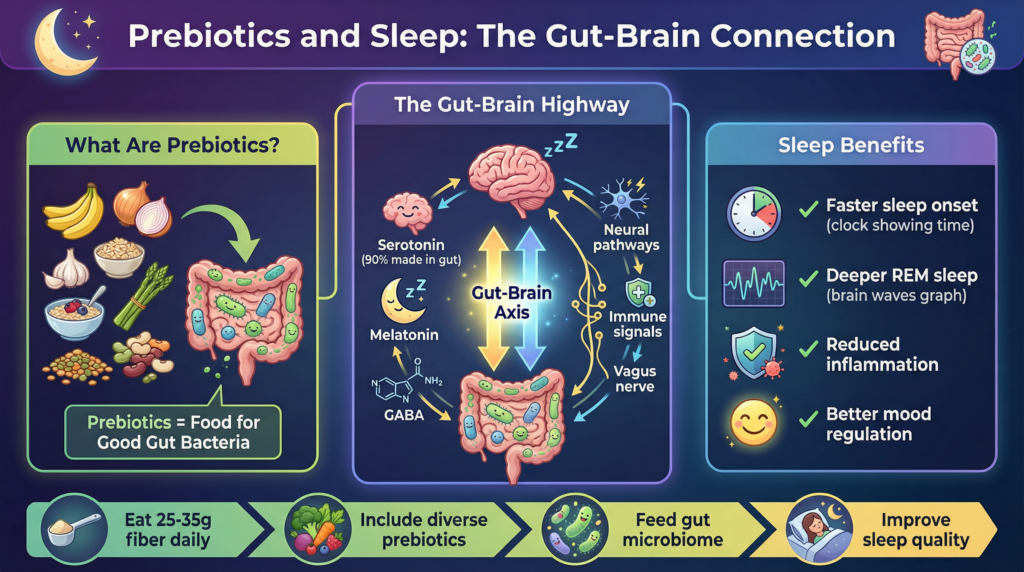
The Gut–Brain–Sleep Axis Revisited
The gut microbiome communicates with the brain through multiple pathways:
- Microbial metabolites (e.g., short-chain fatty acids)
- Immune modulation (cytokines, inflammation)
- Neurotransmitter precursors (tryptophan)
- Neural signaling (vagus nerve)
Prebiotics influence these pathways by reshaping microbial ecology and metabolic output, underscoring diet as a significant and modifiable factor in sleep health. Therefore, incorporating prebiotic-rich foods such as whole grains, onions, and bananas into your diet may help improve sleep quality by supporting these pathways.
These pathways don’t work in isolation. For a deeper explanation of how microbial signaling, neurotransmitters, and circadian rhythms interact, see our detailed overview of the gut–brain axis and sleep regulation.
Pull Quote:
“What you feed your gut microbes may be as important for sleep as when you go to bed.”
Short-Chain Fatty Acids: The Key Metabolic Link to Sleep
What Are SCFAs?
Short-chain fatty acids (SCFAs) — primarily acetate, propionate, and butyrate — are produced when gut bacteria ferment dietary fiber.
SCFAs:
- Strengthen the intestinal barrier.
- Reduce systemic inflammation
- Influence immune and neuroendocrine signaling.
- Affect circadian gene expression.
SCFAs and Sleep Architecture
Animal studies show that SCFAs:
- Promote non-REM sleep
- Increase sleep intensity after deprivation.
- Normalize circadian rhythm disruptions.
In mouse models, butyrate administration increases slow-wave sleep and improves sleep recovery following stress or sleep loss (Szentirmai et al., 2019).
These effects are believed to occur via:
- Reduced inflammatory signaling
- Direct action on brain receptors
- Modulation of peripheral clocks
Diet, Tryptophan, and Sleep Hormones
Prebiotics Influence Tryptophan Metabolism
Tryptophan is the precursor to:
- Serotonin
- Melatonin
- Immune-related kynurenine metabolites
Gut bacteria compete for and redirect tryptophan metabolism. Diets rich in fermentable fibers favor microbial profiles that:
- Increase serotonin availability
- Reduce inflammatory tryptophan diversion.
- Support melatonin synthesis indirectly.
NIH-indexed research demonstrates that diet-driven microbiome changes alter circulating tryptophan metabolites associated with sleep and mood regulation (Agus et al., 2018).
Circadian Rhythms Are Also Microbial
The Microbiome Has Its Own Clock
Gut bacteria follow daily oscillations influenced by:
- Meal timing
- Diet composition
- Sleep–wake cycles
Disrupted eating patterns, such as late-night meals and irregular schedules, can flatten microbial rhythms, disrupting important bodily functions. Scheduled eating within an 8-hour window may help maintain the natural oscillations of the microbiome, enhancing both diet and sleep synchrony. This synergy can support the gut-brain-sleep axis more effectively. Inadequate timing of food intake impairs SCFA production timing, disrupts melatonin signaling, and increases metabolic and sleep disturbances.
Time-restricted eating and consistent meal timing help restore microbial rhythmicity, improving circadian alignment (Thaiss et al., 2014).
Human Evidence: Prebiotics and Sleep Outcomes
Controlled Trials
Several human studies have examined prebiotics and sleep-related outcomes:
- Galactooligosaccharides (GOS) supplementation reduced cortisol awakening response and improved subjective sleep quality in healthy adults (Schmidt et al., 2015).
- Resistant starch intake has been associated with improved sleep efficiency via increased butyrate production.
- High-fiber diets correlate with deeper slow-wave sleep and fewer nighttime awakenings (St-Onge et al., 2016).
Although the observed effects are modest, they remain consistent across studies and are biologically plausible.
Prebiotic Foods Linked to Better Sleep
Whole-food sources of prebiotics, rather than supplements alone, appear to be particularly effective:
| Oats | β-glucans | Stable blood sugar, SCFAs |
| Legumes | Resistant starch | Butyrate production |
| Garlic & onions | Inulin/FOS | Anti-inflammatory |
| Bananas | Resistant starch | Tryptophan support |
| Asparagus | Inulin | Microbial diversity |
Dietary patterns that emphasize plant diversity are consistently associated with improved sleep outcomes.
What Prebiotics Do Not Do
It is important to clarify expectations regarding prebiotic effects:
Prebiotics:
❌ Do not act as sleep medications
❌ Do not cause immediate drowsiness
❌ Do not replace CBT-I or sleep hygiene
❌ Do not work overnight
Prebiotics function by supporting sleep biology over time rather than inducing immediate sleep onset.
How Long Does It Take to See Effects?
Most studies observe changes within:
- 2–4 weeks for metabolic changes
- 4–8 weeks for subjective sleep improvements
Consistency in prebiotic intake is more important than increasing the dosage.
Who Benefits Most From Prebiotics for Sleep?
Prebiotics may be most useful for:
- Stress-related sleep disruption
- Shift workers
- People with low fiber intake
- Individuals with inflammatory or metabolic sleep issues
Prebiotics are less effective as a stand-alone intervention for severe chronic insomnia.
Safety and Tolerability
Prebiotics are generally safe but may cause:
- Temporary bloating or gas
- GI discomfort at high doses
Gradually increasing the dose and utilizing food-based sources can reduce the likelihood of side effects.
FAQs: Prebiotics, Diet, and Sleep
Can prebiotics improve sleep quality?
Yes, modestly. Prebiotics support microbial metabolites and immune signaling that influence sleep architecture and circadian stability.
Are prebiotics better than probiotics for sleep?
They serve different roles. Prebiotics nourish existing microbes, while probiotics introduce new strains. Evidence suggests they may work best together.
How much fiber is needed for sleep benefits?
Studies suggest benefits at 25–38 grams per day, consistent with general dietary guidelines.
Do prebiotics increase melatonin?
Indirectly. Prebiotics influence tryptophan metabolism and microbial rhythms that support melatonin signaling rather than directly increasing levels.
Are there supplements that support sleep without acting as sedatives?
Yes. Some supplements are formulated to support calm, sleep signaling, and circadian rhythm rather than forcing sedation. We reviewed one such option here.
Should prebiotics be taken at night?
Timing appears less important than daily consistency, though some people prefer earlier intake to avoid GI discomfort at bedtime.
Can diet alone improve insomnia?
Diet alone is unlikely to resolve chronic insomnia, but can significantly support sleep quality when combined with behavioral strategies.
Conclusion
The relationship between prebiotics, diet, and sleep underscores that sleep health is influenced by factors occurring well before bedtime. By shaping the gut microbiome, dietary fiber and prebiotic foods modulate inflammation, neurotransmitter pathways, circadian rhythms, and metabolic signals that regulate sleep.
Although prebiotics are not a cure for insomnia, they represent a low-risk, evidence-supported strategy for enhancing sleep biology, particularly when combined with probiotics, consistent meal timing, and established sleep practices.
Looking to integrate diet strategies, such as prebiotics, into a comprehensive sleep framework? Our pillar article on gut health and sleep explores how nutrition, microbiome balance, and circadian biology work together to support better sleep quality.
As research advances, diet-based microbiome interventions are likely to become a cornerstone of personalized approaches to sleep medicine.
What you feed your gut shapes how your brain sleeps.
Prebiotics influence the gut–brain axis by supporting beneficial microbes that help regulate inflammation, neurotransmitter production, and circadian signaling. When those systems are out of balance, sleep often becomes lighter and less restorative.
Learn how gut health, circadian rhythm, and nervous system balance work together to restore deep, consistent sleep naturally.
Key References (APA)
Agus, A., Planchais, J., & Sokol, H. (2018). Gut microbiota regulation of tryptophan metabolism in health and disease. Cell Host & Microbe, 23(6), 716–724.
https://doi.org/10.1016/j.chom.2018.05.003
Szentirmai, É., et al. (2019). Short-chain fatty acids and sleep regulation. Sleep, 42(7).
https://doi.org/10.1093/sleep/zsz061
Schmidt, K., et al. (2015). Prebiotic intake reduces cortisol and improves emotional processing. Psychopharmacology, 232, 1793–1801.
https://doi.org/10.1007/s00213-014-3810-0
St-Onge, M. P., et al. (2016). Fiber and saturated fat are associated with sleep architecture. Journal of Clinical Sleep Medicine, 12(1), 19–24.
https://doi.org/10.5664/jcsm.5384
Thaiss, C. A., et al. (2014). Transkingdom control of circadian clocks. Cell, 159(3), 514–529.
https://doi.org/10.1016/j.cell.2014.09.048