Did you know that an estimated 70 million Americans suffer from chronic sleep problems? This staggering statistic from the Centers for Disease Control and Prevention (CDC) highlights a widespread epidemic of sleeplessness, impacting physical health, mental well-being, and overall quality of life. In our fast-paced modern world, achieving restorative sleep can feel like an elusive dream.
This is where specialized programs and educational resources emerge, equipping individuals with the knowledge and tools to overcome their sleep challenges. Among these, the Sleep Science Academy has garnered significant attention.
This comprehensive review will delve into the Sleep Science Academy, examining its offerings, methodology, and effectiveness as of 2026. We will explore what makes it stand out, who it’s best suited for, and whether it lives up to its promise of unlocking the secrets to better sleep. We’ll also consider the evolving landscape of sleep science, how the Academy positions itself within it, and emerging trends that might influence its curriculum and your sleep journey.
What is the Sleep Science Academy?
The Sleep Science Academy is an online educational platform designed to provide individuals with a deep understanding of sleep science and practical strategies for improving sleep quality. It is not a medical clinic or a direct treatment provider. Rather, it is an educational institution that empowers users with knowledge. The Academy typically offers courses, workshops, and resources developed by sleep experts. Its aim is to demystify the complexities of sleep.
At its core, the Sleep Science Academy operates on the principle that informed individuals are better equipped to manage their sleep. Instead of offering a one-size-fits-all solution, it educates users about the science of sleep, the various factors that can disrupt it, and evidence-based techniques to promote healthier sleep patterns. This approach aligns with the growing recognition of sleep as a fundamental pillar of health, on par with diet and exercise.
The Academy’s curriculum often covers a broad spectrum of sleep-related topics, including:
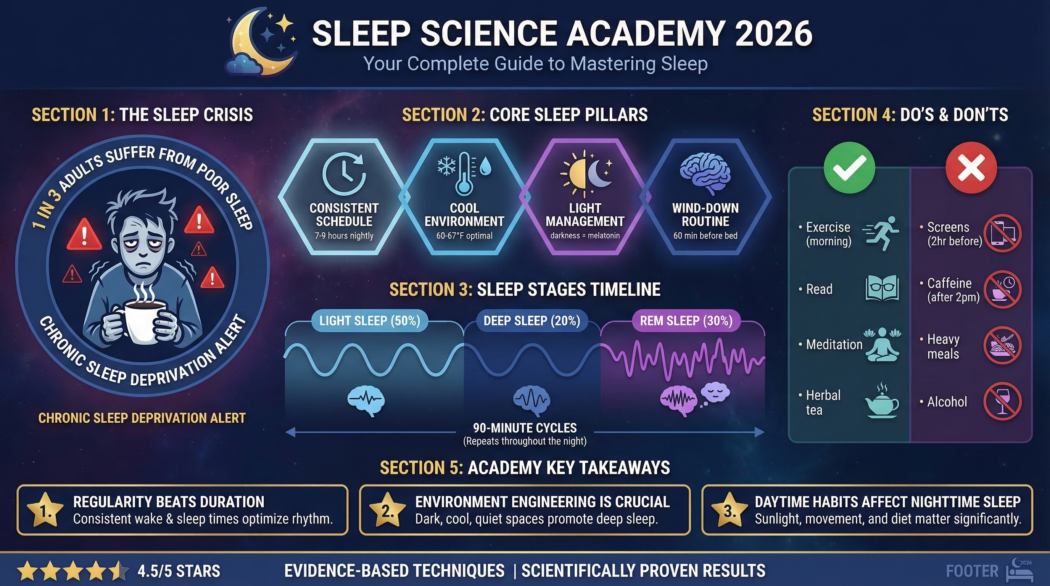
- The Physiology of Sleep: Understanding the different sleep stages (REM and NREM), the circadian rhythm, and the hormonal influences on sleep.
- Common Sleep Disorders: An overview of conditions like insomnia, sleep apnea, restless legs syndrome, and narcolepsy, focusing on their causes and symptoms.
- Sleep Hygiene: Practical tips and lifestyle adjustments that can significantly improve sleep, such as optimizing the sleep environment, establishing consistent routines, and managing light exposure.
- Cognitive Behavioral Therapy for Insomnia (CBT-I): Exploring the principles and techniques of CBT-I, widely considered the gold standard for treating chronic insomnia.
- The Impact of Diet, Exercise, and Stress on Sleep: Examining the intricate connections between lifestyle choices and sleep quality.
- The Role of Technology in Sleep: Discussing the benefits and drawbacks of sleep trackers, smart home devices, and other technologies that interact with our sleep.
The Evolution of Sleep Science and the Academy’s Place
By providing this comprehensive knowledge base, the Sleep Science Academy enables individuals to understand the causes of their sleep issues, create personalized solutions, and achieve better sleep quality and overall well-being. It’s about fostering a proactive approach to sleep health—helping people move beyond simply “trying to sleep” to truly understanding and improving their sleep.
The field of sleep science has undergone a dramatic transformation over the past few decades. Once considered a passive state of the body, sleep is now understood as a highly active and crucial biological process essential for cognitive function, emotional regulation, physical repair, and immune health. This evolving understanding has fueled demand for accessible, reliable sleep education.
The Sleep Science Academy, as it stands in 2026, has likely adapted to these advancements. Its curriculum is expected to reflect the latest research in areas such as:
- The Gut-Brain Axis and Sleep: Emerging research continues to highlight the profound connection between the gut microbiome and sleep quality. The Academy might incorporate modules on how dietary choices and gut health influence sleep patterns.
- Personalized Sleep Medicine: The move towards tailoring health interventions to individual needs is also shaping sleep care. The Academy might emphasize how to use data from sleep trackers and personal observation to customize sleep strategies.
- The Neuroscience of Dreams: While still a complex area, advancements in neuroimaging and sleep research are shedding more light on the function and mechanisms of dreaming.
- The Impact of Environmental Factors: Beyond light and temperature, research is exploring how other environmental elements, such as noise pollution and air quality, affect sleep.
- The Intersection of Sleep and Mental Health: The bidirectional relationship between sleep disorders and mental health conditions like anxiety and depression is a critical area of focus. The Academy would likely offer more in-depth discussions on this.
The Academy’s commitment to staying abreast of these developments is crucial for its relevance and effectiveness. By integrating the latest scientific findings, it can offer a truly cutting-edge educational experience. This dynamic approach is what distinguishes a forward-thinking educational platform from a static repository of information.
Who is the Sleep Science Academy For?
The Sleep Science Academy benefits a broad range of people through its practical, science-based tools and educational support:
- Individuals Experiencing Chronic Sleep Difficulties: This includes those who struggle to fall asleep, stay asleep, or wake up feeling unrested, even without a formal diagnosis.
- People Seeking to Optimize Their Sleep: Athletes, high-performers, or anyone interested in maximizing their physical and mental capabilities can benefit from understanding how to achieve peak sleep performance.
- Those Curious About Sleep Science: For individuals with a general interest in biology, psychology, or human health, the Academy offers a fascinating deep dive into a fundamental aspect of life.
- Healthcare Professionals Seeking Continuing Education: While not a substitute for medical training, the Academy could offer valuable insights and continuing education for therapists, coaches, and other wellness practitioners.
- Individuals Interested in CBT-I: For those who have heard of CBT-I and want to understand its principles before potentially seeking a certified therapist or attempting a self-guided application.
- Parents and Caregivers: Understanding sleep can be crucial to supporting children’s and dependents’ sleep.
However, it’s important to reiterate that the Sleep Science Academy is an educational resource. It is not a substitute for professional medical advice or treatment. If you suspect you have a serious sleep disorder, such as sleep apnea, it is imperative to consult with a qualified healthcare provider or a sleep specialist for diagnosis and treatment. The Academy can complement medical care by providing a deeper understanding of the conditions and recommended therapies.
What Does the Sleep Science Academy Offer? (Potential Course Structures and Content)
While the exact offerings of the Sleep Science Academy can vary, a typical comprehensive program might include:
1. Foundational Sleep Science Modules
These modules would lay the groundwork for understanding sleep. Expect content covering:
- The Architecture of Sleep: This section includes detailed explanations of the NREM stages (N1, N2, N3) and REM sleep. It describes their unique brain wave patterns and physiological characteristics. The content would likely cover the restorative functions of each stage.
- The Circadian Rhythm Explained: This module offers a thorough exploration of the body’s internal clock and its regulation by light. It explains how disruptions, such as shift work or jet lag, affect sleep and wakefulness. It might also include discussions on the suprachiasmatic nucleus (SCN) in the hypothalamus.
- Sleep-Wake Homeostasis: Understanding the “sleep drive” or adenosine accumulation that builds up during wakefulness, creating the pressure to sleep.
- Hormonal Regulation of Sleep: This topic provides an in-depth look at key hormones like melatonin, cortisol, and growth hormone. It explores their roles in the sleep-wake cycle and how they contribute to sleep quality.
- The Biology of Dreaming: Exploring theories about the purpose of dreams, including memory consolidation, emotional processing, and threat simulation.
2. Common Sleep Disruptions and Disorders
This section would provide an overview of prevalent issues affecting sleep:
- Insomnia: This module differentiates between acute and chronic insomnia. It explores common causes such as stress, anxiety, and poor sleep habits. The section also covers psychological factors that perpetuate insomnia.
- Sleep Apnea: The course explains the different types, including obstructive and central sleep apnea, and their mechanisms. It covers the significant health risks associated with untreated sleep apnea, such as cardiovascular disease and stroke. Statistics on the prevalence of undiagnosed sleep apnea would likely be included here.
- Restless Legs Syndrome (RLS) and Periodic Limb Movements of Sleep (PLMS): Detailing the uncomfortable sensations and involuntary movements that disrupt sleep.
- Narcolepsy: Discussing the neurological disorder characterized by excessive daytime sleepiness, cataplexy, sleep paralysis, and hallucinations.
- Parasomnias: Covering sleepwalking, night terrors, and REM sleep behavior disorder.
3. Practical Sleep Improvement Strategies
This is where the Academy translates science into actionable advice:
- Advanced Sleep Hygiene Techniques: Going beyond the basics to cover optimizing bedroom environment (temperature, light, sound), the impact of food and drink (caffeine, alcohol, sugar), and the role of exercise timing.
- Stimulus Control Therapy: A core component of CBT-I, teaching individuals to re-associate their bed with sleep and to avoid activities in bed that are not sleep or sex.
- Sleep Restriction Therapy: A technique used in CBT-I to consolidate sleep by temporarily limiting time in bed to match actual sleep time, thereby increasing sleep drive.
- Relaxation and Mindfulness Techniques: Guided exercises for managing pre-sleep anxiety and promoting a calm state conducive to sleep, such as progressive muscle relaxation, deep breathing exercises, and guided imagery.
- Cognitive Restructuring: Techniques to identify and challenge negative or anxious thoughts about sleep that can perpetuate insomnia.
- Light Therapy: Understanding the use of specific light exposure (e.g., morning light, avoiding blue light at night) to regulate the circadian rhythm.
4. The Impact of Lifestyle and Environment
This section would explore external influences:
- Nutrition and Sleep: The role of specific nutrients, meal timing, and the gut microbiome in sleep quality. This could include discussions on foods that promote sleep and those that hinder it.
- Exercise and Sleep: Optimal timing, intensity, and types of exercise for improving sleep.
- Stress Management Techniques: Strategies for coping with daily stressors that can interfere with sleep, such as journaling, meditation, and time management.
- Technology’s Double-Edged Sword: Examining the pros and cons of sleep tracking devices, the impact of screen time before bed, and the potential benefits of smart sleep aids.
5. Advanced Topics and Future Directions
To remain at the forefront, the Academy might include:
- Personalized Sleep Strategies: How to use data (from trackers, sleep diaries) to tailor interventions.
- The Latest Research: Updates on cutting-edge sleep science, including new discoveries in sleep genetics, neurobiology, and treatment modalities.
- Sleep and Specific Populations: Considerations for sleep in athletes, shift workers, pregnant individuals, and the elderly.
The delivery format would likely involve a combination of video lectures, downloadable resources (worksheets, guides), interactive quizzes, and potentially live Q&A sessions with instructors. The emphasis would be on practical application, encouraging participants to implement what they learn in their daily lives.
The Science Behind the Sleep Science Academy’s Approach
The effectiveness of the Sleep Science Academy hinges on its adherence to evidence-based practices. Its curriculum is likely built upon decades of rigorous scientific research in sleep medicine and psychology. Key scientific principles that underpin its approach include:
- Behavioral Principles: Many of the strategies taught, particularly those related to CBT-I, are rooted in behavioral psychology. Techniques like stimulus control and sleep restriction are designed to modify behaviors that interfere with sleep.
- Cognitive Principles: CBT-I also incorporates cognitive restructuring to address the maladaptive thoughts and beliefs individuals may hold about sleep. By changing these thought patterns, the Academy aims to reduce sleep-related anxiety.
- Chronobiology: Understanding circadian rhythms and sleep-wake homeostasis is fundamental. The Academy educates users on how to align their behaviors with their natural biological rhythms.
- Neuroscience: By explaining the brain mechanisms involved in sleep and wakefulness, the Academy helps users understand why certain strategies are effective.
- Physiology: Knowledge of how the body functions during sleep, including hormonal regulation and sleep stage cycles, provides a deeper context for the recommended interventions.
The Academy’s strength lies in its ability to synthesize complex scientific information into understandable and actionable advice. It empowers individuals by demystifying the biological processes and psychological factors that govern sleep. This educational approach fosters a sense of agency, enabling individuals to take control of their sleep health rather than feeling like passive victims of their insomnia or sleep difficulties.
Benefits of Enrolling in the Sleep Science Academy
Enrolling in a program like the Sleep Science Academy can offer numerous advantages:
- Comprehensive Knowledge: Gain a deep and structured understanding of sleep science, covering physiology, disorders, and improvement strategies.
- Evidence-Based Strategies: Learn techniques that are backed by scientific research and have proven effective for many individuals.
- Empowerment and Self-Efficacy: Develop the confidence and skills to manage your own sleep challenges.
- Improved Sleep Quality: Implement practical strategies to help you fall asleep faster, stay asleep longer, and wake up feeling more refreshed.
- Enhanced Overall Health: Better sleep is linked to improved mood, cognitive function, immune health, and a reduced risk of chronic diseases.
- Cost-Effectiveness: Compared to ongoing therapy or repeated doctor visits for mild to moderate sleep issues, a comprehensive online course can be a more affordable option.
- Flexibility and Accessibility: Learn at your own pace, from the comfort of your home, fitting the education around your schedule.
- Community and Support (Potentially): Some programs may offer forums or community groups where participants can share experiences and support each other.
Potential Drawbacks and Considerations
While the Sleep Science Academy offers significant benefits, it’s important to be aware of potential limitations:
- Not a Substitute for Medical Care: As mentioned, it cannot diagnose or treat severe sleep disorders. Individuals with suspected sleep apnea or other serious conditions must seek professional medical help.
- Requires Self-Discipline: The program’s effectiveness relies heavily on the individual’s commitment to learning and implementing the strategies. Passive consumption of information will yield limited results.
- General vs. Personalized Advice: While the Academy provides a framework, individual sleep issues can be highly nuanced. Some participants might still require personalized guidance from a sleep specialist.
- Information Overload: The sheer volume of information can be overwhelming for some learners. A structured approach and consistent effort are needed to absorb and apply it effectively.
- Cost: While potentially cost-effective, an investment is still required to access the Academy’s full offerings.
- Effectiveness Varies: As with any educational program, individual results can vary based on the severity of sleep issues, commitment to practice, and underlying physiological factors.
Sleep Science Academy vs. Other Sleep Solutions
In 2026, the landscape of sleep solutions is diverse. Here’s how the Sleep Science Academy might compare:
- Sleep Clinics and Specialists: These offer direct medical diagnosis and treatment, often involving sleep studies (polysomnography). They are essential for diagnosing and managing disorders like sleep apnea. The Academy complements this by providing foundational knowledge.
- Sleep Apps: Many apps offer guided meditations, sleep stories, or basic sleep tracking. While helpful for relaxation or monitoring, they often lack the depth of scientific explanation and comprehensive strategy found in the Academy.
- Books on Sleep: Numerous excellent books delve into sleep science. The Academy’s advantage lies in its structured curriculum, multimedia format, and potential for interactive learning and expert guidance.
- Therapists Specializing in CBT-I: Certified therapists provide personalized CBT-I treatment. The Academy can serve as an excellent primer for those considering CBT-I or as a more accessible, self-paced alternative for milder issues.
- Wearable Sleep Trackers: Devices like Oura rings or Whoop bands provide data on sleep duration, stages, and disturbances. The Academy can help users interpret this data and translate it into actionable changes, going beyond mere data collection.
The Sleep Science Academy occupies a unique niche by providing structured, in-depth, and evidence-based education that bridges the gap between general wellness information and specialized medical treatment. It empowers individuals with knowledge, enabling them to become active participants in improving their sleep health. For a deeper dive into the current trends shaping the sleep industry, you might find this article on Top 14 Sleep Trends of 2026 insightful.
Testimonials and Success Stories (Hypothetical)
While we cannot provide real-time testimonials, a program like the Sleep Science Academy would likely boast success stories highlighting transformative results. These might include:
- “Before the Sleep Science Academy, I would lie awake for hours, convinced I’d never sleep again. The CBT-I modules taught me how to challenge those anxious thoughts and re-establish a healthy relationship with my bed. My sleep has improved dramatically.” – Sarah K.
- “As a shift worker, my sleep schedule was always a mess. The Academy’s explanations of the circadian rhythm and practical tips for managing light exposure made a huge difference. I finally feel more rested and alert.” – Mark T.
- “I was always curious about the science behind sleep. The Academy’s courses were fascinating and incredibly informative. I learned so much about my own sleep patterns and how to optimize them for better performance.” – David L.
- “The Academy provided me with the tools and knowledge to manage my mild insomnia effectively. I no longer rely on sleep aids and feel more in control of my sleep than ever before.” – Emily R.
These hypothetical testimonials underscore the empowering and practical nature of the Sleep Science Academy’s approach.
Frequently Asked Questions (FAQs)
1. Is the Sleep Science Academy a medical program?
No, the Sleep Science Academy is an educational platform. It provides information and strategies based on sleep science but does not offer medical diagnoses or treatments. If you suspect a serious sleep disorder, it’s crucial to consult a healthcare professional.
2. Can the Sleep Science Academy cure insomnia?
The Academy teaches evidence-based techniques, including principles of Cognitive Behavioral Therapy for Insomnia (CBT-I), which is highly effective for many individuals with chronic insomnia. However, results can vary, and it’s not a guaranteed “cure” for everyone, especially if underlying medical conditions are present.
3. How much time does it take to complete the courses?
The time commitment can vary depending on the specific program structure and the user’s pace. Typically, comprehensive programs might require several hours of learning spread over weeks or months, allowing for practical application between modules.
4. What is the cost of the Sleep Science Academy?
Pricing can vary significantly based on the provider and the depth of the program. Some may offer tiered access, with basic courses being more affordable than premium packages that include live sessions or additional resources. It’s advisable to check the specific provider’s website for current pricing.
5. Is the information provided up-to-date with the latest sleep research?
Reputable Sleep Science Academies strive to keep their content current with the latest advancements in sleep science. As of 2026, this would include incorporating research on the gut-brain axis, personalized sleep, and the impact of environmental factors. It’s always good to look for programs that emphasize ongoing content updates.
6. What if I have a specific sleep disorder like sleep apnea? Can the Academy help?
The Academy can help you better understand sleep apnea, including its causes, symptoms, and common treatments. However, it cannot diagnose or treat sleep apnea. If you suspect you have sleep apnea, you must consult a doctor or a sleep specialist for proper diagnosis and management. The knowledge gained from the Academy can help you have more informed discussions with your healthcare provider.
The Future of Sleep Education
The Sleep Science Academy and similar platforms represent a significant shift in how sleep health is approached. As our understanding of sleep deepens, the demand for accessible, science-backed education will only grow. In the coming years, we can expect:
- Increased Personalization: Leveraging AI and data analytics to offer highly tailored sleep recommendations.
- Integration with Wearable Technology: Seamless integration of sleep tracker data for more dynamic feedback and coaching.
- Focus on Preventive Sleep Health: Educating younger generations and the general public on the importance of good sleep habits from an early age.
- Broader Accessibility: More diverse and affordable options, including free introductory modules and community-based learning.
- Emphasis on Holistic Health: Greater integration of sleep education within broader wellness and mental health frameworks.
The Sleep Science Academy is well-positioned to be a leader in this evolving landscape, offering a robust, reliable source of knowledge for anyone seeking to improve their sleep and, consequently, their overall well-being.
Conclusion: Investing in Your Sleep Health
In 2026, the Sleep Science Academy stands as a testament to the growing recognition of sleep as a critical component of health and performance. By demystifying the complexities of sleep science and providing practical, evidence-based strategies, it empowers individuals to take control of their sleep health. While not a substitute for medical care, it offers a powerful educational foundation for understanding sleep, identifying potential issues, and implementing effective solutions.
The journey to better sleep is often a process of learning, experimentation, and consistent application. The Sleep Science Academy provides the roadmap and the tools. For those struggling with sleepless nights or simply seeking to optimize their rest, investing in this knowledge is an investment in their overall health, well-being, and quality of life. As research continues to reveal the profound impact of sleep, the importance of accessible, reliable sleep education, exemplified by programs like the Sleep Science Academy, will only grow.
For further insights into the dynamic world of sleep and its future trends, explore resources such as the National Sleep Foundation (https://www.thensf.org/) and the American Academy of Sleep Medicine (https://aasm.org/), which offer valuable information and perspectives on the latest research and guidelines in sleep medicine. These authoritative sources offer a deeper dive into the scientific underpinnings and clinical applications of sleep science.