
Imagine it’s 3 a.m.; the hospital is quiet except for the nurse monitoring a patient’s vitals. Night shifts disrupt your body’s rhythms. Many adapt with good sleep and nutrition. Consistent routines lower risks, though everyone reacts differently. Using light, exercise, and support helps health. Some may need professional advice. If you would like to learn more about this, you can read our guide on Proven Tips for Shift Workers so you can get the rest you need.
In this post, you will discover more proven tips for shift workers to help you navigate your schedule more effectively.
Essential Strategies for Night Shift Wellness
- Optimize Your Sleep Environment: Create a dark, quiet space to mimic nighttime conditions during the day. This can help mitigate sleep disruptions common in shift work.
- Maintain a balanced, nutrient-rich diet and stay hydrated to sustain energy. Avoid sugary snacks; prepare protein-filled meals in advance for convenience.
- Incorporate Regular Exercise: Engage in physical activity before shifts to boost alertness and improve mood. Regular movement also counters the sedentary nature of night work. Exercising close to dusk aligns with natural hormonal surges, including increased cortisol in the late afternoon and early evening. This timing helps sync your internal clock with exercise, enhancing effectiveness.
- Manage Light and Caffeine Exposure: Start your shift with exposure to bright light to boost alertness, then follow with a coffee break to enhance focus. This sequencing aligns your internal clock and helps sustain energy throughout your shift.
Sleep Tips
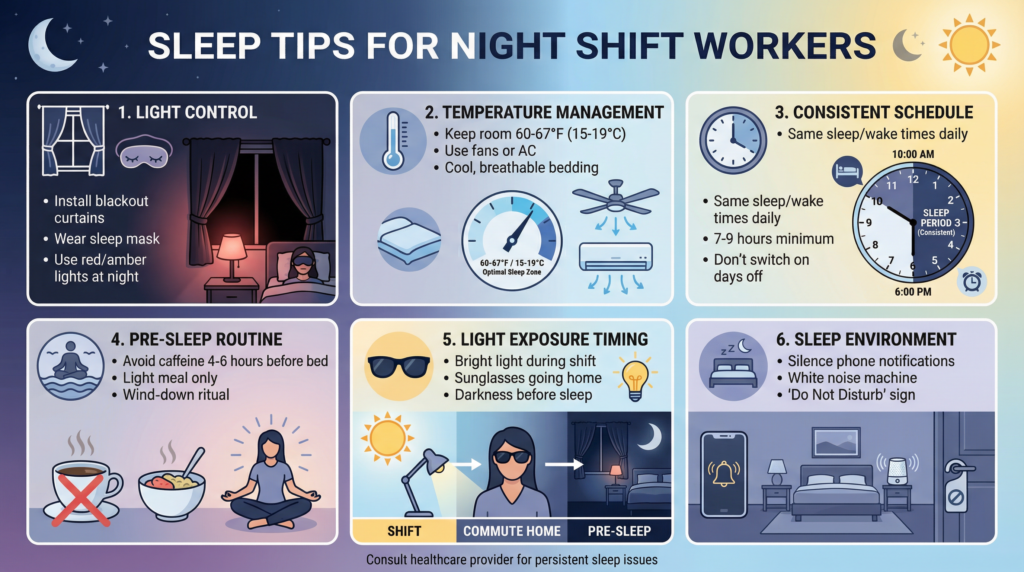
Set a consistent sleep schedule, even on days off, to aid adjustment. Think of it as a personal experiment: log your sleep for two weeks to see what works best for you. This data can help you aim for the recommended 7-9 hours each night. Use blackout curtains or a sleep mask and avoid screens before bed. Take short naps if needed. See resources like the Harvard Health blog for more details.
Nutrition and Hydration
Plan healthy, protein-rich meals with vegetables and whole grains. Hydrate with 88-128 ounces of water daily, adjusting as needed. Try an easy hydration rule, such as ‘one bottle per break’ during your shift, to ensure adequate fluid without counting ounces. Time meals, like eating before your shift, to stabilize energy.
Exercise and Stress Management
Aim for 150 minutes of moderate exercise per week, ideally before work. Use meditation or journaling to reduce stress. Get household support to balance demands.
Working night shifts is a reality for millions in fields like healthcare, manufacturing, and emergency services, but it doesn’t have to come at the expense of your well-being. The body’s circadian rhythm prefers daytime activity and nighttime rest, so shift work can disrupt this and lead to potential health concerns. However, with evidence-based adjustments, many people thrive. This guide draws on medical experts, research, and practical advice to help you prioritize your health during night shifts. First, we’ll explain the risks associated with night shifts, then offer solutions, including tips for sleep, nutrition, exercise, light and environment management, routine building, stress reduction, and employer considerations, all to ensure a holistic approach.
Understanding the Health Impacts of Night Shifts
Night shift work often leads to shift work disorder—symptoms like insomnia, sleepiness, and fatigue from your body’s rhythm being off. The chronic effects are real: people working nights have a 30% higher risk of heart attacks than those with daytime schedules. Research links shift work to diabetes, metabolic syndrome, accidents, and certain cancers. Rotating shifts makes eating habits less healthy. Artificial light from night work can disrupt hormones and genes, and the WHO lists shift work as a probable cancer risk. Exposure to fewer hours of sunlight can lead to vitamin D deficiency and other health issues. Lower job satisfaction and stress are common, but there are ways to manage them.
Changing shifts makes these health risks worse by leaving you feeling jet-lagged and tired all the time, which can lead to more mistakes. The CDC says that night workers usually get less sleep than day workers, raising the risk of accidents now and health issues in the future. On social media, many people mention feeling worn out or grumpy, but they also share tips that help, like drinking mineral water and eating more protein.
Building a Sustainable Sleep Routine
Good sleep is crucial for night shift health; not sleeping enough hurts thinking, mood, and safety. Aim for 7-9 hours of sleep every day, even if you split it. For example, Sarah, a nurse who works both days and nights, felt tired and moody because her sleep schedule kept changing. Grouping her night shifts together helped Sarah get more rest. Experts recommend this tip. Sleep as soon as your shift ends. On your days off, find a balance: Stay up until 3-4 a.m. and sleep until noon. Repeat the routine for a few hours.
For those on rotating shifts, try a weekly sleep schedule like this:
Monday to Wednesday – sleep from 8 a.m. to 4 p.m.
Thursday to Saturday – sleep from 10 a.m. to 6 p.m.
Sunday – sleep from midnight to 8 a.m.
For fixed shifts, maintain consistency by sleeping from 6 a.m. to 2 p.m. daily.
Practice good sleep habits: use blackout curtains or a sleep mask. Turn on a fan or white noise machine to block noise, or use apps to block calls. Try relaxing scents like lavender or cedarwood. Drink calming teas like chamomile. Ask your doctor about natural sleep aids such as melatonin or passionflower. Avoid caffeine 7 hours before sleep. Stay off screens for at least 30 minutes before bed. Take an afternoon nap before your first night shift. Use “anchor sleep”—for example, sleep from 9 a.m. to 1 p.m.—to help your body adjust.30 minutes in a cool, dark space during shifts (midnight to 6 a.m.) improves alertness and reduces errors. Advocate for workplace nap policies if needed. Approach HR or your supervisor to discuss implementing or formalizing nap breaks as part of the work routine. Clearly communicate the benefits, such as increased productivity and reduced errors. If necessary, try 1-hour naps between 2-4 p.m. before shifts. Avoid staying up all day before or after shift blocks to prevent fatigue.
Nutrition and Hydration for Sustained Energy
Irregular schedules can lead to poor eating habits. Planning ahead helps counter this. Prep meals with proteins, vegetables, and whole grains. Opt for smaller, more frequent portions to maintain steady energy. Eat a high-protein meal before or early in your shift. Avoid heavy, sugary, or fatty foods that can disrupt digestion and sleep.
Try eating all your meals within certain hours: for example, eat breakfast at 5 p.m., a snack at 9 p.m., dinner at 1 a.m., then only water until your shift ends. This keeps your blood sugar steady, helps lower blood pressure, and is good for your heart. Bring snacks like fruit, nuts, cheese with crackers, or protein shakes. If you are not outside much, ask your doctor about taking a vitamin D supplement.
Staying hydrated is important—aim for about 88 ounces of water if you’re a woman and 128 ounces if you’re a man, using a bottle you keep refilling. If you’re not sure, do a bottle per break while you’re at work. Not drinking enough water can mess with your focus and how you feel. Skip sugary drinks; they cause crashes. Eat with your coworkers when you can for a social boost.
| Pre-Shift (5-6 p.m.) | High-protein meal (e.g., grilled chicken, veggies) | Sustains energy |
| Mid-Shift Snack (9-10 p.m.) | Nuts, fruit, or yogurt | Steady blood sugar |
| Late-Shift Meal (1-2 a.m.) | Light salad or protein shake | Avoids heaviness |
| Post-Shift (Before Sleep) | Small, light breakfast | Prevents hunger disruptions |
Exercise and Physical Activity
Moving your body regularly helps prevent weight gain and hormonal issues that come from disrupted routines. Try to do 150 minutes of moderate exercise each week, such as brisk walking, weight lifting, or stretching. Break this goal into smaller parts. For example, do two sets of push-ups during a midnight break. Exercise before your shift to feel more alert. If you work out after your shift, focus on weights to boost metabolism longer.
Add activity at work: take the stairs, stand while working, or use a step-counting app with coworkers. Try to exercise between 7 and 10 p.m. to push your body’s sleep schedule later. Don’t work out right before sleeping, so your body can relax. Join group workouts or follow videos with colleagues during breaks to stay motivated.
Light Exposure and Environmental Adjustments
Bright lights at work help keep you awake. Try to get 15 minutes of bright light while working. After work, dim the lights and wear sunglasses on your way home to help you fall asleep. Use orange or red bulbs before bed. When adjusting to daytime, get some sunlight in the morning.
Caffeine, a stimulant found in coffee, tea, and some sodas, taken early in your shift helps focus, but stop toward the end if you are sensitive to its effects. Combine caffeine with naps for optimal performance. Key takeaway: Time your caffeine intake early and pair it with naps for the best results.
Establishing Routines and Support Systems
Keep a regular schedule and ask for fewer overnights when possible. For safety, walk or use public transport home if drowsy. Key takeaway: Consistency and safety measures are essential for night workers.
Maintain a consistent schedule; request fewer overnights from employers. For safety, travel with others or use public transport home if drowsy.
Managing Stress and Mental Health
Night shifts increase stress. Try meditation, journaling, or laughter to relieve it. Foster positivity. Consult mentors or professionals if symptoms arise. Rely on colleagues. Employers should review fatigue protocols. Key takeaway: Use proactive stress relief and seek help when needed.
Try invigorating habits, like taking a cold shower upon waking, to boost energy.
Advice for Employers and Long-Term Considerations
Employers: Shorten night shifts. Offer hydration stations and support high-risk task reviews. Workers: Track stressors and adjust gradually. If problems persist, consult doctors. Adaptations are individual.
Key Takeaways: Night shift work can be sustainable with clear routines for sleep, nutrition, exercise, light management, stress reduction, and support. Track your progress and adjust strategies as needed to maintain your health over time.
Key Citations
- How to Work Night Shift and Stay Healthy: 12 Essential Tips | USAHS
- Shift work can harm sleep and health: What helps? – Harvard Health
- Module 9. Coping with the Night and Evening Shifts, Sleep (Continued) | NIOSH | CDC
- Tips for thriving–not just surviving–on the night shift
- How to work night shifts and stay healthy | Evergreen Life
- Gary Brecka on X: Health tips for daily improvement