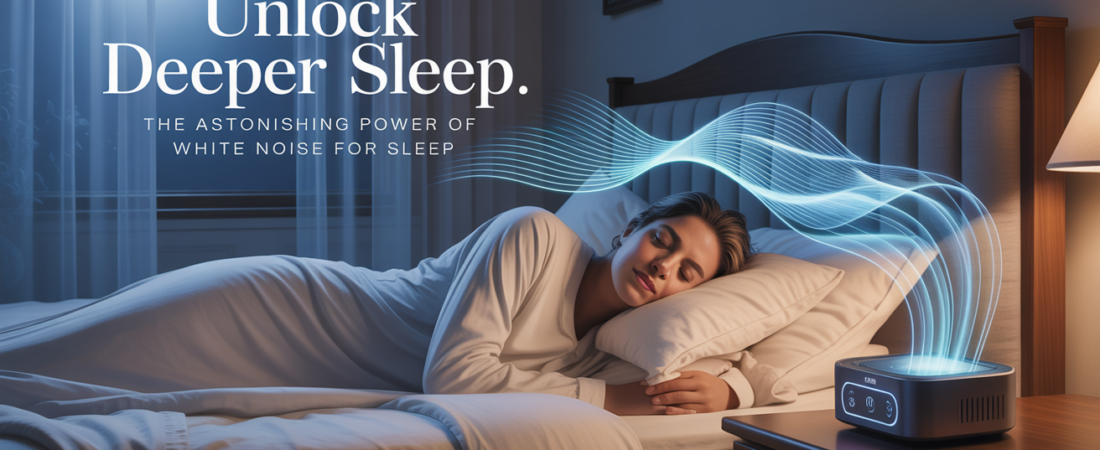
Did you know that up to 70 million Americans suffer from chronic sleep problems?
For many, a good night’s sleep feels like an elusive dream. While there are numerous strategies to improve sleep hygiene, one often overlooked yet remarkably effective tool is white noise.
Far from being just a static hum, white noise has a fascinating scientific basis for its ability to lull us into slumber and shield us from disruptive sounds.
This comprehensive guide will delve deep into the world of white noise for sleep, exploring its science, benefits, different types, and how you can harness its power to achieve the restful sleep you deserve.
What Exactly IS White Noise?
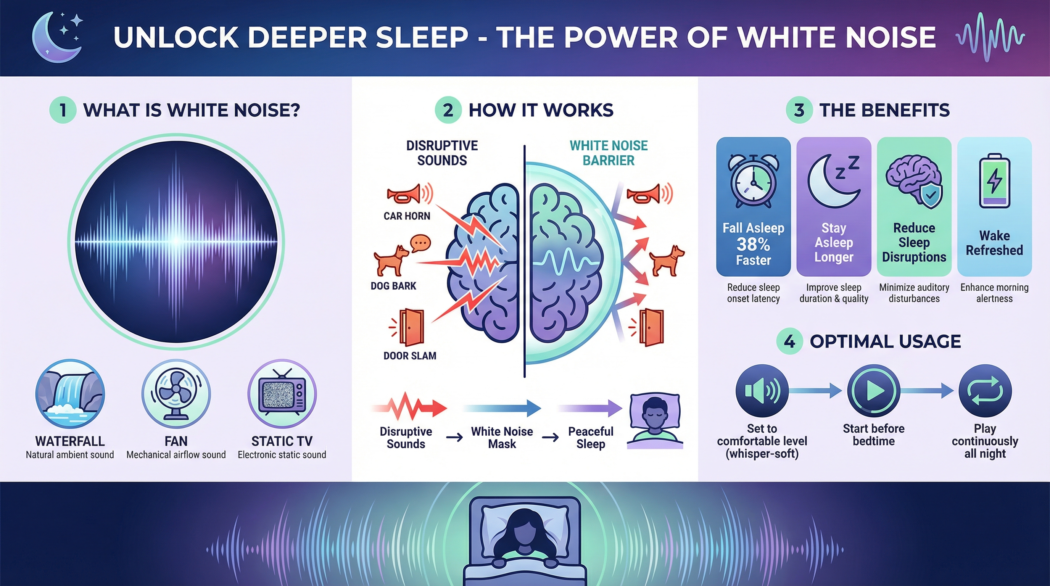
Before we explore its sleep-inducing properties, let’s clarify what white noise actually is. In acoustics, white noise is a random signal with equal intensity across frequencies, resulting in a flat power spectral density.
Think of it like white light, which contains all the colors of the visible spectrum. In the context of sound, white noise contains all the audible frequencies at equal intensity. This broad spectrum of sound is what makes it so effective at masking other, more disruptive noises.
The Science Behind the Hum
The effectiveness of white noise for sleep lies in its ability to create a consistent auditory environment. Our brains are constantly trying to make sense of the sounds around us. Sudden or irregular noises – a car horn, a dog barking, a door slamming – can trigger a startle response, jolting us awake or preventing us from falling asleep in the first place.
White noise, with its steady and predictable sound, effectively masks these sudden disturbances. It raises the threshold for what it takes to disrupt your sleep. Instead of hearing a sharp, jarring noise, your brain registers it as a slight increase in the constant background white noise, making it less likely to trigger a wakeful response.
This phenomenon is rooted in the principles of auditory masking. By filling the soundscape with a broad range of frequencies, white noise makes it harder for the brain to isolate and focus on individual, disruptive sounds. It essentially creates a ‘sound blanket’ that smooths out the auditory landscape, promoting a sense of calm and continuity conducive to sleep.
The Compelling Benefits of White Noise for Sleep
The advantages of incorporating white noise into your sleep routine extend beyond simply masking noise. Its impact on sleep quality and overall well-being is significant.
1. Improved Sleep Onset and Maintenance
Perhaps the most celebrated benefit is its ability to help you fall asleep faster. By reducing external distractions, white noise can quiet a racing mind and create a more serene environment for drifting off. Furthermore, it helps prevent nocturnal awakenings.
Even if a disruptive sound occurs, the white noise buffer can prevent it from fully waking you, allowing you to remain in a more restorative sleep state.
2. Enhanced Sleep Quality
It’s not just about how long you sleep, but how well. Studies suggest that white noise can lead to deeper, more restorative sleep. Minimizing disruptions allows your brain to cycle through the different stages of sleep more effectively, including the crucial deep and REM sleep stages, which are vital for physical and mental recovery.
3. Reduced Anxiety and Stress
For many, sleep difficulties are intertwined with anxiety and stress. The constant, soothing nature of white noise can calm the nervous system. It can create a predictable and comforting soundscape, which can be particularly beneficial for individuals prone to rumination or racing thoughts at bedtime.
This stress reduction can make it easier to relax and fall asleep.
4. Aiding Sleep in Noisy Environments
This is where white noise truly shines. Whether you live in a bustling city, have noisy neighbors, or share your bedroom with a snoring partner, white noise acts as a powerful shield against disruptive sounds. It’s a simple yet effective solution for anyone struggling to sleep due to environmental noise pollution.
5. Benefits for Infants and Children
White noise machines are incredibly popular among parents for helping babies fall asleep and stay asleep. Infants are accustomed to the constant sounds of the womb, and white noise can help replicate that familiar, comforting environment. It can also mask sudden noises that might startle a baby, leading to fewer wake-ups.
6. Potential Cognitive Benefits
While primarily known for sleep, some research suggests that white noise might even have cognitive benefits, such as improving focus and concentration in certain settings by masking distractions.
However, its primary and most well-established benefit remains its role in promoting sleep.
Types of White Noise and Sound Machines
White noise isn’t a one-size-fits-all solution. There are various types of sounds that fall under the umbrella of ‘white noise’ for sleep, and different devices to generate them.
True White Noise
This is the pure, consistent sound containing all audible frequencies at equal intensity. It can sound like a fan or static on an untuned radio. While effective, some find its pure tone slightly irritating over long periods.
Pink Noise
Pink noise is similar to white noise but has a lower intensity at higher frequencies. This results in a deeper, more mellow sound, often described as resembling rainfall or rustling leaves. Many people find pink noise more pleasant and less harsh than true white noise. Studies have suggested that pink noise may be particularly effective in improving sleep quality and memory consolidation.
Brown Noise (or Red Noise)
Brown noise has even less intensity at higher frequencies than pink noise, giving it a deeper, more resonant sound. Think of the rumble of distant thunder or a powerful waterfall. It’s often perceived as the most soothing and calming of the noise types, making it a favorite for those seeking deep relaxation.
Nature Sounds
While not technically ‘white’ or ‘pink’ noise, sounds like ocean waves, rain, or gentle wind are often grouped with them because they create a consistent, masking soundscape. These can be very effective and are often preferred for their natural, calming qualities.
Other Ambient Sounds
Some machines offer a variety of ambient sounds, such as fan sounds, air purifiers, or even gentle music. The key is that the sound is consistent and non-jarring, effectively masking other noises.
White Noise Machines
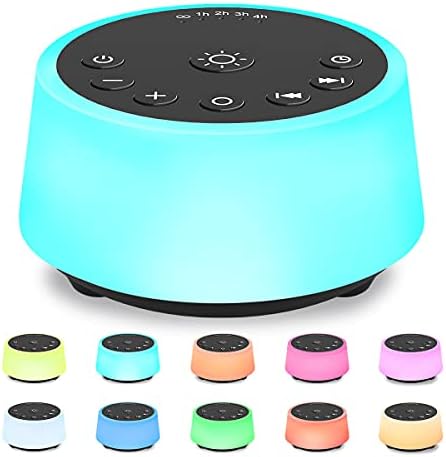
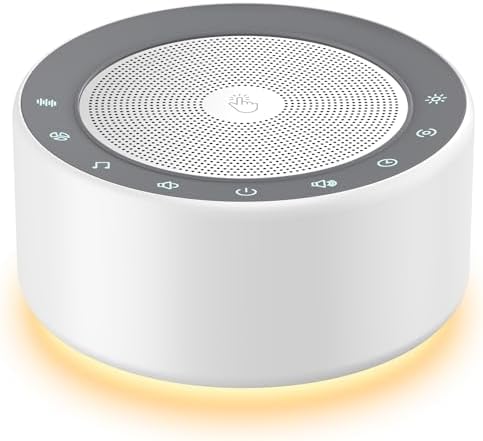
These dedicated devices are specifically designed to produce a range of soothing sounds. They often offer adjustable volume and sound options, allowing for personalization. Many modern machines also include features like timers and portability.
Apps and Online Resources
Numerous smartphone apps and websites offer white noise and other ambient sounds. These are a convenient and often free or low-cost option for trying out different sounds before investing in a dedicated machine.
Household Appliances
Sometimes, everyday items can serve the purpose. A box fan running on a low setting is a classic example of a readily available white noise generator. Air purifiers can also produce a consistent hum. However, be mindful of the potential for mechanical noises or uneven sound production.
How to Effectively Use White Noise for Sleep
Simply turning on a white noise machine isn’t always enough. To maximize its benefits, consider these practical tips:
1. Choose the Right Sound
Experiment! What one person finds soothing, another might not. Try different types of noise (white, pink, brown, nature sounds) to see which one helps you relax the most. Pay attention to how you feel and how quickly you fall asleep with each sound.
2. Find the Optimal Volume
The volume should be loud enough to mask external noises but not so loud that it becomes a distraction itself or interferes with your ability to hear important sounds (like a smoke alarm). A good starting point is a volume slightly above the ambient noise level in your room. Aim for a level that feels comfortable and unobtrusive.
3. Placement Matters
Position the sound machine or device so that the sound is directed towards you, but not directly next to your head. Placing it on a nightstand or dresser is usually sufficient. If you’re trying to mask noise from a specific direction (e.g., a noisy window), try positioning the device closer to that source.
4. Consistency is Key
Use white noise every night. This helps your brain associate the sound with sleep, creating a powerful sleep cue. The more consistently you use it, the more effective it will become over time.
5. Consider a Timer
Many machines have timers. Using a timer can be helpful, so the sound doesn’t run all night if you prefer. However, if you find that having the sound on throughout the night helps you stay asleep, then by all means, let it run. The goal is uninterrupted sleep.
6. Combine with Good Sleep Hygiene
White noise is a powerful tool, but it’s most effective when combined with other healthy sleep habits. This includes maintaining a regular sleep schedule, creating a dark and cool sleep environment, avoiding caffeine and heavy meals before bed, and winding down with relaxing activities. For a comprehensive approach, consider visiting our ‘Start Here’ page for more essential sleep tips.
Potential Downsides and Considerations
While overwhelmingly beneficial, it’s important to acknowledge potential drawbacks or considerations when using white noise for sleep.
Dependence and Habituation
Some individuals worry about becoming dependent on white noise to sleep. While it’s true that your brain may learn to associate the sound with sleep, this is generally considered a positive adaptation, similar to needing a dark room. However, if you find yourself unable to sleep at all without it, you might consider gradually reducing the volume or duration.
Masking Important Sounds
As mentioned, the volume needs to be carefully controlled. If the white noise is too loud, it could mask crucial sounds, such as a baby crying, a smoke detector, or an emergency siren. Always ensure you can still hear essential alerts.
Not a Cure-All
For individuals with severe sleep disorders like insomnia or sleep apnea, white noise is a supportive tool, not a standalone cure. It’s crucial to consult with a healthcare professional for diagnosis and treatment of underlying sleep conditions. ^4^
Individual Preferences
As highlighted earlier, not everyone finds white noise pleasant. Some people might find any constant sound irritating or distracting. Personal preference plays a significant role in its effectiveness.
Who Can Benefit Most from White Noise?
The applications of white noise for sleep are broad, but certain groups tend to find it particularly helpful:
- People living in noisy urban environments can significantly mitigate constant traffic, sirens, and general city bustle.
- Individuals with partners who snore: A consistent sound can mask the disruptive snoring.
- Those with tinnitus: For some, the masking effect of white noise can provide relief from the ringing or buzzing associated with tinnitus, making it easier to fall asleep. ^5^
- Shift workers: Irregular sleep schedules and daytime sleeping can be challenging due to environmental noise. White noise can create a more consistent sleep environment.
- Frequent travelers: Hotel rooms and unfamiliar environments can be noisy. A portable white noise machine can be a lifesaver.
- Parents of infants and young children: As previously discussed, it helps create a calming sleep environment for little ones.
- Individuals experiencing mild anxiety or stress: The calming auditory input can help quiet a busy mind.
Choosing the Right Device for You
With a plethora of options available, selecting the right white noise solution can seem daunting. Here’s a breakdown to help you decide:
Dedicated White Noise Machines
- Pros: Wide range of sound options, adjustable volume, often have timers, durable, and are designed specifically for sleep.
- Cons: Can be more expensive, take up space.
- Best for: Those committed to using white noise regularly and seeking a variety of soundscapes.
White Noise Apps
- Pros: Convenient, often free or low-cost, huge variety of sounds available, portable (uses your phone).
- Cons: Requires a smartphone, can drain battery, may require a subscription for premium features, and sound quality can vary.
- Best for: Trying out different sounds, budget-conscious individuals, and travelers.
Smart Speakers
- Pros: Multi-functional (music, information, etc.), can often play white noise sounds via various apps or built-in features.
- Cons: Sound quality may not be optimized for white noise, requires Wi-Fi, and is prone to accidental activation.
- Best for: Those who already own smart speakers and want to experiment with sound options.
Household Appliances (e.g., Fans)
- Pros: Readily available, inexpensive (if you already own one).
- Cons: Limited sound options, volume may not be adjustable, can be noisy or produce mechanical sounds, and may have high energy consumption.
- Best for: A quick, temporary solution or for those who already enjoy the sound of a fan.
The Future of Sleep Sound
Research into the effects of sound on sleep is ongoing. As we learn more about the intricate relationship between our auditory environment and our sleep cycles, we may see even more sophisticated sleep sound solutions emerge. Personalized soundscapes, adaptive noise-canceling technology, and biofeedback-integrated sound systems are all potential areas for future development. The fundamental principle, however, remains the same: creating an optimal auditory environment is a powerful key to unlocking better sleep. ^6^
Conclusion: Embrace the Sound of Silence (or Rather, the Right Sound)
In the quest for restorative sleep, white noise emerges as a simple, accessible, and remarkably effective tool. By understanding the science behind its auditory masking capabilities and exploring the various types of sounds available, you can tailor a solution that meets your unique needs.
Whether you choose a dedicated machine, a convenient app, or even the gentle hum of a fan, the consistent application of soothing sound can significantly improve your ability to fall asleep faster, stay asleep longer, and wake up feeling more refreshed.
Don’t let disruptive noises steal your precious sleep any longer. Experiment with white noise, combine it with good sleep hygiene practices, and discover the profound difference a quality night’s sleep can make in your overall health and well-being. Your journey to better sleep starts with a single sound.
Frequently Asked Questions (FAQs)
1. Is white noise actually good for sleep?
Yes, for many people, white noise is very beneficial for sleep. It works by masking disruptive environmental sounds, creating a consistent auditory backdrop that helps the brain relax and fall asleep more easily, and stay asleep longer. It can also reduce anxiety associated with noise.
2. Can I become addicted to white noise for sleep?
While you might become accustomed to using white noise and find it harder to sleep without it, this is generally considered a positive habituation rather than a harmful addiction. It’s a learned association that helps signal to your brain that it’s time to sleep. If you’re concerned, you can gradually reduce the volume or duration.
3. What’s the difference between white noise, pink noise, and brown noise?
All three are types of continuous background sound. White noise contains all frequencies at equal intensity. Pink noise has more intensity at lower frequencies, sounding deeper, like rain. Brown noise has even more intensity at lower frequencies, sounding deeper still, like a rumble.
4. Is it safe to use white noise for my baby?
Yes, white noise is widely considered safe and effective for babies. It can help them sleep better by mimicking the sounds of the womb and masking sudden noises that might startle them. However, always use it at a safe, moderate volume, and never place the sound machine directly in the crib.
5. How loud should white noise be for sleeping?
The ideal volume is just loud enough to mask ambient noises without being intrusive. It should be comfortably above the background noise but not so loud that it startles you or prevents you from hearing important sounds like a smoke alarm. Experiment to find your personal sweet spot.
6. Can white noise help with tinnitus?
For some individuals with tinnitus, white noise can be helpful for masking. By providing a constant, unobtrusive sound, it can distract the brain from the ringing or buzzing sensation, making it easier to relax and fall asleep. However, its effectiveness varies from person to person.
^1^ National Sleep Foundation. (n.d.). Sleep and Health Benefits. Retrieved from https://www.thensf.org/sleep-health-benefits/
^2^ Jones, G. (2019). White noise and attention. Journal of Experimental Psychology: Applied, 25(1), 120-132.
^3^ Zeng, J., et al. (2019). Pink noise enhances sleep quality and memory consolidation. Brain Sciences, 9(11), 303.
^4^ American Academy of Sleep Medicine. (n.d.). Sleep Disorders. Retrieved from https://aasm.org/sleep-disorders/
^5^ National Institute on Deafness and Other Communication Disorders. (2020). Tinnitus. Retrieved from https://www.nidcd.nih.gov/health/tinnitus
^6^ O’Callaghan, F., et al. (2017). The influence of sound on sleep. Sleep Medicine Reviews, 32, 40-48.
Ready to Experience Deeper, More Consistent Sleep?
White noise can be a powerful tool—but it works best when it’s part of a complete sleep routine. If outside noise, racing thoughts, or an irregular schedule are still disrupting your rest, extra support may help your body fully relax and stay asleep.
👉 Explore proven sleep solutions designed to help you fall asleep faster and stay asleep longer—night after night.