
In today’s fast-paced world, quality sleep can feel like a luxury. Stress, screens, and busy schedules disrupt sleep, so millions seek relief in natural sleep aids. Unlike prescription options, natural sleep aids offer a gentler approach, often with fewer side effects and no risk of dependence.
This guide covers what you need to know about natural sleep aids, including popular choices and how to pick the best one for you. Whether you have occasional insomnia or chronic sleep issues, we’ll help you navigate the top options in 2026.
Discover Why Natural Sleep Remedies Like CBN Are Trending
Why Consider Natural Sleep Aids?
Sleep is crucial for health, as it affects mood, productivity, immunity, and heart health. Experts at Johns Hopkins note that poor sleep raises the risk of diabetes and hypertension. The Sleep Foundation reports nearly one-third of adults have insomnia symptoms, which leads many to try alternatives to drugs.
Natural sleep aids support the body’s own mechanisms for relaxation and rest. These include herbs, minerals, hormones, and lifestyle remedies that boost melatonin, ease anxiety, or calm the nervous system. Unlike synthetic options, plant- or food-based remedies appeal to those who prefer holistic solutions.
Benefits of all natural sleep aids include:
- Fewer Side Effects: Many are non-habit-forming and gentle on the body.
- Holistic Support: They address root causes such as stress and nutrient deficiencies.
- Accessibility: Available without a prescription, often in tea, supplement, or essential oil form.
- Long-Term Use: Safe for ongoing use when taken as directed.
- Non-addictive
However, they’re not a cure-all. The Mayo Clinic advises consulting a doctor before starting any sleep aid, especially if you have underlying health conditions or take medications.
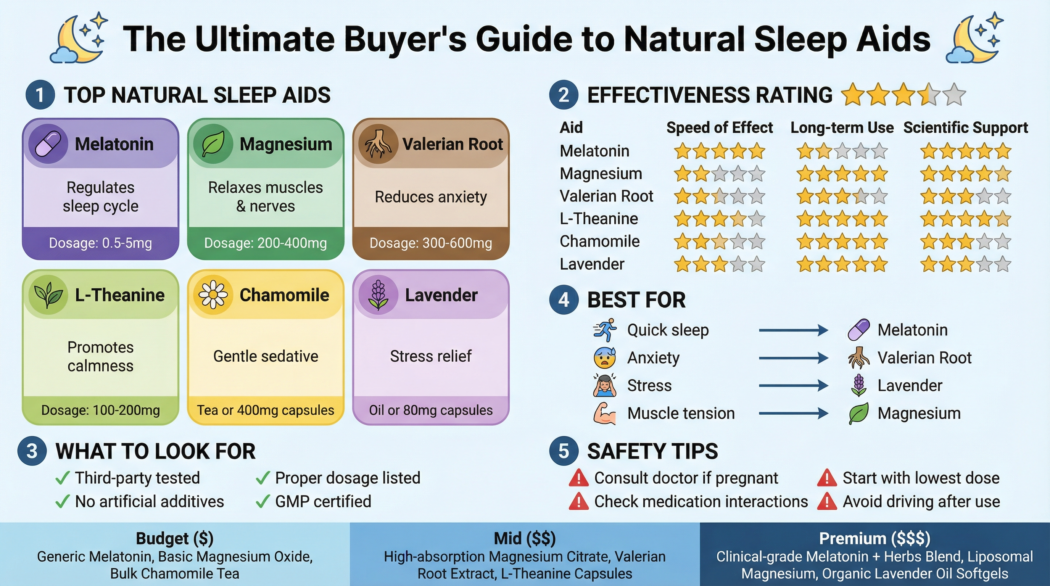
Ultimate Buyer’s Guide to Natural Sleep Aids – What Works and Why
Drawing from the latest scientific studies, clinical evidence, and insights from trusted sources like the Sleep Foundation, Mayo Clinic, and National Council on Aging, we’ve curated a list of the most effective natural sleep aids for 2026. These options harness nature’s power to promote better rest without the risks associated with synthetic prescription drugs.
For each, we’ll explore key benefits, recommended usage, potential side effects, and my top picks to help you make an informed choice tailored to your sleep needs. Whether you’re battling occasional sleeplessness, nightshift schedules or chronic insomnia, these remedies backed by research, can guide you toward restorative nights.
1. Melatonin
Melatonin is a signal hormone produced by the pineal gland that regulates 24 hour circadian cycles. Supplements mimic this effect, helping with jet lag, shift work, or delayed sleep phase syndrome.
- Benefits: Reduces time to fall asleep; improves sleep quality. A review by the Sleep Foundation notes it’s especially useful for circadian rhythm disorders.
- How to Use: 1-5 mg taken 30-60 minutes before bed. Start low to avoid grogginess.
- Side Effects: Headaches, dizziness, or daytime drowsiness. Rare interactions with blood thinners. Can stop working over time.
- Evidence: Mayo Clinic studies show mild benefits for short-term use. Healthline lists it among the top 10 natural sleep aids for 2025.
2. Valerian Root
Derived from the valerian plant, this herb has been used for centuries to treat insomnia and anxiety.
- Benefits: Promotes relaxation by increasing GABA levels in the brain, a neurotransmitter that calms nerves.
- How to Use: 300-900 mg in capsule or tea form, 30 minutes before bed. It may take 2-4 weeks for the full effects.
- Side Effects: Headache, upset stomach, or vivid dreams. Avoid alcohol or sedatives.
- Evidence: PubMed Central reviews suggest it improves sleep latency and quality, though results vary. The VA Whole Health Library recommends it for mild insomnia.
Best Bedtime Teas For Goodnight Sleep
3. Magnesium Glycinate
This mineral plays a key role in muscle relaxation and neurotransmitter function.
- Benefits: Helps regulate melatonin and GABA, reducing stress and improving deep sleep stages.
- How to Use: 200-400 mg of magnesium glycinate or citrate before bed. Foods like nuts and leafy greens also provide it.
- Side Effects: Diarrhea if overconsumed; consult for kidney issues.
- Evidence: Chandra, MD, highlights its effectiveness in helping people stay asleep. NCOA lists it among the top natural remedies.
4. Chamomile
Often consumed as tea, chamomile contains apigenin, an antioxidant that binds to brain receptors for sedation.
- Benefits: Reduces anxiety and promotes mild sedation without a morning hangover.
- How to Use: 1-2 cups of tea 45 minutes before bed.
- Side Effects: Allergic reactions in ragweed-sensitive individuals.
- Evidence: Johns Hopkins recommends it for its caffeine-free calming effects. Holland & Barrett notes its centuries-old use.
5. Lavender
Used in aromatherapy, lavender essential oil reduces heart rate and blood pressure.
- Benefits: Enhances slow-wave sleep; great for anxiety-related insomnia.
- How to Use: Diffuse oil, use in baths, or apply topically (diluted).
- Side Effects: Skin irritation if undiluted; avoid ingestion.
- Evidence: WebMD slideshow praises its calming properties. Henry Ford Health suggests it for psychological relaxation.
6. Passionflower
This vine extract boosts GABA levels, similar to valerian.
- Benefits: Eases anxiety and improves sleep continuity.
- How to Use: 250-500 mg in tea or supplement form.
- Side Effects: Dizziness or confusion in high doses.
- Evidence: NCOA includes it in science-backed tips.
7. Tart Cherry Juice
Rich in natural melatonin and antioxidants.
- Benefits: Increases sleep time and efficiency.
- How to Use: 8 oz twice daily, especially before bed.
- Side Effects: High sugar content; opt for unsweetened.
- Evidence: Johns Hopkins notes its melatonin-supporting properties.
Ready to try a blend of these top aids in one amazing formula?🌙 Check out my Recommended all natural sleep supplement
8. CBD (Cannabidiol)
From hemp, CBD interacts with the endocannabinoid system.
- Benefits: Reduces pain and anxiety that disrupt sleep.
- How to Use: 25-75 mg in oil or gummies.
- Side Effects: Dry mouth or fatigue; check legality.
- Evidence: NCOA reports potential for better sleep without highs. WebMD includes it in natural aids.
9. Ashwagandha
An adaptogen herb that lowers cortisol.
- Benefits: Combats stress-induced insomnia.
- How to Use: 300-600 mg daily.
- Side Effects: Stomach upset; not for pregnant individuals.
- Evidence: Holland & Barrett suggests benefits for stress-related sleep issues.
10. L-Theanine
Found in green tea, it promotes relaxation without drowsiness.
- Benefits: Improves sleep quality by reducing mental chatter.
- How to Use: 200 mg with or without caffeine.
- Side Effects: Minimal; safe for most.
- Evidence: VA Library recommends for mild anxiety.
Beauty Sleep: 7 Essential Tips for Salon Owners to Boost …
Comparison Chart of Natural Sleep Aids
To help you decide, here’s a comparison table of key natural sleep aids, ranked by efficacy, cost, and ease of use. Data comes from sources like Healthline and Sleep Foundation.
| Melatonin | Regulates cycles | 1-5 mg | Headaches, drowsiness | $5-10 | 5 |
| Valerian Root | Reduces anxiety | 300-900 mg | Upset stomach | $10-15 | 4 |
| Magnesium | Muscle relaxation | 200-400 mg | Diarrhea | $8-12 | 4 |
| Chamomile | Mild sedation | 1-2 cups tea | Allergies | $5-8 | 3 |
| Lavender | Aromatherapy calm | Diffuse | Skin irritation | $10-20 | 3 |
| Passionflower | GABA boost | 250-500 mg | Dizziness | $10-15 | 3 |
| Tart Cherry Juice | Melatonin source | 8 oz | High sugar | $15-20 | 3 |
| CBD | Pain/anxiety relief | 25-75 mg | Dry mouth | $20-40 | 4 |
| Ashwagandha | Stress reduction | 300-600 mg | Stomach upset | $10-15 | 3 |
| L-Theanine | Mental relaxation | 200 mg | None notable | $8-12 | 3 |
(Note: Evidence level based on clinical studies; 5 = strong consensus.)
How to Choose the Right Natural Sleep Aid
Selecting the best natural sleep aid depends on your specific needs:
- For Falling Asleep Fast: Try melatonin or chamomile.
- For Staying Asleep: Magnesium or valerian root.
- For Anxiety: Lavender, passionflower, or ashwagandha.
- Budget and Form: Teas are affordable and easy; supplements offer precision.
- For nightshift workers
- Travel and jetlag
Start with the lowest dose, track results, and consult a healthcare provider. Choose third-party tested products for quality.
Combining Natural Sleep Aids with Lifestyle Changes
Natural sleep aids work best alongside good habits:
- Maintain a consistent sleep schedule.
- Limit screens an hour before bed.
- Exercise regularly, but not close to bedtime.
- Create a cool, dark sleep environment.
- Avoid caffeine after noon.
Johns Hopkins suggests warm milk or tart cherry juice as simple additions.
FAQ: Common Questions About Natural Sleep Aids
What are the safest natural sleep aids?
Most are safe, but melatonin and chamomile have the fewest side effects for general use. Always check with a doctor.
Can natural sleep aids be taken long-term?
Yes, unlike habit-forming drugs, but monitor for tolerance. Valerian may require cycling.
Do natural sleep aids interact with medications?
Potentially—e.g., valerian with sedatives. Consult professionals.
Are natural sleep aids effective for children?
Some, like chamomile, are, but dosages differ. Pediatrician approval needed.
What’s the best natural sleep aid for anxiety?
Lavender or ashwagandha excel here.
How quickly do natural sleep aids work?
Varies: Melatonin in 30 minutes; herbs like valerian in weeks.
🌙 Struggling with sleep? Checkout my recommended all natural sleep solution
Conclusion: Reclaim Your Rest with Natural Sleep Aids
In the quest for restorative sleep, natural sleep aids stand out as empowering allies, harnessing nature’s gentle power to realign your body’s rhythms without the drawbacks of synthetic alternatives. Whether you opt for melatonin’s swift embrace, valerian’s calming whisper, or magnesium’s profound relaxation, this guide has illuminated a world of proven, accessible options tailored to your unique needs.
By integrating these aids with mindful lifestyle tweaks—like a serene bedtime routine and balanced daily habits—you can transform restless nights into rejuvenating escapes. Embrace this holistic path to better sleep today; your well-rested self awaits. If challenges linger, consult a healthcare professional to ensure your journey is safe and sustainable.