Did you know that a staggering 70 million Americans suffer from chronic sleep problems? This isn’t just a minor inconvenience; it’s a public health crisis affecting productivity, mood, and long-term health. As we hurtle towards 2026, the way we approach sleep is set to undergo a radical transformation.
Driven by technological advancements, a deeper understanding of our biology, and a growing awareness of sleep’s crucial role in overall well-being, the sleep landscape is evolving at an unprecedented pace.
Get ready to discover the top 14 sleep trends that will define how we rest, recover, and rejuvenate in 2026.
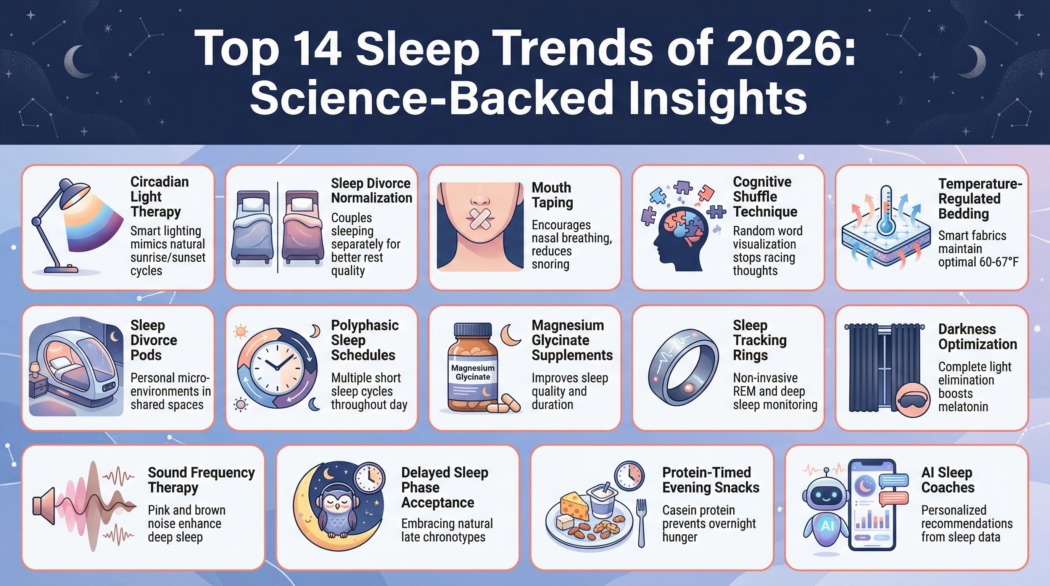
One Sleep Trend Stands Out in 2026: Calming the Nervous System
Many of the top sleep trends in 2026 point to the same root issue: an overactive nervous system at night.
Tracking devices and sleep data reveal the problem — but calming your body before bed is what actually improves sleep quality. That’s why many people are turning to CBN gummies as part of their nightly wind-down routine.
They’re commonly used to promote relaxation and deeper, more consistent sleep without next-day grogginess.
👉 Support Natural Sleep With CBN Gummies
1. AI-Powered Sleep Coaching and Personalization
Artificial intelligence (AI) is no longer just a buzzword; it’s becoming an indispensable tool in optimizing our lives, and sleep is no exception. In 2026, expect AI-powered sleep coaching to move beyond basic sleep tracking.
These sophisticated systems will analyze vast amounts of personal data – including sleep patterns, heart rate variability, movement, and even environmental factors – to provide hyper-personalized recommendations.
Imagine an AI coach that not only tells you when you slept poorly but also identifies why and offers tailored advice, such as specific mindfulness exercises before bed, optimal room temperature adjustments, or even dietary suggestions.
Companies are already integrating AI into smart mattresses, wearables, and dedicated apps, promising a future where your sleep coach understands you better than you understand yourself.
The Science Behind It: AI algorithms can process complex datasets far beyond human capacity, identifying subtle correlations between lifestyle choices and sleep quality. This allows for a level of personalization previously unimaginable.
According to a Grand View Research report, the global sleep technology market is projected to reach USD 67.9 billion by 2027, with AI playing a significant role in this growth.
2. Wearable Technology for Deeper Sleep Insights
Wearable devices have been around for a while, but in 2026, they will offer even more sophisticated insights into our sleep. We’re talking about devices that go beyond simply tracking steps and heart rate.
Expect advanced sensors capable of monitoring blood oxygen levels (SpO2), body temperature fluctuations, respiratory rate, and even brainwave activity (EEG).
These enhanced capabilities will enable more accurate detection of sleep stages (light, deep, REM), identification of potential sleep disorders such as sleep apnea, and a more nuanced understanding of how our daily activities affect our nightly rest. The focus will shift from just tracking sleep to understanding the underlying physiology that dictates its quality.
Expert Insight: “The next generation of wearables will be less about vanity metrics and more about actionable health data,” says Dr. Anya Sharma, a leading sleep physician.
“By capturing a wider array of physiological signals, we can move towards early detection and intervention for sleep-related health issues.”
3. Smart Home Integration for Optimized Sleep Environments
Your bedroom is about to become your ultimate sleep sanctuary, thanks to the seamless integration of smart home technology. In 2026, smart lighting systems will automatically adjust color temperature and brightness to promote melatonin production as bedtime approaches and gently wake you with a simulated sunrise.
Smart thermostats will learn your preferred sleep temperatures and adjust them dynamically throughout the night. Even smart blinds and curtains will play a role, ensuring optimal darkness for uninterrupted sleep. This interconnected ecosystem will work in harmony to create the perfect sleep environment, minimizing disruptions and maximizing restorative sleep.
The Impact: A study published in the Journal of Sleep Research found that environmental factors, such as light and temperature, significantly influence sleep quality. Smart home technology addresses these variables proactively.
4. The Rise of Personalized Sleep Supplements and Nutraceuticals
While the idea of sleep supplements isn’t new, 2026 will see a significant shift towards personalized formulations. Leveraging genetic testing, microbiome analysis, and detailed sleep data from wearables, companies will offer bespoke blends of vitamins, minerals, herbs, and amino acids tailored to an individual’s specific needs and deficiencies.
Forget one-size-fits-all melatonin; think targeted nutritional support designed to address underlying issues contributing to poor sleep, whether it’s stress, hormonal imbalances, or nutrient gaps. This trend aligns with the broader movement towards precision medicine and personalized wellness.
Considerations: While promising, it’s crucial to consult with a healthcare professional before starting any new supplement regimen. For doctor-recommended natural sleep aids, consider options like these.
5. Sleep Tracking Beyond the Bedroom: Daytime Habits Matter
We’ve long known that what we do during the day affects our sleep. In 2026, this understanding will be further amplified, with greater emphasis on tracking and optimizing daytime behaviors that affect sleep. This includes monitoring caffeine intake, alcohol consumption, exercise timing and intensity, meal timing, and even stress levels throughout the day.
Advanced apps and wearables will integrate this information with sleep data to provide holistic insights. The focus will be on creating a synergistic relationship between our waking lives and our sleep quality, recognizing that sleep isn’t an isolated event but a continuous process influenced by our daily choices.
The Connection: Research consistently shows that factors like evening exercise, late-night meals, and excessive caffeine can disrupt the body’s natural sleep-wake cycle (circadian rhythm).
6. Enhanced Focus on Sleep Hygiene Education and Accessibility
As the importance of sleep becomes more widely recognized, there will be a surge in accessible and engaging sleep hygiene education. Expect more comprehensive online courses, interactive workshops, and readily available resources from reputable health organizations and sleep experts. The goal is to demystify sleep science and empower individuals with practical strategies for improving their sleep.
This trend is driven by a desire to move beyond quick fixes and towards sustainable sleep habits. Accessibility will be key, with content tailored for different learning styles and available across various platforms.
Impact on Public Health: Improved sleep hygiene can lead to significant public health benefits, including reduced accident rates, improved mental health, and better management of chronic diseases.
7. The Growth of Sleep Retreats and Immersive Sleep Experiences
For those seeking a deeper reset, sleep retreats and immersive sleep experiences will gain significant traction. These curated getaways will offer a holistic approach to sleep improvement, combining luxurious accommodations with expert-led workshops, mindfulness sessions, personalized sleep assessments, and digital detox periods.
Imagine a weekend dedicated entirely to optimizing your sleep, away from the distractions of daily life. These retreats will cater to a growing demand for wellness tourism focused on restorative rest and rejuvenation.
Market Growth: The wellness tourism market is booming, with a significant share dedicated to sleep and relaxation, indicating strong consumer interest in these experiences.
8. Advanced Sleep Tracking for Athletes and Performance Optimization
Athletes have long understood the critical role of sleep in recovery and performance. In 2026, the tools and insights available to them will become even more sophisticated. Beyond basic sleep tracking, expect advanced analytics that correlate sleep quality with training load, muscle recovery, injury risk, and peak performance metrics.
This will enable athletes and their coaches to fine-tune training schedules, optimize nutrition, and implement recovery strategies with unprecedented precision, ensuring they are performing at their best when it matters most.
Performance Edge: Elite athletes are increasingly leveraging sleep data to gain a competitive advantage. Companies specializing in sports science are developing tools specifically for this market.
9. The “Sleep-First” Culture in the Workplace
Forward-thinking companies will increasingly prioritize employee well-being by fostering a “sleep-first” culture. This trend involves implementing policies and initiatives that support healthy sleep habits, such as flexible work hours, designated quiet rooms for napping, educational workshops on sleep, and encouraging employees to disconnect after work hours.
Recognizing that well-rested employees are more productive, creative, and less prone to burnout, businesses will invest in creating an environment that values and supports sleep.
The Business Case: A RAND Corporation study estimated that insufficient sleep costs the U.S. economy billions of dollars annually in lost productivity. Investing in employee sleep is a sound business strategy.
10. Innovations in Sleep-Conscious Fashion and Textiles
Even our clothing will become more sleep-conscious. In 2026, we’ll see a rise in sleepwear and bedding made from innovative materials designed to enhance sleep quality. Think temperature-regulating fabrics that adapt to your body’s needs, moisture-wicking textiles that keep you dry and comfortable, and even fabrics infused with calming scents like lavender.
The focus will be on creating a sensory experience that promotes relaxation and deep, uninterrupted sleep.
Material Science: Advances in textile technology are enabling the creation of fabrics with enhanced breathability, thermoregulation, and antimicrobial properties, all contributing to a better sleep environment.
11. The Integration of Mindfulness and Meditation Apps with Sleep Tech
Mindfulness and meditation have long been recognized as powerful tools for combating stress and improving sleep. In 2026, expect a deeper integration of these practices with sleep technology. Apps will offer guided meditations and sleep stories dynamically adjusted to your real-time sleep data. For example, if your wearable detects restlessness, the app might subtly introduce calming sounds or a guided breathing exercise. This synergistic approach aims to address both the physiological and psychological aspects of sleep.
Mind-Body Connection: The link between mental well-being and sleep quality is well-established. Integrating mindfulness practices directly addresses the mental hurdles that often prevent restful sleep.
12. Personalized Sleep Soundscapes and Binaural Beats
Beyond generic white noise, 2026 will see a significant advancement in personalized sleep soundscapes. Leveraging AI and biofeedback, devices and apps will create custom audio environments designed to guide your brainwaves into deeper sleep states.
This includes the use of binaural beats, auditory illusions created by playing two slightly different frequencies to each ear, which are believed to influence brainwave activity. Imagine a soundscape that adapts in real-time to your sleep cycles, promoting longer periods of deep and REM sleep.
The Science of Sound: Research suggests that specific sound frequencies can influence brainwave patterns, potentially aiding in relaxation and sleep induction. For instance, theta waves are associated with deep relaxation and meditation.
13. Increased Focus on Circadian Rhythm Optimization
Understanding and optimizing our circadian rhythm – our internal biological clock – will be a cornerstone of sleep improvement in 2026. This trend involves a more holistic approach that considers factors such as light exposure (timing and intensity), meal timing, exercise, and social cues.
Wearables and apps will provide more detailed insights into our individual circadian rhythms, offering personalized recommendations for when to expose ourselves to light, when to eat, and when to wind down to align with our natural biological clocks. This moves beyond simply tracking sleep to actively managing our body’s natural sleep-wake cycle.
Circadian Health: Disruptions to the circadian rhythm are linked to a host of health problems, including sleep disorders, metabolic issues, and even increased risk of certain cancers. Optimizing it is crucial for overall health.
14. Sleep Tracking for Mental Health Monitoring
As our understanding of the intricate connection between sleep and mental health grows, sleep tracking will increasingly be used as a tool for monitoring and even predicting mental health states. Subtle changes in sleep patterns – such as increased wakefulness, altered sleep duration, or changes in REM sleep – can be early indicators of conditions like depression, anxiety, or bipolar disorder. In 2026, advanced sleep-tracking technologies, combined with AI analysis, will provide valuable data for individuals and clinicians to proactively manage mental well-being.
Early Detection: “Sleep disturbances are often one of the first and most persistent symptoms of mental health issues,” notes Dr. Emily Carter, a psychiatrist specializing in sleep disorders. “Leveraging sleep data can provide an objective measure to aid in early detection and intervention.”
2026’s Biggest Sleep Trend? Turning Insight Into Action
The future of sleep isn’t just about trends, technology, or data — it’s about what you do with that information.
If these 2026 sleep trends show anything, it’s that better sleep comes from calming the body, supporting natural rhythms, and creating a consistent nighttime routine.
That’s why many readers pair modern sleep insights with CBN gummies to relax faster, stay asleep longer, and wake up feeling more refreshed.
👉 Upgrade Your Sleep Routine With CBN Gummies
Conclusion: Embracing the Future of Rest
The sleep landscape of 2026 promises to be more personalized, data-driven, and technologically advanced than ever before. From AI coaches and advanced wearables to smart home environments and personalized supplements, the tools and trends emerging are designed to help us unlock the full potential of our sleep. As we navigate these innovations, the underlying message remains consistent: prioritizing sleep is not a luxury but a fundamental pillar of health, happiness, and productivity. By embracing these trends, we can move towards a future where quality rest is not just a hope, but a tangible reality for everyone.
Frequently Asked Questions (FAQs)
Q1: How will AI change sleep tracking in 2026?
A1: AI will move sleep tracking from simple data collection to sophisticated analysis. Expect AI-powered coaches to offer hyper-personalized insights and recommendations based on your unique sleep patterns, lifestyle, and even environmental data, going far beyond basic sleep scores.
Q2: What new types of data will wearables collect for sleep insights?
A2: Future wearables will likely track a wider array of physiological data, including blood oxygen levels (SpO2), respiratory rate, body temperature fluctuations, and potentially even brainwave activity (EEG), providing a more comprehensive picture of sleep quality and potential disorders.
Q3: Can smart home technology really improve my sleep?
A3: Yes, smart home technology can significantly enhance your sleep environment. Systems can automate lighting to promote melatonin production, adjust room temperature for optimal comfort, and ensure darkness, all contributing to fewer disruptions and more restorative sleep.
Q4: Are personalized sleep supplements safe and effective?
A4: Personalized sleep supplements, tailored to individual needs based on genetic or microbiome data, hold promise. However, it’s crucial to consult with a healthcare professional to ensure safety and effectiveness, and to understand potential interactions or underlying health conditions.
Q5: How important is optimizing my circadian rhythm for sleep?
A5: Optimizing your circadian rhythm is critically important. It’s your body’s natural internal clock that regulates sleep-wake cycles. Aligning your daily activities (like light exposure, eating, and exercise) with your circadian rhythm can dramatically improve sleep quality and overall health.
Q6: Will sleep tracking be used to monitor mental health?
A6: Yes, there’s a growing trend to use sleep-tracking data as an indicator of mental health. Subtle changes in sleep patterns can be early warning signs for conditions like depression or anxiety, allowing for more proactive monitoring and intervention.
External Resources:
- National Sleep Foundation: https://www.thensf.org/ – A leading organization dedicated to improving health and well-being through sleep education and advocacy.
- Centers for Disease Control and Prevention (CDC) – Sleep and Sleep Disorders: https://www.cdc.gov/sleep/ – Provides information on sleep health, the importance of sleep, and common sleep disorders.
- Sleep Foundation: https://www.sleepfoundation.org/ – Offers comprehensive resources on sleep science, sleep disorders, and tips for better sleep.
- American Academy of Sleep Medicine (AASM): https://aasm.org/ – The professional organization for sleep medicine, providing resources for patients and professionals.