Why Night Shift Sleep Problems Persist
If you work nights and feel tired yet unable to sleep properly as a night shift worker, you’re not alone — and you’re not doing anything wrong.
Night shift work creates a biological mismatch between your schedule and your internal clock. Unfortunately, most sleep advice is designed for people who sleep at night and wake during the day.
That’s why so many night shift workers suffer horribly.
- Try everything
- Follow “good sleep hygiene.”
- Use strong sleep aids
- Still feel chronically tired everyday
In reality, the problem isn’t effort — it’s misaligned strategy for night shift worker sleep. Up at night, sleep during the day.
Below, let’s look at the five most common sleep mistakes night shift workers make—why they happen, and how to address them for genuinely better rest.
Mistake #1: Treating Night Shift Sleep Like Regular Insomnia
This is the most damaging — and most common — mistake.
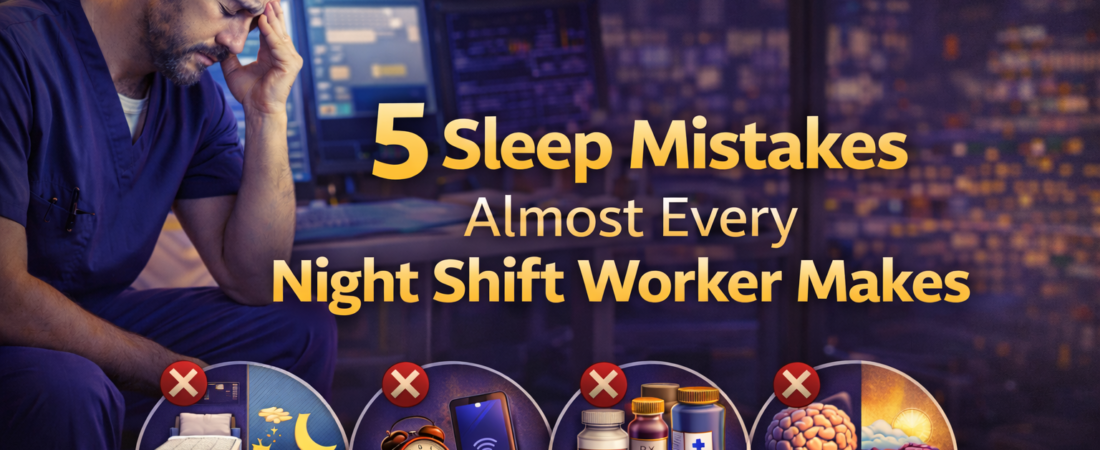
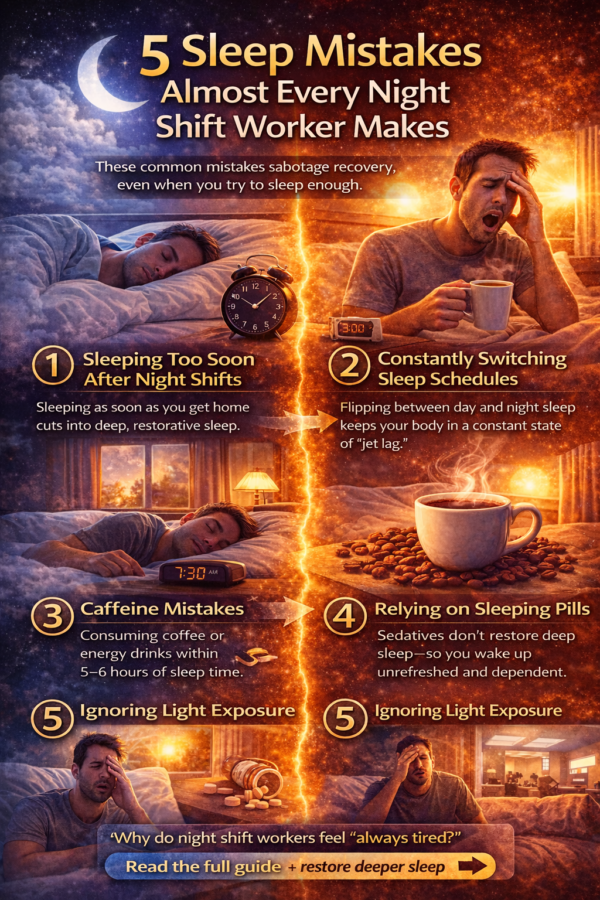
One crucial aspect to consider are the 5 Sleep Mistakes Almost Every Night Shift Worker Makes that can adversely affect your rest.
Many night shift workers assume their sleep problems are the same as, it is not.
Understanding night shift worker sleep challenges can lead to better strategies for night shift worker sleep.
- Stress insomnia
- Anxiety insomnia
- Occasional sleeplessness
They’re not.
Night shift sleep problems are primarily circadian, meaning your body’s internal clock is out of sync with your schedule.
Why this matters
When you treat circadian disruption like insomnia:
- Relaxation techniques only partially help.
- Sleep aids feel inconsistent.
- Frustration increases
- Sleep becomes pressured
Your body isn’t refusing sleep — it’s confused about when sleep is supposed to happen.
What to do instead:
Learn how circadian rhythm disruption affects night workers and adjust sleep timing, light exposure, and routines accordingly.
👉 Related: Circadian Rhythm Disruption and Sleep
Mistake #2: Exposing Yourself to Too Much Morning Light Exposure After Work
Light is the strongest signal to your brain.
Many night shift workers:
- Leave work in bright daylight.
- Don’t wear sunglasses
- Blue light exposure
- Doom scrolling on your phone before bedtime
- High stress
This tells the brain:
“It’s morning — stay awake.”
Why does this ruin sleep
Morning light exposures suppress melatonin and increase cortisol — exactly when your body needs the opposite.
Even 10–20 minutes of bright light exposure can:
- Delay sleep onset
- Fragments sleep
- Reduce sleep intensity or no REM sleep
What to do instead:
- Wear dark sunglasses after getting off work
- Keep indoor lighting low and blue light exposure
- Avoid screens before sleep
- Treat post-shift treat like a drug — dose matters.
👉 Related: Sleep Tips for Night Shift Workers
Mistake #3: Relying on Strong Sleep Aids to “Knock Yourself Out”
This mistake usually comes from hopelessness.
After weeks or months of poor sleep, many night shift workers escalate:
- Higher melatonin doses
- Sedating antihistamines
- Alcohol
- Prescription sleep medications
Why this backfires
Sedation is not the same as circadian repair.
Strong sleep aids may:
- Increase grogginess
- Reduce REM sleep
- Fragments sleep cycles
- Worsen long-term sleep quality.
Over time, they often stop working, increasing dosage doses and more side effects.
👉 What to do instead? Focus on stress regulation and nervous system calming, not forced sedation.
This is why system-based approaches tend to work better than single “knockout” ingredients.
👉 Related: Why Sleep Aids Stop Working — And What Actually Fixes Chronic Insomnia
Mistake #4: “Catching Up” on Sleep the Wrong Way on Days Off
It feels logical:
“I’ll just sleep normally on my days off.”
Unfortunately, this creates circadian whiplash.
What usually happens
- Day sleep during workdays
- Full night’s sleep on days off
- Then back to nights
Your body never stabilizes.
This leads to:
- Worse sleep before shifts
- More fatigue during work
- Poorer sleep quality overall
👉 What to do instead:
- Maintain a core sleep window even on days off.
- Allow small adjustments (1–2 hours max)
- Avoid complete day-night flips.
Consistency beats perfection.
👉 Related: Best Sleep Schedules for Night Shift Workers
Mistake #5: Ignoring Stress and Hormone Timing
Night shift work is inherently stressful — even if you enjoy your job.
It disrupts:
- Cortisol timing
- Adrenal signaling
- Nervous system balance
- Your life everyday
Many night shift workers feel:
- Wired after work
- Mentally awake but restless alert
- Unable to fully relax
- Like a zombie
Why this matters
If cortisol remains elevated after your shift, sleep becomes shallow and fragmented — no matter how tired you are.
What to do instead:
Support stress regulation rather than chasing sedation.
This is where non-sedating, system-based sleep support can help.
One example is Yusleep, which is designed to:
- Support stress cortisol regulation
- Calms the nervous system
- Improve sleep consistency without drowsiness or grogginess
- Low in Melatonin
- All Natural
- Better than OTC prescriptions
Why These Mistakes Are So Common
None of these mistakes comes from laziness or lack of discipline.
They happen because:
- Most sleep advice is written for day workers.
- Night shift biology is poorly explained.
- Quick fixes are heavily marketed.
- Chronic fatigue lowers decision quality.
Once night shift workers understand why sleep is different for them, improvement becomes much more achievable.
How to Fix Night Shift Sleep (The Right Way)
If you want the full system:
- Light timing
- Sleep windows
- Stress regulation
- Nutrition timing
- Recovery strategies
Start here…
👉 10 Proven Sleep Tips for Night Shift Workers
👉 Best Sleep Schedule for Night Shift Workers (Permanent vs Rotating Shifts)
Together, these posts form a complete framework for night shift sleep.
Final Thoughts
Night shift work isn’t just “sleeping at a weird time.”
It’s a biological; it demands an alternative approach, a different strategy.
Once you stop treating night shift sleep like regular insomnia — and start working with circadian biology — sleep becomes:
- More predictable sleep schedules.
- Minimizes stress and restores better sleep.
- Least impact on cortisol levels.
The goal isn’t perfect sleep. It’s better sleep on an imperfect schedule.