
Why Night Shift Sleep Is So Hard (And Not Your Fault)
If you work nights and find daytime sleep difficult, remember—your struggle is due to biology, not personal failure.
Night shift work forces your body to stay awake when it’s programmed to sleep and sleep when it’s programmed to be alert. That creates a state similar to permanent jet lag, disrupting hormones, digestion, mood, and cognitive performance.
Most sleep advice overlooks night shift workers because it assumes a so-called “normal” circadian rhythm. This guide presents something different.
Here are practical, science-backed sleep tips that address circadian disruption, stress hormones, and everyday night shift schedules—not just ideal conditions.
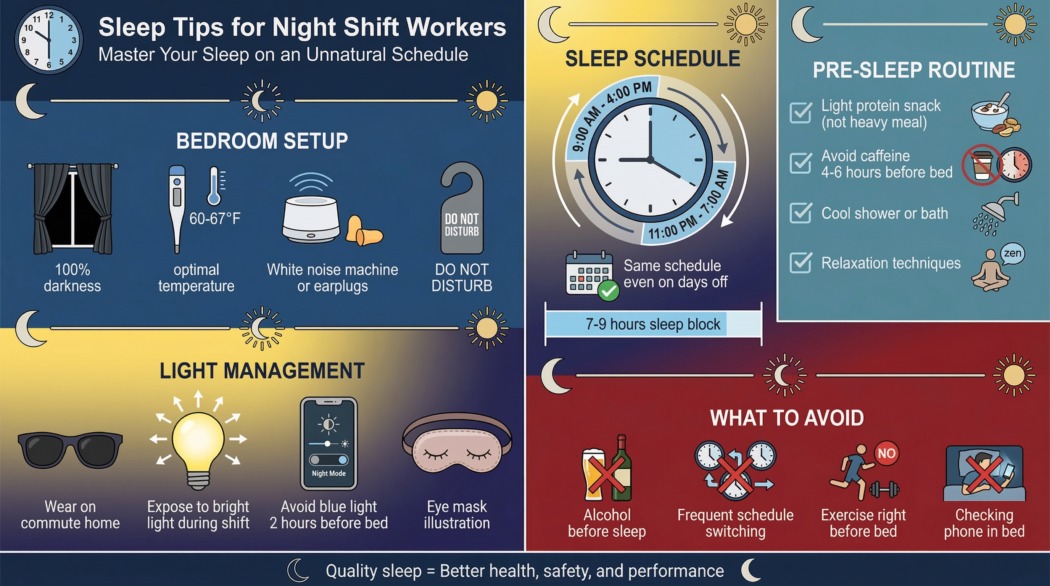
How Night Shift Work Disrupts Sleep Biology
Before the tips, it helps to understand why standard advice doesn’t work.
Night shift work disrupts:
- Melatonin (sleep hormone) release
- Cortisol timing (stress hormone)
- Core body temperature rhythms
- Gut–brain signaling
- Sleep pressure accumulation
This leads to:
- Difficulty sleeping after work
- Light, fragmented daytime sleep
- Feeling tired but wired
- Brain fog and irritability
👉 This is why quick fixes and stronger sleep aids often fail for shift workers.
🎥 Watch This Before Trying Another Sleep Aid
Night shift work disrupts sleep differently than stress or typical insomnia. This short video explains why most sleep advice fails for night shift workers — and what actually helps your body adapt.
🌙 Night shift sleep problems aren’t about effort — they’re about timing.
Once you understand how light, stress hormones, and circadian rhythm are affected by night work, the sleep tips below make a lot more sense — and work far more consistently.
Foundational Sleep Tips for Night Shift Workers
These tips form the base layer. Without them, supplements and techniques work inconsistently.
1. Protect Your Light Exposure Like It’s Medicine
Light is the strongest signal to your brain.
After your shift:
- Wear dark sunglasses on the way home.
- Avoid bright indoor lighting.
- Do not check your phone in bed.
Before your shift:
- Use bright light strategically to stay alert.
This helps prevent melatonin reduction at the wrong time.
2. Anchor a “Core Sleep Window” (Even If It’s Short)
Instead of trying to sleep “normally,” aim for a consistent core block:
- 4–6 hours at the same time every day
- Even on days off, if possible
Consistency matters more than duration for circadian stability. If shifts rotate or are unpredictable, set a core sleep block when possible, adjusting your light exposure and sleep environment to support rest. Flexible, consistent practices help minimize disruption.
3. Eat With Your Clock, Not the Clock on the Wall
Large meals at the wrong time confuse your circadian rhythm.
Better approach:
- Light meal after shift
- Main calories earlier in your “day.”
- Avoid heavy food right before sleep.
Digestive timing affects sleep more than most people realize. For practical application: have a light snack after your shift to avoid sleeping on a full stomach, a main meal early in your day, and small protein-rich snacks during your shift for energy without overload.
4. Control Noise and Temperature Aggressively
Daytime sleep is fragile.
Optimize your environment:
- Blackout curtains
- White noise or earplugs
- Cooler room temperature (65–68°F)
Small disruptions can cause significant sleep loss for shift workers, so proactively address noise and temperature barriers to maintain rest.
Advanced Sleep Tips for Night Shift Workers
Once foundations are in place, these strategies improve sleep depth and consistency.
5. Use Strategic Napping (Not Random Napping)
Naps can help or hurt.
Best approach:
- Short nap (20–40 min) before shift
- Avoid long naps too close to your main sleep window.
This improves alertness without disturbing sleep pressure.
6. Don’t Chase “Knockout” Sleep Aids
Many shift workers try increasingly powerful sleep aids.
The problem? Sedation ≠ circadian repair.
High-dose sleep aids may:
- Increase grogginess
- Fragment sleep cycles
- Worsen long-term sleep quality.
👉 This is why system-based approaches work better than single ingredients.
7. Support Stress Regulation, Not Sedation
Night shift work elevates cortisol — especially after work.
One example of a non-sedating, system-based option is Yuslee, formulated to address distinct sleep difficulties and those experienced by night shift workers.
Instead of forcing sleep, it’s designed to:
- Support stress regulation
- Calm the nervous system.
- Improve sleep reliability without grogginess.
👉 See how Yusleep fits into a system-based approach for night shift sleep
8. Treat Days Off Carefully
“Catching up” on normal sleep on days off can backfire.
Better approach:
- Keep your core sleep window.
- Allow minor adjustments (1–2 hours max)
- Avoid full day–night flips if possible.
This reduces circadian whiplash.
9. Pay Attention to Gut Health
Night shift work disrupts gut bacteria, which affects:
- Serotonin production
- Inflammation
- Sleep hormone signaling
If you experience:
- Night wakings
- Digestive discomfort
- Light, unrestful sleep
👉 Gut–brain alignment may be part of the problem.
Common Sleep Mistakes Night Shift Workers Make
10. Treating Night Shift Like Insomnia
Night shift sleep problems are circadian, not classic insomnia.
That’s why:
- Sleep hygiene alone fails.
- Relaxation techniques work inconsistently.
- Motivation doesn’t fix it.
When Night Shift Sleep Gets Easier
Sleep doesn’t become perfect — but it becomes:
- Sleep schedules become easier.
- Restorative
- Less stressful, more restful.
Most night shift workers improve their sleep without quitting once they stop fighting biology and start working with it. These strategies enhance rest and support long-term health.
By aligning sleep patterns and managing stress, workers can reduce risks associated with chronic sleep deprivation, such as cardiovascular issues and metabolic disruptions. Supporting both sleep and overall health becomes a sustainable part of maintaining a healthy lifestyle, even amid night shift challenges.
Final Thoughts
Night shift work is a different kind of sleep disruption — and it deserves different advice.
The goal isn’t perfect sleep. It’s better, more consistent sleep on an imperfect schedule.
When you align light, timing, stress regulation, and support tools, sleep stops feeling like a nightly battle.
Start your step-by-step journey. Start Here.