Feeling Tired Doesn’t Mean Caffeine Is Affecting Your Sleep
If you’re asking, “Does caffeine affect sleep even if you feel tired?”, you already sense something isn’t adding up.
You may feel exhausted all day. You might even fall asleep quickly at night. Yet you still:
- Wake up too early
- Toss and turn
- Sleep lightly
- Feel unrefreshed in the morning.
This leads many people to assume that caffeine isn’t the problem, even though they feel tired. But that assumption is often wrong.
Caffeine doesn’t always prevent sleep. Instead, it often changes how deeply and how long you sleep, even when you don’t feel wired.
Understanding this difference is key to fixing broken sleep patterns.
Does Caffeine Affect Sleep Even If You Feel Tired?
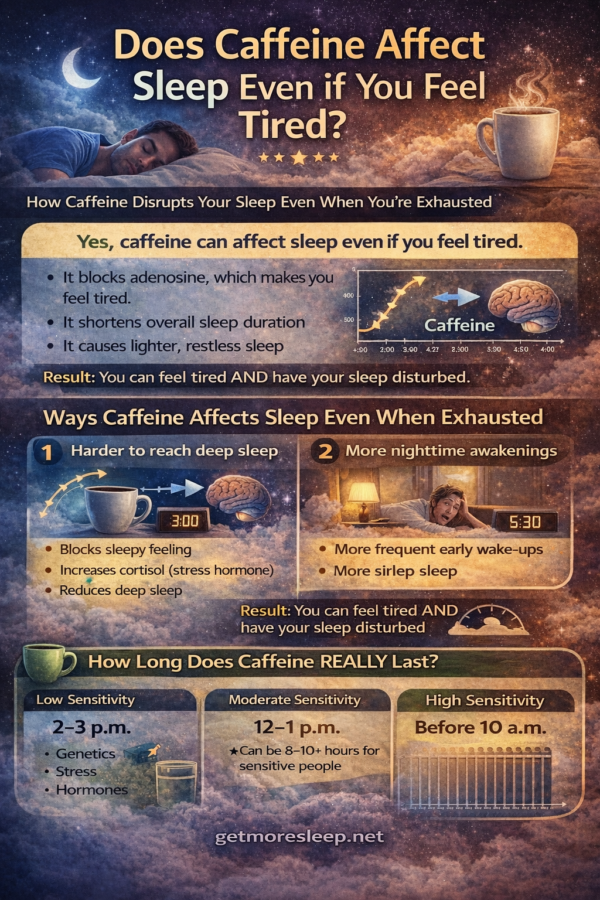
Yes, caffeine can affect sleep even if you feel tired. Caffeine blocks adenosine, the chemical that creates sleep pressure, and can reduce sleep depth, shorten sleep duration, and cause early awakenings—even when you fall asleep easily.
Caffeine is only one part of the problem — many people unknowingly reinforce poor sleep by repeating common sleep mistakes that reduce recovery, especially when working night or rotating shifts.
Why Feeling Tired Doesn’t Cancel Out Caffeine
Feeling tired and being ready for restorative sleep are not the same thing.
Adenosine vs. Fatigue
- Adenosine builds up during the day, creating sleep pressure.
- Caffeine blocks adenosine receptors, hiding sleepiness rather than removing it.
- You can feel exhausted while caffeine is still actively disrupting sleep signals.
By bedtime, you may be tired enough to fall asleep, but your brain chemistry is still altered.
How Caffeine Affects Sleep Quality (Not Just Falling Asleep)
Most people judge caffeine’s impact by one question:
“Can I fall asleep tonight?”
But that’s the wrong question.
What Caffeine Actually Disrupts
Even if you fall asleep:
- Deep sleep (slow-wave sleep) is reduced.
- REM sleep may be delayed or shortened
- Nighttime awakenings increase
- Early-morning wake-ups become more likely.
This is why people often sleep six hours or less without knowing why.
🌙 If caffeine is quietly disrupting your sleep, your body may need extra support. YuSleep is designed to help calm the nervous system and support deeper, uninterrupted sleep—without next-day grogginess.👉Learn how YuSleep supports better sleep quality.
How Long Does Caffeine Really Last in Your Body?
One of the biggest misunderstandings about caffeine is how long it stays active.
Caffeine Half-Life
- Average half-life: 5–7 hours
- For some people: 8–10+ hours
- Genetics, stress, hormones, and age all affect this.
What This Means
- A 2 p.m. coffee can still affect sleep at 10 p.m.
- A 4 p.m. energy drink can interfere with sleep after midnight.
- Even “morning-only” caffeine can reduce sleep depth.
This explains why many people feel tired but still sleep poorly.
Why You Can Fall Asleep but Still Wake Up Too Early
This is one of the most common caffeine-related sleep problems.
Caffeine and Early Wake-Ups
Caffeine:
- Raises nighttime cortisol
- Lightens sleep in the early morning hours
- Makes the brain more responsive to noise and light
Result:
You fall asleep fine, but wake up after 5–6 hours and can’t get back to sleep.
This pattern is extremely common in people who say:
“Caffeine doesn’t affect me.” Well it does and greatly affects your 6-8 hour sleep.
When caffeine use is layered on top of inconsistent sleep timing, it amplifies the #1 sleep habit that ruins recovery on night shift, making deep sleep even harder to maintain.
Does Caffeine Affect Sleep More as You Get Older?
Yes—very often.
As you age:
- Caffeine metabolism slows
- Sleep becomes lighter naturally.
- Hormonal changes increase sensitivity.
Many people tolerate caffeine well in their 20s but struggle in their 30s, 40s, and beyond without realizing caffeine is the reason.
Hidden Sources of Caffeine That Still Affect Sleep
You may think you’ve “cut back,” but caffeine hides everywhere.
Common Hidden Sources
- Green and black tea
- Chocolate
- Pre-workout supplements
- Energy drinks
- Certain pain relievers
- “Natural” focus supplements
Even small amounts can disrupt sleep if taken late.
Why Caffeine Feels Less Stimulating When You’re Sleep-Deprived
Here’s the paradox:
The more sleep-deprived you are, the less caffeine feels stimulating.
That’s because:
- Adenosine levels are already high.
- Caffeine only masks fatigue temporarily
- Sleep pressure still exists underneath.
So you feel tired, but caffeine is still interfering with sleep architecture.
How Caffeine Affects People Differently
Not everyone responds the same way.
You’re More Sensitive If You:
- Wake up after 6 hours regularly.
- Have anxiety or chronic stress.
- Work night or rotating shifts
- Are over 35
- Have trouble staying asleep
These groups often benefit most from adjusting caffeine timing, not eliminating it completely.
Best Caffeine Cutoff Time for Better Sleep
There’s no single rule, but these guidelines work for most people:
| Low sensitivity | 2–3 p.m. |
| Moderate | 12–1 p.m. |
| High sensitivity | Before 10 a.m. |
If you’re trying to sleep longer than 6 hours, earlier is better.
Can You Sleep Well With Caffeine at All?
Yes—but only when:
- Timing is controlled
- Intake is consistent
- Sleep routines are stable.
The goal isn’t perfection—it’s minimizing interference.
Managing caffeine works best when paired with a consistent schedule, which we break down in our guide to the best sleep schedule for night shift workers.
How to Tell If Caffeine Is Affecting Your Sleep
Ask yourself these questions:
- Do I wake up earlier than I want?
- Is my sleep light or restless?
- Do I feel tired despite “sleeping enough”?
- Does skipping caffeine improve sleep within 3–5 days?
If yes, caffeine is likely playing a role.
🌙 If caffeine is quietly disrupting your sleep, your body may need extra support.
YuSleep is designed to help calm the nervous system and support deeper, uninterrupted sleep—without next-day grogginess.🌙If caffeine is quietly disrupting your sleep, your body may need extra support.
YuSleep is designed to help calm the nervous system and support deeper, uninterrupted sleep—without next-day grogginess.
👉 Learn how YuSleep supports better sleep quality.
Frequently Asked Questions (FAQs)
Does caffeine affect sleep even if I fall asleep fast?
Yes. Falling asleep doesn’t mean caffeine isn’t reducing sleep depth or duration.
Why do I feel tired but can’t sleep deeply?
Caffeine blocks sleep pressure while stress hormones keep the brain alert.
Is morning caffeine still a problem?
For sensitive individuals, yes—especially if sleep is already fragile.
Does decaf affect sleep?
Decaf still contains small amounts of caffeine and can affect very sensitive sleepers.
How long after stopping caffeine will sleep improve?
Most people notice improvements within 3–7 days.
Is caffeine worse for staying asleep than falling asleep?
Yes. It commonly causes early waking and lighter sleep.
🌙 Ready to stop letting caffeine quietly sabotage your sleep?
If you want deeper, longer sleep—even on days you need caffeine—supporting your sleep system can help restore balance.
👉 Try YuSleep and support more restful nights.
Conclusion: Feeling Tired Doesn’t Mean Caffeine Is Harmless
So, does caffeine affect sleep even if you feel tired? Absolutely.
Caffeine doesn’t need to keep you awake to harm your sleep. It works quietly, reducing depth, shortening duration, and increasing early wake-ups.
If you’re stuck sleeping less than 7 hours or waking too early, adjusting caffeine timing may be one of the simplest and most effective fixes you can make.
Better sleep often starts earlier in the day—not at bedtime.