Did you know that the abrupt shift of Daylight Saving Time (DST) can disrupt our internal body clocks? This can lead to a 20% increase in heart attacks in the days following the spring forward. This startling statistic highlights a critical truth.
While the extra hour of daylight might seem appealing, the transition can have a significant, albeit often temporary, impact on our sleep and overall well-being. As clocks spring forward or fall back, our bodies—finely tuned to a 24-hour cycle—struggle to adapt.
This leads to a cascade of sleep-related issues. This article delves into the science behind these disruptions and provides a comprehensive guide. You’ll find practical, actionable sleep tips to help you navigate the complexities of Daylight Saving Time with greater ease. These strategies can help you maintain restful nights and energized days.
The Biological Clockwork: Understanding Circadian Rhythms
At the heart of our sleep-wake cycle lies the circadian rhythm, an internal biological clock that operates on a roughly 24-hour cycle. This intricate system is influenced by a multitude of internal and external cues, with light being the most powerful zeitgeber (German for “time giver”). Our eyes detect light and send signals to the suprachiasmatic nucleus (SCN) in the hypothalamus. The SCN then orchestrates the release of hormones like melatonin, the “sleep hormone,” and cortisol, the “stress hormone,” to regulate our alertness and sleepiness throughout the day and night.
When DST is implemented, this delicate balance is disrupted. The abrupt shift of an hour throws our internal clocks out of sync with the external environment. For instance, in the spring, we “lose” an hour of sleep. Our bodies, accustomed to waking at a certain time relative to sunrise, are now being nudged awake an hour earlier according to the clock.
This mismatch can lead to feelings of fatigue, irritability, difficulty concentrating, and a general sense of being “off.” Conversely, in the fall, we “gain” an hour, which can also present challenges as our bodies adjust to a later wake-up time, potentially delaying our natural sleep onset.
The impact of this disruption isn’t merely subjective. Research has shown a correlation between DST transitions and various health issues. Beyond the increased risk of heart attacks, studies have linked the spring forward to a rise in traffic accidents and workplace injuries due to decreased alertness and cognitive function.
The fallback, while seemingly less dramatic, can also lead to a temporary increase in insomnia and mood disturbances. Understanding the underlying biological mechanisms empowers us to take proactive steps to mitigate these effects.
The Spring Forward: Navigating the Loss of an Hour
The spring transition, where clocks jump forward by one hour, is often the more challenging of the two DST shifts. We effectively lose an hour of sleep, and our bodies are forced to adapt to an earlier wake-up time. This can feel like perpetual jet lag, especially in the first days.
Strategies for a Smoother Spring Forward:
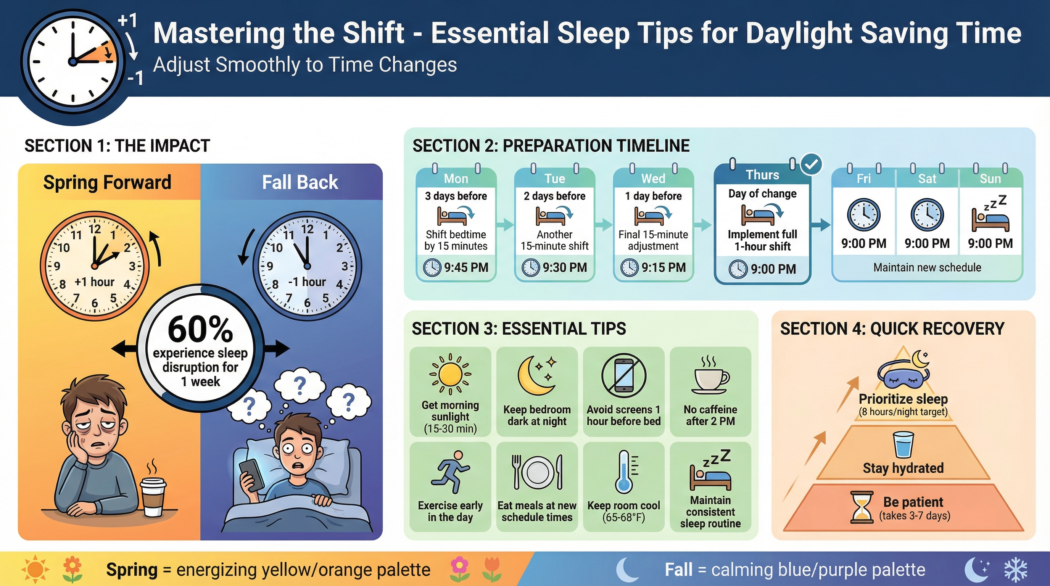
1. Gradual Adjustment: The most effective strategy for navigating the spring forward is to begin adjusting your sleep schedule before the official change.
Start a few days early. Aim to shift your bedtime and wake-up time by 15-20 minutes each day for the three to four days leading up to DST. For example, if you normally wake up at 7:00 AM, on the Thursday before DST, set your alarm for 6:45 AM. Gradually move this earlier each day.
Embrace the early morning light. Once the clocks spring forward, make an effort to expose yourself to bright natural light as soon as you wake up. This signals your SCN that it’s time to be awake and alert, reinforcing the new schedule. Open curtains, go for a short walk, or simply sit near a window.
2. Prioritize Sleep Hygiene: Good sleep hygiene practices become even more crucial during DST transitions.
Try to maintain a consistent bedtime and wake-up time. This reinforces your body’s natural sleep-wake cycle and helps you adapt faster.
* Create a Relaxing Bedtime Routine: Wind down for at least an hour before bed. This could include a warm bath, reading a physical book, listening to calming music, or gentle stretching. Avoid stimulating activities, such as watching intense TV shows or working.
* Optimize Your Sleep Environment: Ensure your bedroom is dark, quiet, and cool. Use blackout curtains, earplugs, or a white noise machine if necessary. A comfortable mattress and pillows are also essential for quality sleep.
* Mindful Food and Drink Intake: Avoid heavy meals, caffeine, and alcohol close to bedtime. Caffeine can stay in your system for hours, interfering with sleep onset. While alcohol might make you feel drowsy initially, it disrupts sleep architecture later in the night.
3. Strategic Napping (If Needed): If you’re struggling with daytime sleepiness, strategic napping can be beneficial, but it needs to be done correctly.
* Keep it short: Aim for naps of 20-30 minutes. Longer naps can lead to grogginess (sleep inertia) and may interfere with nighttime sleep.
* Nap earlier in the day: Avoid napping too late in the afternoon, as this can make it harder to fall asleep at your regular bedtime.
4. Be Patient with Yourself: It’s important to remember that your body needs time to adjust. Don’t get discouraged if you don’t feel completely adjusted immediately. Be kind to yourself, stick to your healthy habits, and you’ll likely find your rhythm within a few days to a week.
5. Limit Exposure to Blue Light Before Bed: Electronic devices like smartphones, tablets, and computers emit blue light, which can suppress melatonin production and make it harder to fall asleep. Try to put these devices away at least an hour before bedtime, or use blue light filters if absolutely necessary.
The Fall Back: Adjusting to the Extra Hour
The fall transition, where clocks are turned back by one hour, is often perceived as easier because we “gain” an hour of sleep. However, this shift can also disrupt our circadian rhythms, leading to challenges like difficulty waking up in the morning and a tendency to feel more sluggish. Our internal clocks are now accustomed to an earlier wake-up time, and the extra hour can leave us feeling “behind.”
Strategies for a Smoother Fall Back:
1. Embrace the Morning Light (Again!): Just as with the spring forward, morning light is your ally.
As soon as you wake up, expose yourself to bright natural light. This helps anchor your internal clock to the adjusted wake-up time and counteracts sluggishness.
* Consider a light therapy lamp: For those who struggle with the darker mornings, a light therapy lamp can be a valuable tool. These lamps mimic natural sunlight and can help regulate your circadian rhythm.
2. Maintain Sleep Consistency: The temptation to sleep in an extra hour on the weekend after the fall back can be strong. While a little extra rest might feel good, it’s important to try to maintain a relatively consistent sleep schedule.
* Resist oversleeping: While a slight shift is understandable, try not to deviate too drastically from your weekday wake-up time. Significant variations can further confuse your internal clock.
Continue to go to bed around the same time each night. This reinforces your body’s natural sleep cues and helps your system stay on track.
3. Pay Attention to Your Body’s Cues: The fall back can sometimes lead to a feeling of wanting to go to bed earlier. Listen to your body, but also be mindful not to fall asleep too early, which could lead to waking up in the middle of the night.
4. Adjust Your Evening Routine:
* Gradual Wind-Down: Continue with your relaxing bedtime routine. As evenings get darker earlier, it can be a natural cue to wind down.
* Avoid Late-Night Stimulants: Be extra mindful of caffeine and alcohol intake in the evenings.
5. Manage the Shift in Daylight: As the days get shorter, it’s important to actively create opportunities for light exposure during the day.
* Take breaks outdoors: Even a short walk during your lunch break can make a difference.
* Maximize indoor lighting: Ensure your home and workspace are well-lit, especially during the darker hours.
6. Re-evaluate Your Sleep Needs: Some individuals find that their sleep needs shift slightly with the change in seasons and daylight. Pay attention to how much sleep you’re truly getting and if you feel rested.
Beyond the Transitions: Long-Term Sleep Health
Though DST poses unique challenges, maintaining good sleep habits year-round is the best way to handle these changes. Universal sleep hygiene is the basis for quality rest, no matter the season.
Pillars of Long-Term Sleep Health:
- Consistent Sleep Schedule: This is arguably the most important factor. Going to bed and waking up around the same time every day, even on weekends, trains your body’s internal clock.
- Optimized Sleep Environment: A dark, quiet, and cool bedroom is conducive to uninterrupted sleep. Invest in blackout curtains, earplugs, or a white noise machine if needed.
- Relaxing Bedtime Routine: Dedicate time before bed to unwind and signal to your body that it’s time to rest. This can include reading, taking a warm bath, or practicing mindfulness.
- Regular Physical Activity: Exercise can significantly improve sleep quality, but timing is key. Aim to finish vigorous workouts at least a few hours before bedtime. Gentle exercise, like yoga or stretching, can be done closer to bedtime.
- Balanced Diet: Avoid heavy meals, caffeine, and alcohol close to bedtime. These can interfere with your ability to fall asleep and stay asleep.
- Stress Management: Chronic stress is a major disruptor of sleep. Incorporate stress-reducing techniques into your daily life, such as meditation, deep breathing exercises, or journaling.
- Limit Screen Time Before Bed: Blue light from electronic devices can suppress melatonin production, making it harder to fall asleep.
- Sunlight Exposure: Getting adequate natural light exposure, especially in the morning, helps regulate your circadian rhythm.
The Science Behind the Sleep Disruption: Expert Insights
Dr. Anya Sharma, a leading chronobiologist at the Sleep Research Institute, explains, “The circadian rhythm is a sophisticated biological system that governs everything from our sleep-wake cycles to our hormone production and body temperature. When we abruptly shift our clocks, we are essentially creating a form of ‘social jet lag.’ Our deeply ingrained internal clock doesn’t immediately recognize the external time change. This mismatch can lead to a temporary period of sleep deprivation and reduced cognitive performance.”
She further elaborates on the physiological impact: “During the spring forward, the sudden loss of an hour can lead to a decrease in REM sleep and slow-wave sleep, the most restorative stages of sleep. This can manifest as daytime sleepiness, impaired concentration, and even mood disturbances. The fallback, while seemingly beneficial, can disrupt the synchronization of our internal clock with the external environment, leading to a feeling of being out of sync and potentially impacting our mood and energy levels.”
According to a study published in the Journal of Clinical Sleep Medicine, “the transition into and out of Daylight Saving Time is associated with significant, albeit transient, negative impacts on sleep duration and quality.” The researchers found that the spring forward, in particular, was associated with greater sleep disruption.
Another expert, Dr. David Lee, a sleep physician at the National Sleep Foundation, emphasizes the importance of proactive measures: “Many people simply try to ‘power through’ the DST changes. However, by implementing small, consistent adjustments in the days leading up to and following the transition, individuals can significantly mitigate the negative effects. Prioritizing sleep hygiene practices becomes paramount during these periods.”
Specific Sleep Challenges During DST and How to Address Them
1. Difficulty Falling Asleep (Spring Forward)
- Why it happens: Your body clock is still set to the “old” time, making you feel tired later than the clock indicates. Melatonin production might be delayed.
- Solutions:
- Gradual bedtime shift: As mentioned, start shifting your bedtime 15-20 minutes earlier each night for several days before the change.
- Evening light management: Reduce exposure to bright light, especially blue light from screens, in the hours before bed.
- Relaxing routine: Engage in calming activities such as reading, taking a warm bath, or listening to quiet music.
- Avoid stimulating activities: Don’t engage in intense exercise or stressful conversations close to bedtime.
2. Waking Up Too Early (Spring Forward)
- Why it happens: Your body is still programmed to wake up at the “old” time, which is now an hour earlier according to the clock.
- Solutions:
- Embrace the early morning light: As soon as you wake up, expose yourself to bright light. This helps signal to your brain that it’s time to wake up.
- Stay in bed for a while: If you wake up significantly earlier than you need to, try to stay in bed quietly without looking at the clock or your phone for a bit longer.
- Gentle stretching: Light stretching in bed can help you feel more awake without being jarring.
- Avoid checking the clock: This can increase anxiety and make it harder to fall back asleep.
3. Daytime Sleepiness and Fatigue (Spring Forward)
- Why it happens: You’ve effectively lost an hour of sleep, and your body is struggling to adapt to the new schedule.
- Solutions:
- Strategic naps: Short (20-30 minute) naps in the early afternoon can help combat sleepiness without disrupting nighttime sleep.
- Prioritize morning light: Get as much natural light exposure as possible upon waking.
- Stay hydrated: Dehydration can worsen fatigue.
- Light physical activity: A short walk can boost alertness.
- Be patient: This is a temporary adjustment period.
4. Difficulty Waking Up (Fall Back)
- Why it happens: Your body clock is still set to the “old” time, making it harder to wake up when the clock says it’s time. Mornings are darker, reducing the natural wake-up cue.
- Solutions:
- Use an alarm consistently: Stick to your wake-up alarm, even if it feels harder.
- Light exposure immediately: Open curtains or use a light therapy lamp as soon as you wake up.
- Set a positive intention: Think about something you’re looking forward to in the morning.
- Prepare the night before: Lay out your clothes, pack your lunch, and do anything else that makes your morning routine smoother.
- Consider a gradual wake-up alarm: Some alarms simulate a sunrise, gradually increasing light to wake you up more gently.
5. Feeling “Out of Sync” or Sluggish (Fall Back)
- Why it happens: The shift can disrupt your circadian rhythm, leaving you feeling generally off.
- Solutions:
- Maintain a consistent schedule: Stick to your regular bedtime and wake-up times as much as possible.
- Regular exercise: Physical activity helps regulate your body clock and improve mood.
- Healthy diet: Ensure you’re eating nutritious foods to support energy levels.
- Mindfulness and stress reduction: Practices like meditation can help you feel more grounded.
The Future of Sleep and DST: Emerging Trends
The conversation around Daylight Saving Time is evolving. Some regions are considering permanent DST, while others advocate for permanent standard time. The potential long-term health implications of these shifts are a subject of ongoing research. As we look towards the future, understanding our sleep needs and how they are influenced by external factors, such as DST, will become even more critical. For those interested in the broader landscape of sleep, exploring the top sleep trends of 2026 can offer insights into how technology and societal changes are shaping our approach to sleep. You can find more information on this topic here.
When to Seek Professional Help
While most people adjust to DST with temporary mild discomfort, persistent sleep problems can indicate an underlying issue. If you experience chronic insomnia, excessive daytime sleepiness that interferes with your daily life, or significant mood disturbances that don’t resolve after the DST transition, it’s advisable to consult a healthcare professional. They can assess your individual situation, identify potential sleep disorders, and recommend appropriate treatments. Resources like the National Sleep Foundation offer valuable information and guidance on sleep health. Visit the National Sleep Foundation for more resources.
Conclusion: Reclaiming Your Sleep Rhythm
Daylight Saving Time, whether springing forward or falling back, presents a recurring challenge to our finely tuned biological clocks. The abrupt shift can lead to temporary sleep disruptions, impacting our mood, energy levels, and cognitive function. However, by understanding the science behind circadian rhythms and implementing proactive strategies, you can significantly ease the transition. Prioritizing consistent sleep hygiene, embracing natural light, creating relaxing bedtime routines, and being patient with your body are key. Remember, these adjustments aren’t just about surviving DST; they are about cultivating long-term sleep health that benefits you all year round. By taking a mindful, proactive approach, you can navigate clock changes with greater ease, ensuring restful nights and energized days, no matter when the clocks shift.
Frequently Asked Questions About Sleep and Daylight Saving Time
Q1: How long does it typically take to adjust to Daylight Saving Time?
A1: Most people find they adjust to the time change within a few days to a week. However, some individuals may experience lingering effects for a longer period, especially if they have pre-existing sleep issues or are particularly sensitive to circadian rhythm disruptions. Factors such as age, lifestyle, and adherence to sleep hygiene practices can influence the time required for adjustment.
Q2: Is it better to adjust gradually or all at once?
A2: Gradual adjustment is generally recommended, especially for the spring forward. Shifting your sleep and wake times by 15-20 minutes each day for several days leading up to the change helps your body adapt more smoothly. For the fallback, a gradual adjustment can also be beneficial, though many people find this transition less disruptive.
Q3: What are the most important sleep hygiene tips to follow during DST transitions?
A3: The most crucial tips include maintaining a consistent sleep schedule as much as possible, optimizing your sleep environment (dark, quiet, cool), establishing a relaxing bedtime routine, and being mindful of caffeine and alcohol intake before bed. Exposure to natural light in the morning is also vital for resetting your internal clock.
Q4: Can DST affect my mental health?
A4: Yes, the disruption to sleep patterns caused by DST can impact mental health. Sleep deprivation and circadian rhythm misalignment can exacerbate symptoms of anxiety and depression, lead to increased irritability, and affect mood regulation. If you notice significant changes in your mood or mental well-being, it’s important to consult a healthcare professional.
Q5: Are there any specific risks associated with the spring “forward” versus the fall “back”?
A5: The spring “forward” is generally considered more disruptive because it involves losing an hour of sleep. This can lead to a temporary increase in sleep deprivation, reduced alertness, and a higher risk of accidents. The fall “back,” while gaining an hour, can also lead to feelings of sluggishness and difficulty waking up due to the shift in the body’s internal clock relative to external cues.
Q6: Should I use sleep aids during DST transitions?
A6: It’s generally best to rely on natural methods and good sleep hygiene. Over-the-counter sleep aids should be used with caution, ideally under the guidance of a healthcare professional, as they can sometimes mask underlying sleep issues or cause side effects. Focusing on consistent sleep habits is a more sustainable approach to managing DST transitions.