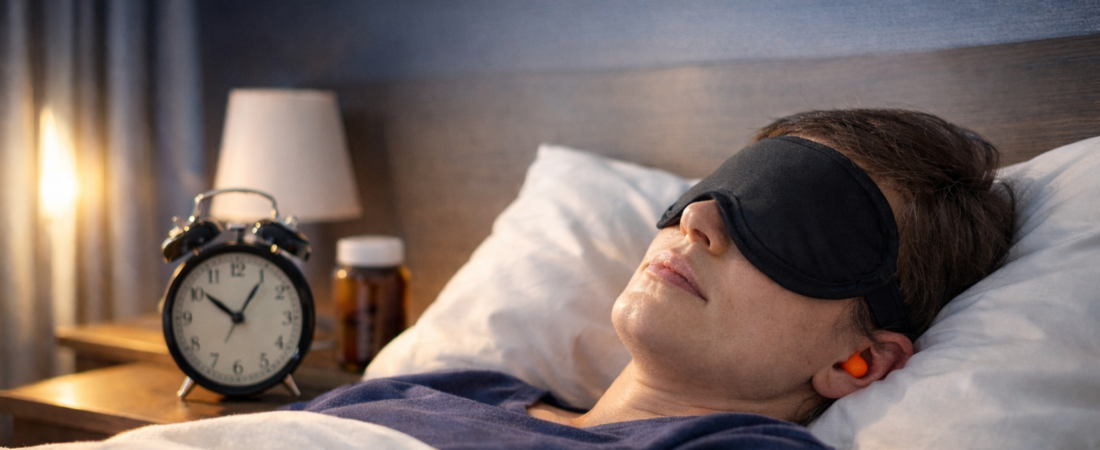
You walk through the front door as the sun rises. The world wakes up, but you’re exhausted. Your eyes burn, your body feels heavy, and all you want is sleep. Yet the moment your head hits the pillow, your mind stays wide awake. If you’re searching for how to sleep during the day for the night shift, this frustrating cycle probably feels all too familiar.
Night shift workers don’t struggle with sleep because they lack discipline or willpower. They struggle because their bodies are wired to follow daylight, social cues, and routines that clash with overnight work. Sunlight pours through the windows, daytime noise fills the air, and your internal clock refuses to cooperate. The result is often short, broken sleep that leaves you drained before your next shift even begins.
The good news is this: learning how to sleep during the day for the night shift is possible. When you stop fighting your biology and start working with it, your sleep can improve, sometimes dramatically. With the right environment, habits, and timing, many night workers fall asleep faster, stay asleep longer, and wake up feeling genuinely rested.
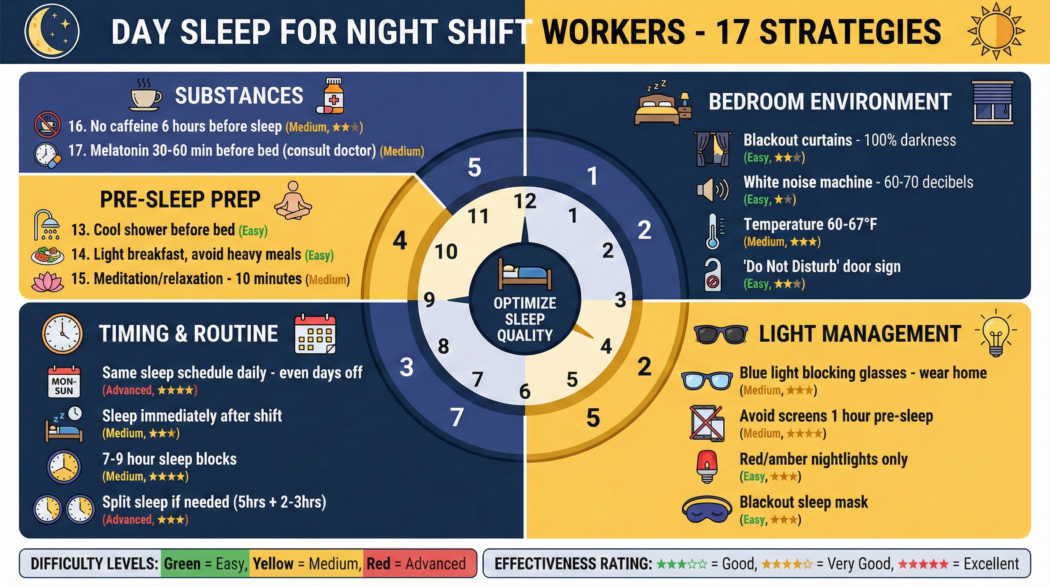
This guide will walk you through 17 doctor-backed, real-world strategies that night shift workers use. No gimmicks. No unrealistic advice. Just practical steps you can start using today.
👉 Struggling to sleep after night shifts?
Start with the strategies below and build a routine that finally lets your body rest.
Why Sleeping During the Day Is So Difficult for Night Shift Workers
Your body runs on a circadian rhythm—an internal clock that tells you when to feel awake and when to feel sleepy. This rhythm is heavily influenced by light exposure, temperature, meals, and social activity.
When you work nights, that clock doesn’t automatically reset. Instead, it keeps pushing you toward wakefulness during the day, even when you’re exhausted.
Common challenges include:
- Daylight-suppressing melatonin
- Increased daytime noise
- Family and social interruptions
- Irregular or rotating schedules
- Poor sleep environments
Understanding these barriers is the foundation of mastering how to sleep during the day for the night shift.
1. Turn Your Bedroom Into a Dark Sleep Cave
Light is the single biggest enemy of daytime sleep. Even small amounts can reduce sleep depth and cause early awakenings.
What helps most:
- Install true blackout curtains.
- Use a sleep mask as backup.
- Cover LED lights from electronics.
- Block light under doors with draft stoppers
Your goal is total darkness—even at noon.
👉 Sleep tips for night workers
2. Control Daytime Noise Before It Controls You
You can’t stop the world from being loud, but you can mask it.
Effective options include:
- White noise machines or apps
- Box fans for a steady background sound
- High-quality earplugs
- Sound-absorbing curtains or rugs
White noise works because it prevents sudden sound changes from pulling you out of deep sleep.
👉 5 Mistakes Nightshift Workers Make
3. Stick to a Consistent Night Shift Sleep Schedule
One of the biggest mistakes night workers make is completely flipping their sleep schedule on days off.
To improve how to sleep during the day for the night shift:
- Go to bed and wake up at the same time on workdays.
- On days off, shift your schedule slightly—not drastically.
- Prioritize consistency over perfection.
Your brain adapts best to predictable routines.
👉 Best Sleep Schedule for Night Shift Workers
Still struggling to sleep during the day—even after fixing your routine?
Yusleep was designed specifically for night shift workers to support deeper, longer daytime sleep naturally.
👉 Try Yusleep and wake up feeling rested—even on night shift
4. Wear Sunglasses on the Way Home
Morning sunlight tells your brain it’s time to wake up. That’s the last message you want after a night shift.
Do this instead:
- Wear dark sunglasses during your commute.
- Avoid bright stores on the way home.
- Keep indoor lighting low once inside.
This simple habit protects melatonin and helps you fall asleep faster.
5. Use Caffeine Strategically, Not Desperately
Caffeine is helpful—until it isn’t.
Best practices:
- Use caffeine early in your shift.
- Avoid it 6–8 hours before sleep.
- Switch to water or herbal tea late in the shift.
Too much caffeine causes shallow, fragmented sleep.
👉 Consider Supplements Carefully
6. Keep Your Bedroom Cool
Your body naturally cools down as it prepares for sleep.
Ideal sleep temperature:
60–67°F (15–19°C)
Use fans, air conditioning, and breathable bedding to support this natural process.
7. Eat Light Before Daytime Sleep
Heavy meals can cause discomfort and disrupt sleep.
Better choices include:
- Greek yogurt
- Oatmeal
- Eggs
- Bananas
- Whole-grain toast
Avoid spicy, greasy, or sugary foods right before bed.
8. Avoid Using Alcohol as a Sleep Aid
Alcohol may help you fall asleep, but it:
- Reduces REM sleep
- Causes early awakenings
- Dehydrates the body
If quality sleep is the goal, alcohol works against you.
9. Nap With Purpose
Short naps can be helpful when timed correctly.
Night shift nap tips:
- Limit naps to 20–30 minutes.
- Nap before your shift if needed
- Avoid long naps close to bedtime.
Think of naps as support—not replacements—for real sleep.
10. Exercise Regularly (But Not Before Bed)
Exercise improves sleep quality and mood.
Best timing:
- After waking up
- Before your shift
- At least 4 hours before sleep
Gentle stretching before bed is fine—intense workouts are not.
11. Create a Repeatable Wind-Down Routine
Your brain needs clear signals that sleep is coming.
Try:
- A warm shower
- Reading a physical book
- Light stretching
- Deep breathing
Doing the same routine every day trains your body to relax on cue.
12. Limit Screen Exposure Before Sleep
Screens emit blue light that blocks melatonin.
Helpful steps:
- Avoid screens 60 minutes before sleep.
- Use blue-light filters
- Wear blue-light-blocking glasses if needed.
If routines and environment changes still aren’t enough, some night shift workers use targeted sleep support like Yusleep to help their bodies fully rest during the day.
13. Consider Supplements Carefully
Some night shift workers benefit from:
- Low-dose melatonin
- Magnesium glycinate
Start small and consult a healthcare professional before long-term use.
14. Protect Your Sleep From Interruptions
Your sleep is not optional—it’s essential.
- Communicate your sleep schedule.
- Silence notifications
- Use a “Do Not Disturb” sign if needed.
15. Use Your Bed Only for Sleep
Avoid scrolling, watching TV, or working in bed.
This strengthens the mental link between your bed and sleep.
16. Track What Actually Works
Keep notes on:
- Sleep duration
- Wake-ups
- Foods and habits
Patterns become clear quickly when you pay attention.
17. Give Your Body Time to Adapt
Adjusting to night shift sleep takes time. Be patient. Small improvements add up.
FAQs: How to Sleep During the Day for Night Shift
Is it unhealthy to sleep during the day?
Not if your sleep environment and habits are well managed.
How many hours should night shift workers sleep?
Aim for 7–9 hours total.
Should I flip my sleep schedule on days off?
Minimize drastic changes whenever possible.
Why do I wake up after 3–4 hours?
Light, noise, caffeine, or stress often interrupt sleep cycles.
What’s the fastest way to fall asleep after a night shift?
Darkness, sunglasses on the commute home, and a consistent routine.
You Don’t Have to Keep Fighting Sleep
If you’ve tried fixing your routine, darkening your room, and limiting caffeine—but you’re still waking up tired—your body may need extra support to fully shut down during the day.
Yusleep was created for night shift workers who need deeper, longer daytime sleep without feeling groggy or dependent. It works with your body’s natural sleep process, helping you fall asleep faster and stay asleep longer—even when the sun is up.
👉 Take the next step toward real rest