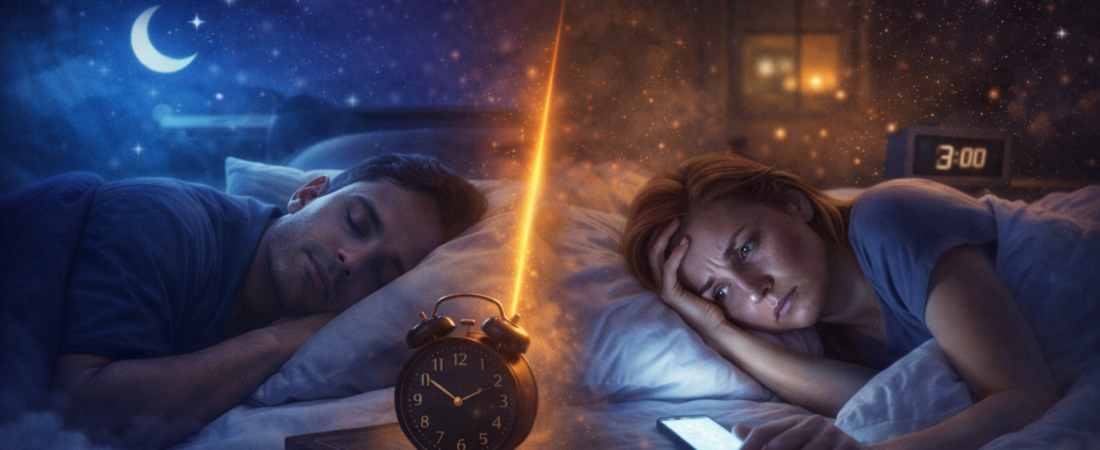
Why So Many People Can’t Sleep Longer Than 6 Hours
If you’re looking to sleep longer than 6 hours, you’re not alone. Many people fall asleep easily but wake up after five or six hours—wide awake, frustrated, and exhausted.
For some, this happens because of stress or poor sleep habits. For others, it’s linked to light exposure, caffeine timing, inconsistent schedules, or an overstimulated nervous system. Over time, sleeping only six hours or less can affect mood, focus, immune health, metabolism, and long-term well-being.
The good news? Sleeping longer is possible once you know what limits your sleep and what to adjust.
This guide breaks down:
- Why does your body wake early?
- How to extend sleep naturally
- Practical routines that promote longer, deeper rest
- Common mistakes that sabotage sleep length
Let’s fix your sleep—step by step.
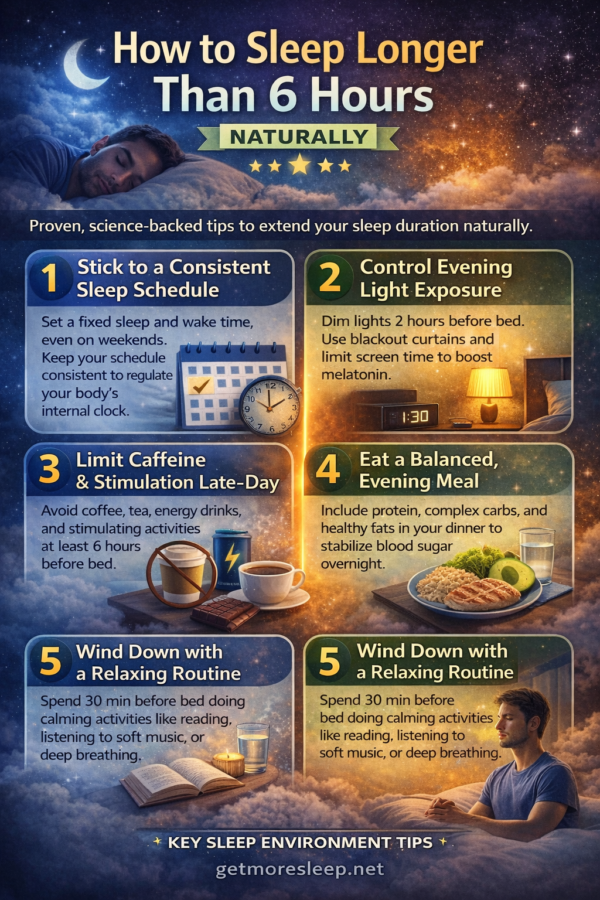
How to Sleep Longer Than 6 Hours (Quick Answer)
To sleep longer than 6 hours, you need a consistent sleep schedule, proper light exposure, reduced evening stimulation, balanced blood sugar overnight, and a calming pre-sleep routine. Limiting caffeine late in the day, managing stress, and optimizing your sleep environment can significantly extend total sleep time.
Why Your Body Wakes Up After 6 Hours
Sleeping for only six hours isn’t always about insomnia. Often, it’s your circadian rhythm doing exactly what it’s been trained to do.
1. Your Internal Clock Is Set Too Early
Your body learns patterns fast. If you’ve been waking up at the same early time—even unintentionally—your brain starts releasing cortisol earlier, signaling wake-up mode.
2. Stress Hormones Spike Too Soon
Chronic stress raises cortisol levels. Elevated cortisol in the early morning hours can pull you out of sleep before your body is fully rested.
3. Blood Sugar Drops Overnight
If your evening meal lacks protein or healthy fats, blood sugar can dip overnight, triggering a burst of adrenaline and waking you up.
4. Light Exposure Is Disrupting Melatonin
Early morning light—even from streetlights or phones—can suppress melatonin and shorten sleep duration.
How Much Sleep Do You Actually Need?
Most adults need 7–9 hours of sleep per night. Sleeping only six hours may feel normal, but studies regularly link short sleep to:
- Lower concentration and memory
- Increased stress and anxiety
- Weakened immune system
- Higher risk of weight gain and metabolic issues
If you wake after six hours, something interferes with your sleep cycle.
How to Sleep Longer Than 6 Hours Naturally
1. Lock In a Stable Sleep Window
Your body thrives on predictability.
- Go to bed and wake up at the same time daily.
- Keep weekends within 1 hour of your weekday schedule.
- Avoid “catch-up sleep” that shifts your rhythm.
⏰Commit to a fixed bedtime for the next 14 days and track how your sleep length changes.
2. Control Evening Light Exposure
Light is the strongest signal to your brain.
- Dim lights 2 hours before bed
- Avoid overhead lighting at night.
- Use warm lamps or red-tinted bulbs.
- Block outdoor light with blackout curtains.
This helps melatonin stay high longer and keeps you asleep.
3. Stop Stimulating Your Nervous System at Night
Many people are “tired but wired.”
Avoid in the evening:
- Intense workouts
- Heated arguments
- News or stressful content
- Late-night problem solving
Replace with:
- Stretching
- Reading
- Deep breathing
- Calm music
🧘Create a 30-minute wind-down routine that signals your brain it’s safe to stay asleep.
4. Fix Late-Day Caffeine Timing
Caffeine can linger in your system 6–10 hours.
- Stop caffeine by early afternoon.
- Remember hidden sources (tea, chocolate, pre-workout drinks)
Even if you fall asleep, caffeine can reduce sleep quality and cause early waking.
5. Eat for Stable Overnight Blood Sugar
A balanced dinner helps prevent 3–5 a.m. wake-ups.
Include:
- Lean protein
- Complex carbs
- Healthy fats
Avoid:
- Sugary desserts late at night
- Heavy alcohol before bed
🥗 Experiment with a balanced dinner for one week and note nighttime awakenings.
Common Mistakes That Keep You Stuck at 6 Hours
- Lying in bed, anxious about sleep.
- Checking the clock when waking early
- Using your phone during night awakenings
- Sleeping in to compensate
- Overtraining or under-eating
Each of these trains your brain to shorten sleep.
How Stress and Anxiety Shorten Sleep
Stress doesn’t just make it hard to fall asleep; it also cuts sleep short.
When stress remains high:
- Cortisol rises earlier
- Sleep becomes lighter
- REM sleep is reduced
Helpful strategies:
- Journaling before bed
- Box breathing
- Progressive muscle relaxation
- Daytime stress management (not just at night)
😴 Struggling to stay asleep past 6 hours? YuSleep is designed to support longer, deeper sleep by helping your body relax and stay in sleep mode through the night — without grogginess the next day.
👉 Learn how YuSleep supports full-night rest naturally.
Sleep Environment Changes That Extend Sleep
Your bedroom should protect sleep—not interrupt it.
Optimize:
- Cool temperature (60–67°F / 15–19°C)
- Quiet or white noise
- Complete darkness
- Comfortable mattress and pillow
Small changes can add 30–90 minutes of extra sleep.
When to Worry About Only Sleeping 6 Hours
Occasional short sleep is normal. But if it’s chronic and paired with:
- Daytime fatigue
- Mood changes
- Poor concentration
- Frequent early waking
It’s time to take action and rebuild healthy sleep patterns.
😴 Make sleep length a priority—not an afterthought.
Frequently Asked Questions (FAQs)
Why do I wake up after 6 hours and can’t fall back asleep?
This usually happens due to stress hormones, early light exposure, or blood sugar drops that activate the nervous system too soon.
Is sleeping 6 hours enough for adults?
For most adults, no. Long-term six-hour sleep is linked to neurocognitive difficulties.
Can naps make it harder to sleep longer at night?
Yes. Long or late naps reduce sleep pressure and can shorten nighttime sleep.
Does exercise help you sleep longer?
Yes—when done earlier in the day. Late intense exercise can shorten sleep.
Can supplements help me sleep longer than 6 hours?
Some people benefit from magnesium or glycine, but routines and habits matter more.
How long does it take to retrain my body to sleep longer?
Most people see improvements within 1–3 weeks of consistent changes.
🌙 Ready to finally sleep longer than 6 hours? If better routines aren’t enough on their own, YuSleep can help support uninterrupted, restorative sleep so you wake up feeling refreshed — not wired or worn out.
Conclusion: You Can Sleep Longer Than 6 Hours
Learning how to sleep longer than 6 hours isn’t about forcing sleep; it’s about removing the signals that wake your body too early.
By:
- Aligning your sleep schedule
- stress and mental stimulation
- Supporting melatonin and blood sugar
- Creating a sleep-friendly environment
You give your body permission to have a good night’s rest again.
Better sleep isn’t a luxury—it’s a foundation for better health, energy, and life.