
Getting more sleep doesn’t always mean better sleep. This guide breaks down what actually improves sleep quality — and which common habits quietly make sleep worse.
Most people think quality sleep just means “getting more hours.”
This assumption is incorrect.
It is possible to sleep 8 hours and remain fatigued, or sleep 6.5 hours and feel awesome and rejuvenated. The decisive factor is not time in bed, but sleep quality.
This guide breaks down:
- What quality sleep really means
- What actually improves it
- What looks advantageous but quietly backfires
- and how to fix sleep quality without turning your life upside down
🎥 Watch This Before Trying Another Sleep Aid
If you’ve improved your habits but sleep still feels light, fragmented, or unrefreshing, this short video explains why many sleep aids fail — and what actually improves sleep quality.
If that video felt familiar, you’re not alone.
Quality sleep isn’t about knocking yourself out — it’s about reducing stress signals and supporting deeper, more restorative sleep. The strategies below focus on exactly that.
What Is “Quality Sleep,” Really?
Restorative sleep is sleep that allows your brain and body to fully cycle through:
- Deep sleep (physical repair)
- REM sleep (memory, emotion, stress processing)
- with minimal nighttime awakenings
“Quality sleep means sleeping deeply, cycling through restorative sleep phases, and waking up refreshed — not just sleeping longer.”
If your sleep quality is poor, you may experience:
- morning grogginess
- brain fog
- irritability
- strong afternoon fatigue
- feeling “tired but wired” at night
The Biggest Sleep Myth (And Why It’s Holding You Back)
Myth: “If I’m tired, I just need to go to bed earlier.”
Reality:
Poor sleep quality is usually caused by:
- nervous system overactivation
- stress hormones staying elevated
- interrupted sleep cycles
- inconsistent sleep timing
Attempting to sleep earlier without dealing with these factors frequently aggravates insomnia.
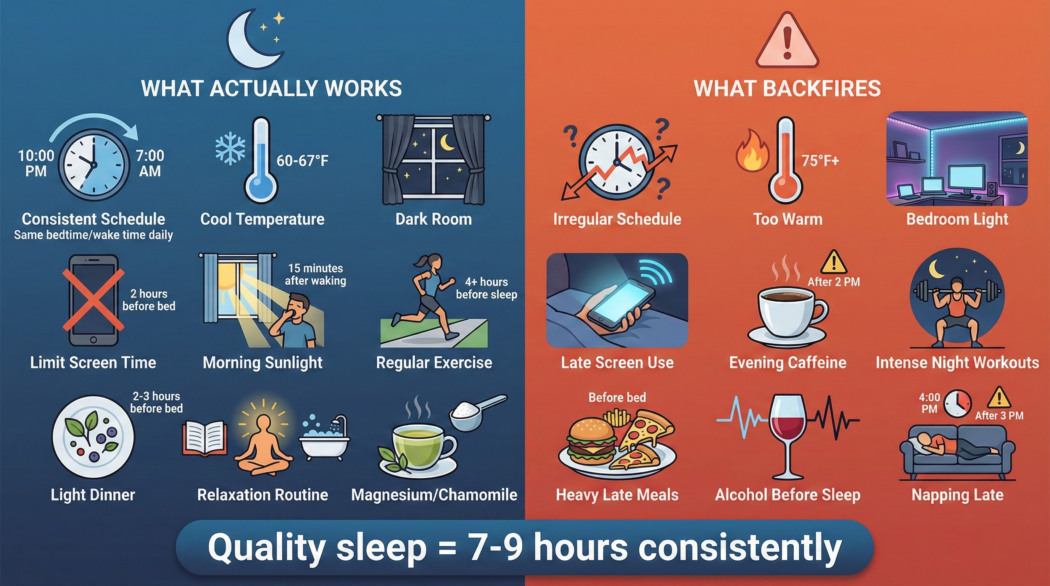
What Actually Improves Sleep Quality
1️⃣ A Calm Nervous System (The Foundation Most People Miss)
Your body cannot enter deep, reparative sleep if it’s stuck in fight-or-flight mode.
Signs your nervous system is overstimulated:
- racing thoughts at night
- light, shallow sleep
- waking up at 3–4am
- needing “something” to knock you out
What helps
- slow breathing (nasal, long exhales)
- consistent wind-down rituals
- reducing nighttime stimulation (screens, work, problem-solving)
📌 This is where natural sleep-support products that focus on calm + balance — not sedation — fit best.
👉 If calming your nervous system is the missing piece, targeted nighttime support can help restore deep sleep without OTC dependence.
→ See what actually helps with sleep quality
2️⃣ Consistent Sleep Timing (More Important Than Duration)
The brain functions better with consistent rhythmic cycles.
Irregular sleep patterns disrupt the circadian system, regardless of total sleep duration.
What improves quality
- consistent sleep and wake times (±30–60 minutes)
- consistent sunlight exposure
- avoiding late-night “second winds.”
“Consistent sleep timing improves sleep quality by reinforcing your circadian rhythm, making it easier to enter deep and REM sleep.”
If your biggest struggle is feeling exhausted but wired after night shifts, the problem isn’t lack of sleep effort — it’s stress hormone timing.
That’s why some night shift workers do better with system-based support that calms the nervous system instead of forcing sedation.
→ See how Yusleep supports stress regulation and sleep consistency for night shift workers
3️⃣ Fewer Nighttime Awakenings (Fragmentation Is the Silent Killer)
You may not remember waking up — but your body does.
Sleep fragmentation reduces:
- deep sleep
- REM cycles
- hormone recovery
Common causes
- stress spikes
- blood sugar swings
- temperature changes
- noise/light exposure
What helps
- cool, dark sleep surroundings
- stable evening nutrition, no heavy meals
- calming pre-bed routines
4️⃣ Proper Evening Wind-Down (Not “Scrolling Until Tired”)
Being tired doesn’t mean your brain is ready for sleep.
Backfiring habits
- doom-scrolling
- social media, you tube videos, or playing video games late in the day
- intense conversations late at night
Better alternatives
- low light
- slow activities
- repetitive, non-stimulating routines
📌 Your brain learns sleep cycling through consistent repetition — not willpower.
What Backfires (Even Though Everyone Recommends It)
❌ Relying on “Knock-Out” Sleep Aids Night After Night
They may help you fall asleep — but often:
- reduce REM sleep
- create dependency
- worsen next-day fatigue
❌ Obsessing Over Sleep Data
Tracking sleep without context increases anxiety and worsens sleep quality for many people.
❌ Forcing Sleep
Trying harder creates stress, which blocks sleep.
Sleep improves when safety and calm are restored — not pressure.
Struggling to sleep isn’t a willpower issue — it’s often a hormone and timing issue. Learn why stress hormones keep night shift workers wired even when exhausted → Cortisol and Night Shift Work: Why You’re Wired After Your Shift Ends
How to Improve Sleep Quality Tonight (Simple Reset Plan)
Tonight
- dim lights 90 minutes before bed
- slow breathing for 5 minutes
- no problem-solving in bed
This week
- Keep wake-up time consistent
- Reduce late day caffeine, before 12am only
- build a predictable pre-sleep routine
- No alcohol late in the day
Over time
- address nervous system balance
- improve sleep depth, not just duration
- improve diet, which in turn, helps gut health and Serotonin production
- reduce stress where possible
When Lifestyle Changes Aren’t Enough
If you’ve already tried:
- sleep hygiene
- routines
- cutting caffeine
- eliminate alcohol
- meditation
…but still wake up tired, the issue may be sleep quality, not discipline. However, persistent fatigue might also indicate underlying medical issues, so it’s important to consult a healthcare professional if lifestyle changes don’t lead to improvement.
📌 Some people may need targeted sleep support to help the brain fully disengage at night.
👉Designed to support calm, deeper sleep — without melatonin overload or morning grogginess.
→ Explore a science-backed all natural sleep support supplement
FAQ (Featured Snippet Friendly)
How many hours of sleep equals quality sleep?
Most adults need 7–9 hours, but quality sleep depends more on sleep depth and continuity than total hours.
Why do I wake up tired even after 8 hours?
Common reasons include insufficient sleep, increased stress, elevated cortisol levels, poor REM sleep, excessive alcohol consumption, excessive caffeine consumption, or nervous system overactivation.
Can supplements improve sleep quality?
Yes. Some all-natural sleep supplements support relaxation and better sleep—especially when stress or anxiety disrupts it—but they work best when used alongside healthy routines.
If you want a step-by-step framework instead of trial and error, start here:
→ Sleep Tips for Night Shift Workers — A Practical Guide That Actually Works
Final Thoughts: Quality Beats Quantity
If there’s one takeaway, it’s this:
Better sleep isn’t about doing more — it’s about removing what blocks restoration.
Key takeaway: Always address sleep quality first to improve how you feel and function during the day. Sleep time often improves naturally after.
Still waking up tired after “doing everything right”? That usually means your nervous system never fully powers down at night.
Here’s the option many people turn to when standard sleep aids fail → See if Yusleep is right for you